
Can an Online Store Check Your Age Without Seeing Your Birth Date?

In October 2025, Discord disclosed that a security breach at a third-party customer support provider may have exposed government ID photos belonging to approximately 70,000 users who had appealed age verification decisions.
For businesses selling age-restricted products online, the incident raises a question: how much personal information do we really need to collect to verify someone’s age?
A common way to verify someone’s age online is to ask them to upload a picture of their driver’s license. For deliveries, customers often hand their license to a driver at the door. In both cases, they’re revealing their full name, home address, date of birth, license number and photograph, even though the business may only need to know whether they’re 21 or older.
Imagine ordering a bottle of gin from a liquor store in Brooklyn. The store already knows where you live because it’s delivering your order. Why should you also have to disclose your date of birth and driver’s license number?
The driver’s license on your phone
A number of states now issue mobile driver’s licenses, commonly referred to as mDLs. These are digital credentials issued by the same government agencies that issue physical driver’s licenses. Apple’s developer documentation lists support across 16 states and Puerto Rico, while states such as New York have developed their own digital ID apps.
A mobile driver’s license offers more than convenience. It lets you control what information you share.
This is known as selective disclosure. A business can request specific information from a digital ID without accessing the rest of the credential. It can also verify that the information was issued by the DMV and hasn’t been altered.
A retailer could simply ask whether a customer is 21 or older and receive a verified yes-or-no answer. It doesn’t even need to know the customer’s exact age, let alone their date of birth. That’s difficult to accomplish with a plastic driver’s license.
New York already allows it
In October 2024, the New York State Liquor Authority issued an advisory recognizing the state’s Mobile ID as an acceptable form of identification for alcohol sales. The advisory also addresses the legal protections available to sellers when alcohol is sold or delivered.
Under this approach, the seller requests specific information from the customer’s digital ID. The customer can see what’s being requested and decide whether to share it.
Simply showing someone a digital license on a phone, however, isn’t enough. The seller must use appropriate verification software to confirm the authenticity of the credential and still check that the person presenting it matches the ID photo.
Georgia’s Department of Revenue issued similar guidance a year later, allowing alcohol retailers to accept mobile driver’s licenses using compliant readers. Screenshots and photographs of digital IDs are not accepted.
For online alcohol retailers, verifying a customer’s age at checkout does not necessarily remove the obligation to verify the recipient’s identity and age at delivery.
What information does the customer share?
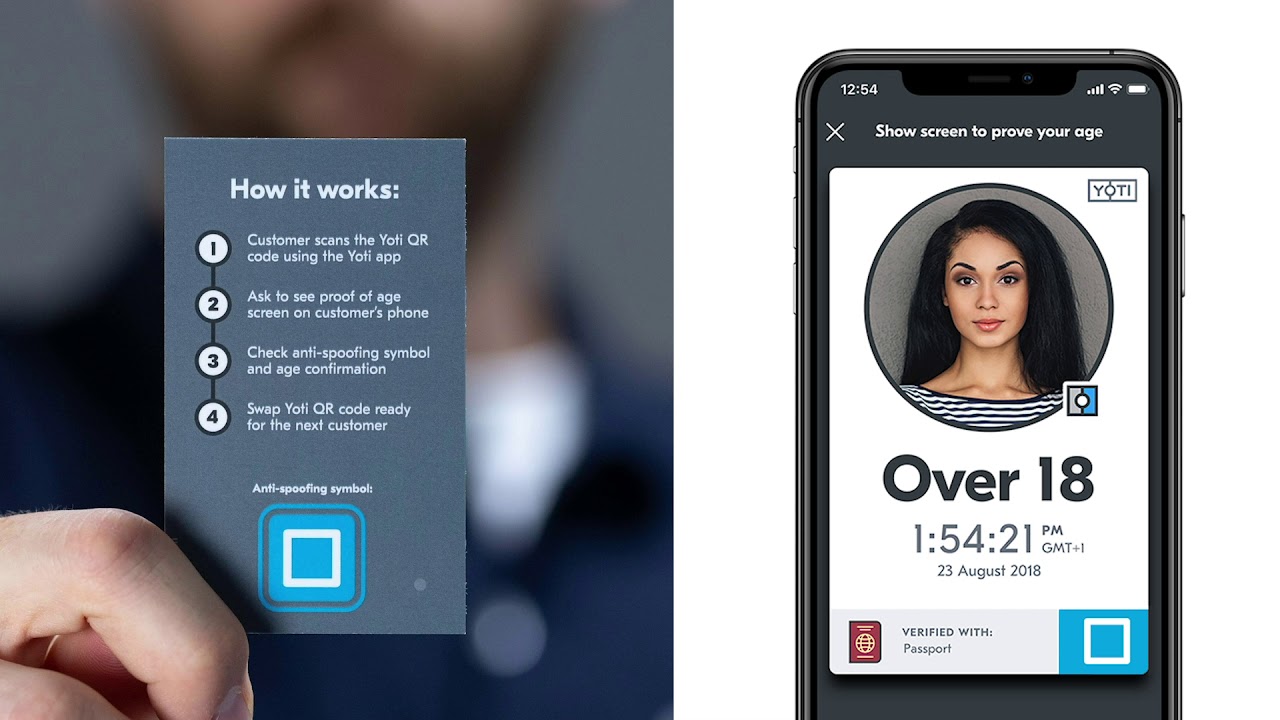
When a business requests an age check, the customer’s phone displays the information being requested.
In the example shown here, the request includes three pieces of information: the customer’s age, confirmation that they meet a specified age threshold, and their ID photo.
The customer reviews the request and approves it. Their name, address, date of birth, license number and other personal details are not shared.
This doesn’t make the customer anonymous. The verification provider still receives the information the customer agrees to share, including their photograph in this example. It simply avoids exposing personal information that isn’t relevant to the transaction.
What does the retailer actually receive?
The retailer can receive even less information than the verification provider.
With Stile’s age verification software, for example, the business receives a digitally signed verification result containing:
- Whether the customer met the minimum age requirement
- The age threshold that was checked
- The customer’s age in whole years
- When the verification took place
The retailer can associate that result with the order without receiving or storing a photograph of the customer’s driver’s license or their date of birth.
New York permits alcohol retailers to retain certain identification details for a limited legal purpose. That doesn’t mean retailers need to keep a copy of every customer’s driver’s license.
Information a retailer never collects cannot be exposed in a breach of its systems.
Where digital IDs are available
Mobile driver’s licenses are still relatively new, and their availability varies considerably by state.
In both New York and Georgia, accepting a mobile ID is optional for retailers. New York also requires retailers to continue accepting physical identification from customers who prefer to use it.
Digital wallet support in Stile’s age verification service is currently in beta. Whether a customer can use a digital ID depends on where their license was issued, which phone they own and which digital identity platforms are supported.
Traditional age verification isn’t going away anytime soon.
But for customers who have a supported digital ID, and in jurisdictions where its use is permitted, buying an age-restricted product could become a much more private experience.
A liquor store needs to know that its customer is old enough to buy alcohol. It shouldn’t need to build a collection of driver’s licenses in the process.
Previously in Business news: How Digital Tools Help Investors Understand Dividend Stocks







Comment