
From DevRel to AgentRel: Why AI-Driven Execution Is the Next Frontier for Developer Platforms

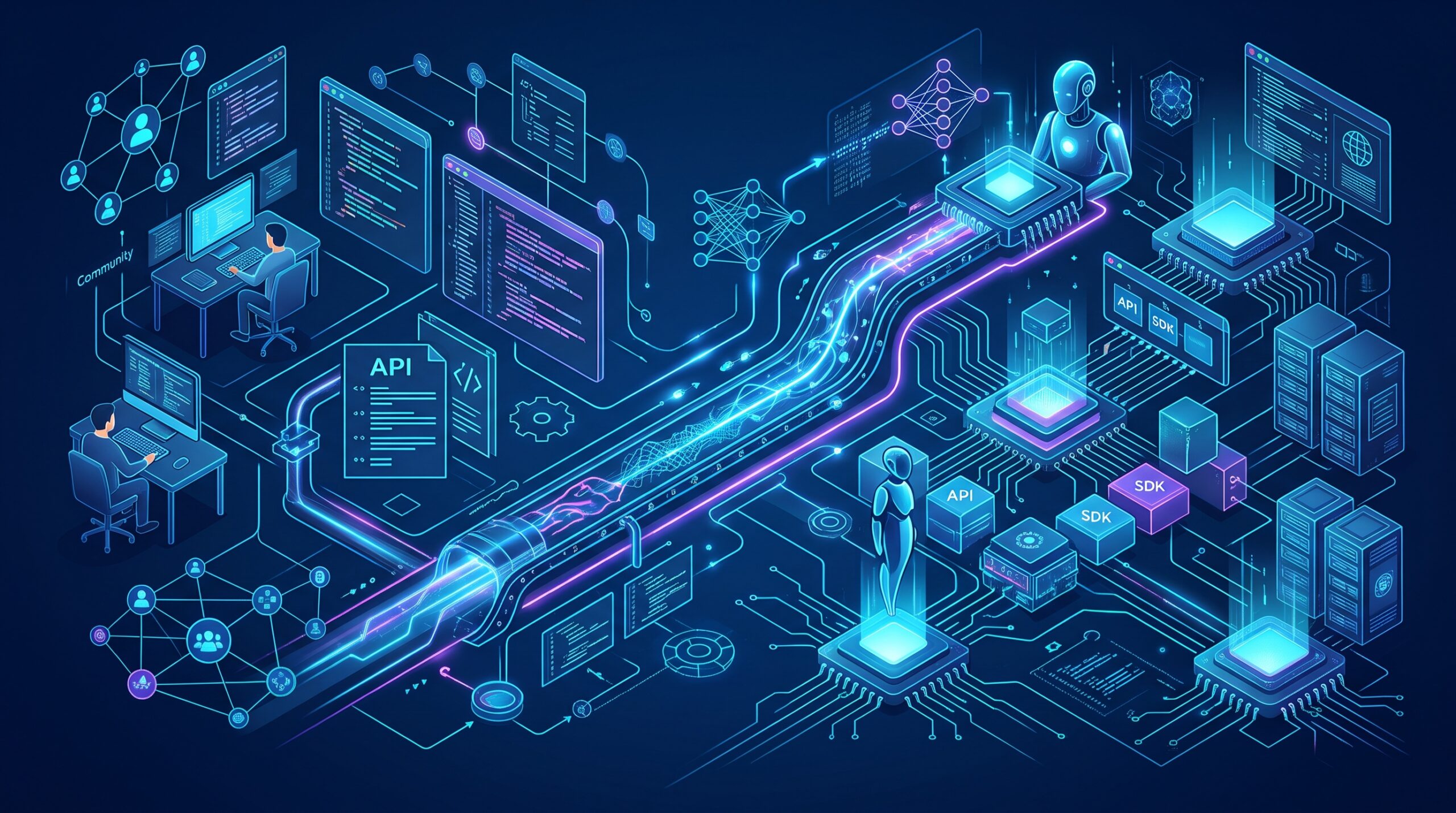
Developer Relations has spent fifteen years acting as the definitive growth engine for infrastructure software. Engineering founders turned DevRel into an art form by supporting open-source maintainers, crafting reference documentation, and cultivating developer communities. That model succeeded because human software engineers owned the technical stack. If an engineer loved an API architecture, that individual convinced their team and integrated the SDK.
The daily routine of modern software engineering is changing rapidly. Developers increasingly rely on generative platforms like ChatGPT, Claude, and Google AI Overviews to review frameworks, write boilerplate scaffolding, and debug runtime environments. When technical queries bypass traditional search results entirely, classic DevRel distribution channels reach natural limitations. Human advocacy remains important, but reaching the machine layer that directs implementation is now equally critical. This emerging discipline is Agent Relations, or AgentRel.
Manicule (YC P26), an operational startup founded in San Francisco, raised $1.3 million in seed funding to build the infrastructure for this transition. The round was co-led by Y Combinator and Broom Ventures, with strategic participation from technology angel investors. Manicule is developing automated execution systems that partner with technical teams to optimize developer software directly for AI agents.
Expanding Beyond Traditional SEO and Passive Dashboards
As software research shifted to conversational prompts, enterprise software buyers faced a new wave of visibility trackers. Legacy monitoring vendors rolled out dashboards that track how often an API appears in synthetic search results, charging steep recurring subscriptions for observational data.
While tracking awareness is helpful, passive dashboards stop short of solving the underlying distribution challenge. Seeing a statistical drop in model mentions does not rewrite API reference materials or adjust endpoint schemas.
“The fundamental unit of software discovery has shifted from the Google search query to the AI prompt,” said Naman Bansal, Co-Founder and CEO at Manicule. “Passive tracking dashboards don’t bring in customers. We handle the execution end-to-end so AI models don’t just mention our clients; they are chosen and used.”
Where human developers value tutorials and community forums, autonomous systems parse structural clarity, predictable endpoint payloads, and clean execution steps. Software platforms that adapt to these technical requirements position themselves for seamless discovery.
The Core Pillars of Agent Relations
DevRel focuses on engaging human practitioners, while AgentRel focuses on preparing technical software for automated agents. Designed for Seed to Series C technical startups, Manicule implements internal systems that execute across two distinct technical areas:
1) AI Visibility and Recommendation: Manicule structures developer documentation, research benchmarks, and API specifications into formats that large language models process cleanly. This structural work ensures that when an engineering team prompts a foundation model for technical recommendations, the client’s platform stands out as a reliable choice.
2) Autonomous Agent Onboarding: AI agents increasingly perform implementation tasks directly inside IDEs and automated build pipelines. Manicule re-engineers authentication layers, sandbox environments, and API endpoints so autonomous systems can register accounts, run tests, and execute production tasks independently on behalf of end users.
Aaron Epstein, General Partner at Y Combinator, highlighted the strategic importance of this development when investing: “Manicule is at the frontier of how software will be discovered and purchased going forward. It’s no longer about humans deciding what tools to buy; agents are making these decisions, and strong AgentRel will determine who the big winners will be.”
A key challenge when working with foundation models is maintaining technical credibility. Models often misinterpret API signatures or generate syntactically broken snippets that alienate engineering teams.
“Foundation models struggle with developer tone and technical accuracy,” added Shreyans Jain, Co-Founder and CTO at Manicule. “We treat this as an engineering problem, building custom agent rails internally to bridge the gap between AI automation and technical precision.”
To solve this, Manicule combines automated pipelines with expert engineering review. This workflow allows their team to operate at 5x the capacity of traditional technical agencies while delivering measurable business ROI for clients. Developer-focused companies including Supermemory, PromptLayer, Bright Data, and Courier have already integrated these frameworks into their growth strategies.
Preparing Developer Platforms for an Autonomous Future
The $170 billion developer tools sector represents the natural starting point for AgentRel. Developers often lead the tech industry in adopting automated workflows, and their software selection processes reflect that.
Developer Relations built the foundation for modern community-driven software adoption. Agent Relations builds upon that heritage, expanding the target audience to include the autonomous agents working alongside human engineers. Technical platforms that structure their documentation and onboarding for both humans and agents will secure an enduring competitive advantage in the post-search internet.






Comment