
How AI Is Opening New Business Opportunities in the Laser Engraving Industry

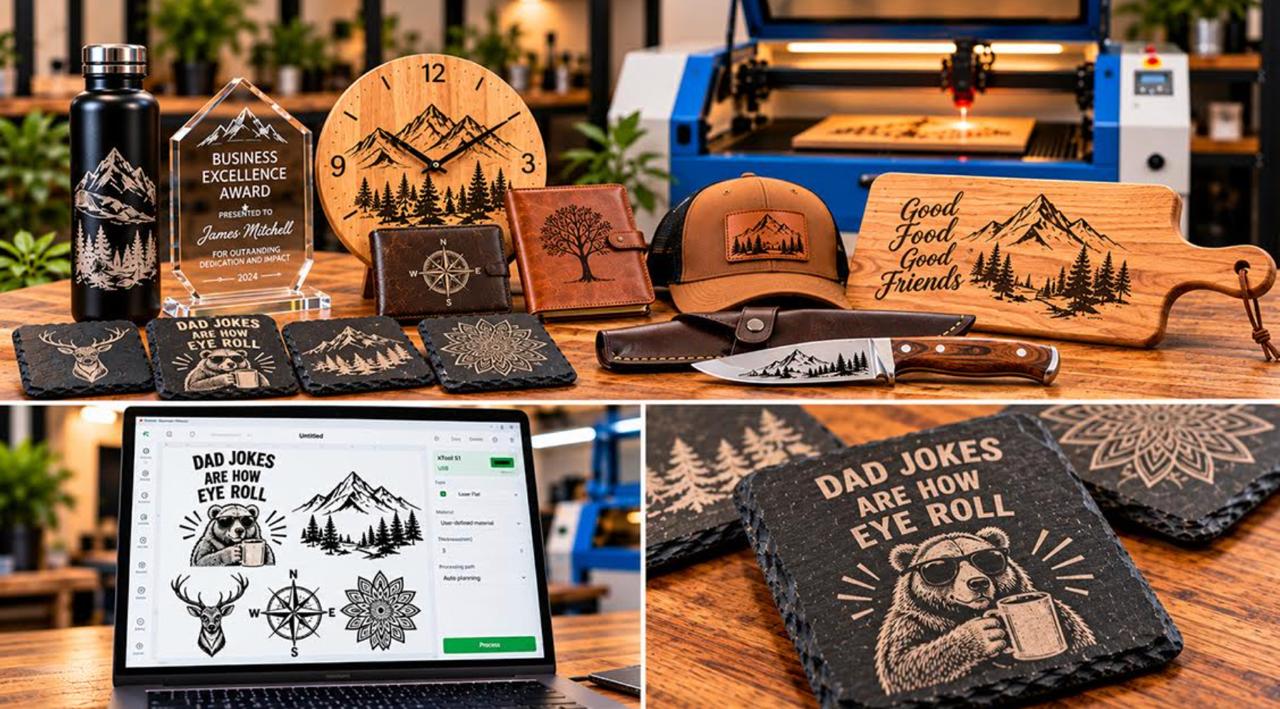
Starting a business that involves designing and manufacturing products has traditionally required more than a good idea. Entrepreneurs often needed graphic design experience, specialized software skills, or the budget to hire someone who could turn their ideas into production-ready artwork.
Artificial intelligence is beginning to change that.
With AI-assisted design tools becoming more accessible, people with little formal design experience can now experiment with illustrations, patterns, personalized artwork, and product concepts. Combined with laser engraving technology, these developments could make it easier for a new generation of entrepreneurs to enter the manufacturing and customization industry.
The opportunity is not simply about creating better-looking designs. It is about giving more people a practical starting point for building businesses around products they can make themselves.
The Design Barrier Is Getting Smaller
For someone interested in starting a laser engraving business, learning to operate the machine is only part of the challenge. Creating artwork that customers want to buy can be equally demanding.
A personalized gift business, for example, might require everything from detailed wildlife illustrations and decorative patterns to custom names, logos, and photographic engravings. Traditionally, producing this artwork required design experience or access to a graphic designer.
AI-assisted design tools offer another starting point.
An entrepreneur can describe an idea, experiment with different visual styles, and generate artwork that can be refined for a particular product. Someone creating a range of engraved wooden gifts could develop multiple design concepts without having to draw every illustration from scratch.
This does not eliminate the need for design skills. AI-generated images often require editing, and artwork must still be prepared correctly for the engraving process. However, it can significantly reduce the difficulty of getting an idea onto the screen.
For people who previously considered themselves creative but lacked the technical skills to produce digital artwork, that distinction matters.
From AI-Generated Images to Physical Products
One of the more interesting applications of AI-assisted design is photographic and detailed image engraving.
Modern image-generation tools can produce high-resolution illustrations, intricate patterns, and realistic artwork. These images can provide a starting point for products that would otherwise take considerable time to design manually.
Consider someone wanting to create a collection of engraved wildlife artwork on wooden panels. AI can help develop the initial illustrations, while image-editing and laser software can prepare the artwork for production.
The finished design can then be reproduced using suitable laser engraving machines.
The process is not as simple as sending any high-resolution image directly to a machine. Successful engraving depends on factors such as image contrast, resolution, material selection, laser settings, and how grayscale information is converted into engraved detail.
Different materials also produce different results. An image that looks impressive on a computer screen may need adjustments before it engraves well on wood, acrylic, or another suitable surface.
Nevertheless, the ability to move from a digitally generated concept to a finished physical product creates an interesting opportunity for small manufacturers.
A Business That Can Start Small
One of the attractions of laser engraving is that entrepreneurs do not necessarily need to begin with large production runs.
A small business could start by offering personalized gifts, engraved wooden products, custom signage, awards, or branded merchandise. Instead of committing to hundreds of identical items, the owner can produce individual orders or small batches.
AI-assisted design adds another dimension to this model.
A customer might request a particular illustration, decorative style, or personalized design. Rather than spending hours developing the initial concept, the business owner can use AI to explore options before refining the selected artwork for engraving.
This can make customization more practical, particularly for businesses handling many different customer requests.
There is also an opportunity to serve other businesses.
Companies regularly need branded gifts, identification products, promotional items, and customized awards. Entrepreneurs operating laser engravers can potentially offer these services locally, providing an alternative to ordering certain products from larger suppliers.
Of course, owning equipment does not automatically create a profitable business. Finding customers, setting appropriate prices, maintaining quality, and delivering orders reliably remain essential.
But the combination of accessible design tools and small-scale production equipment gives aspiring entrepreneurs more ways to test an idea before expanding.
Could AI Encourage Growth in the Laser Industry?
Much of the conversation around artificial intelligence focuses on software development, office productivity, and automation. Its potential influence on physical manufacturing receives less attention.
Yet the connection is worth considering.
As AI-assisted design becomes easier to use, more people may begin exploring businesses that turn digital artwork into physical products. Some of those entrepreneurs could discover laser engraving as a practical manufacturing method.
That could create opportunities beyond the businesses selling finished products.
Equipment suppliers, material distributors, training providers, maintenance specialists, and software developers all form part of the wider laser manufacturing industry.
If more entrepreneurs enter the market, demand for these supporting products and services could grow alongside them.
It is too early to attribute measurable industry growth directly to AI-assisted design without supporting market data. However, the potential relationship is clear: making design more accessible could encourage more people to consider manufacturing products that previously seemed beyond their capabilities.
Technology Still Needs Practical Skills
Despite the possibilities, AI does not remove the practical requirements of running a laser engraving business.
Entrepreneurs still need to understand the materials they work with, the capabilities of their equipment, and the safety procedures involved.
Machine selection is particularly important. Different laser technologies are suited to different applications. CO₂ systems are commonly used for engraving and cutting compatible non-metal materials, including wood and acrylic, while suitable fiber laser systems are used for marking and engraving metals.
Not every laser machine can perform every task, and businesses need equipment matched to the products they intend to manufacture.
Reliability, training, maintenance, and technical support also become increasingly important when customers are depending on orders being completed on time.
There are creative considerations as well. AI-generated artwork may contain errors, reproduce unwanted details, or raise questions about intellectual property and commercial usage rights. Business owners should review designs carefully rather than assuming every generated image is ready to sell.
In other words, AI can help someone get started, but building a sustainable business still requires judgment, experimentation, and practical knowledge.
A New Starting Point for Entrepreneurs
The most significant change may not be what laser engraving machines can produce, but who can realistically consider using them.
Someone who has never worked as a graphic designer can now explore product concepts with AI, learn to prepare artwork, and experiment with turning those ideas into physical products.
That does not mean every idea will become a successful business. It does mean that one of the traditional barriers to entering the industry is becoming smaller.
For the laser engraving sector, this could introduce a broader audience of potential entrepreneurs, from creative individuals looking for additional income to small businesses wanting to bring customization and production in-house.
AI may be best known for generating text and images, but its longer-term influence could extend into workshops, studios, and small manufacturing businesses.
And for people with ideas they have never had the skills to design, that could be where the technology becomes particularly valuable.





Comment