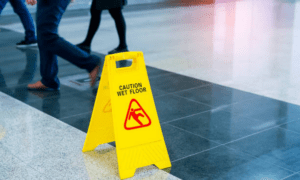
When a simple trip to the grocery store ends with a serious fall on a wet floor, many Floridians discover they’re facing more than just physical injuries — they’re navigating a complex legal landscape where proving fault requires far more than pointing to the hazard that caused their accident. Florida’s premises liability laws have evolved significantly in recent years, with courts increasingly scrutinizing both property owner knowledge and victim behavior in ways that can dramatically impact case outcomes. For the thousands of people injured in slip and fall accidents across the state each year, understanding how to build a compelling legal case often determines whether they receive fair compensation or find themselves responsible for mounting medical bills. The difference between a successful claim and a dismissed case frequently comes down to evidence preservation, legal strategy, and understanding exactly what Florida courts require to establish liability.
The Role of Negligence and Legal Standards in Florida Slip and Fall Cases
Florida operates under premises liability law, which requires slip and fall victims to prove that property owners knew or should have known about the dangerous condition that caused their accident. Unlike some states with more straightforward liability standards, Florida distinguishes between actual knowledge — where the property owner definitively knew about the hazard — and constructive knowledge, where the dangerous condition existed long enough that a reasonable property owner would have discovered it through regular maintenance and inspection.
This distinction creates a critical burden of proof that shapes every aspect of building a slip and fall case. Courts examine whether the hazardous condition was “open and obvious” to visitors, considering factors like lighting, visibility, and whether a reasonable person would have noticed and avoided the danger. Property owners can assert that visitors assumed the risk by proceeding despite an obvious hazard, potentially reducing or eliminating liability.
Florida’s modified comparative negligence rule adds another layer of complexity. If a victim bears partial responsibility for their accident — perhaps by texting while walking or ignoring warning signs — their compensation decreases proportionally to their fault percentage. Victims found 51% or more at fault receive no compensation whatsoever. This means proving the property owner’s negligence isn’t sufficient; victims must also demonstrate their own reasonable behavior leading up to the accident.
The legal standard also varies depending on the victim’s classification. Invitees (customers in stores) receive the highest level of protection, while licensees (social guests) face more limited property owner duties. Understanding these nuances helps frame the evidence needed and realistic expectations for case outcomes.
Evidence and Documentation Needed to Prove a Slip and Fall Claim in Florida
Building a successful slip and fall case in Florida requires assembling multiple types of evidence that work together to establish both the dangerous condition and the property owner’s knowledge of it. Physical evidence from the accident scene — photographs, measurements, and documentation of the exact hazard — forms the foundation, but this must be supplemented with evidence of the property owner’s maintenance practices, incident response, and knowledge timeline.
Incident reports filed by property management or staff can provide crucial admissions about hazard awareness, though these documents aren’t always voluntarily shared. Medical records linking specific injuries to the fall mechanism help establish causation and damage severity. Maintenance logs, inspection schedules, and previous incident reports for the same location can demonstrate whether similar hazards existed before, suggesting constructive knowledge.
Witness Statements and Surveillance Footage
Independent witnesses who observed either the fall itself or the hazardous condition beforehand provide powerful testimony that courts find particularly credible. Witnesses can describe the exact state of the area, lighting conditions, and whether any warnings were present. Their statements carry more weight than victim testimony alone, especially when multiple witnesses corroborate details about the dangerous condition.
Surveillance footage often provides the most objective evidence available, capturing the actual fall and the moments leading up to it. However, many businesses routinely overwrite security footage within 30 days, making immediate preservation requests critical. The footage can reveal whether staff members walked past the hazard without addressing it, establishing actual knowledge, or whether the dangerous condition existed for an extended period, supporting constructive knowledge claims.
Medical Records and Photographic Documentation
Immediate medical documentation creates an essential timeline linking the fall to specific injuries. Emergency room records, diagnostic imaging, and physician notes help establish injury severity and causation. Delayed medical treatment can undermine claims, as insurance companies argue that injuries resulted from other causes.
Scene photography must capture multiple angles showing the exact hazard, surrounding conditions, and any inadequate warnings or lighting. Photos should include close-ups of the dangerous surface, wide shots showing the overall area, and documentation of any substances or debris involved. Taking measurements and including reference objects helps convey scale and severity to judges and juries who weren’t present during the incident.
Steps to Take Immediately After a Slip and Fall Accident in Florida

The actions taken in the first few hours after a slip and fall accident often determine whether a viable legal claim can be established. Document the scene immediately before conditions change — property owners frequently clean up hazards quickly after accidents, eliminating crucial evidence. Take photographs from multiple angles, noting the exact location, lighting conditions, and any substances or objects that contributed to the fall.
Report the incident formally to property management, store employees, or security personnel, insisting that a written incident report be created. Request a copy of this report and ensure it accurately reflects the hazardous condition and circumstances of your fall. Many businesses try to minimize details in incident reports, so review the document carefully before signing and request corrections to any inaccuracies.
Seek immediate medical attention even if injuries seem minor initially. Adrenaline and shock can mask serious injuries, and delayed treatment creates opportunities for insurance companies to argue that injuries resulted from other causes. Emergency room documentation provides crucial medical evidence linking specific injuries to the fall incident.
Preserve the accident scene by requesting that surveillance footage be saved and identifying potential witnesses before they leave the area. Exchange contact information with anyone who witnessed the fall or observed the dangerous condition beforehand. Many witnesses become difficult to locate later, making immediate contact essential.
Avoid giving recorded statements to insurance representatives without lawyer for slip and fall injuries in Miami guidance, as these statements are often used to minimize or deny claims. Insurance adjusters may contact accident victims within hours, hoping to secure admissions that undermine future legal action. Polite deferral until you understand your legal position protects your interests while maintaining cooperation.
How Florida Courts Evaluate Slip and Fall Cases and the Impact of Comparative Negligence
Florida courts apply a systematic analysis to slip and fall cases that examines both the property owner’s duty and the victim’s conduct leading to the accident. Judges and juries consider whether the dangerous condition was transitory or permanent — temporary hazards like spilled liquids require different knowledge standards than structural problems like broken flooring or inadequate drainage that develop over time.
The reasonableness standard governs both property owner maintenance duties and victim behavior expectations. Courts evaluate whether a reasonable property owner would have discovered and addressed the hazard through regular inspections, considering factors like foot traffic volume, the nature of the business, and industry standards for maintenance. Similarly, they assess whether a reasonable person in the victim’s position would have noticed and avoided the obvious danger.
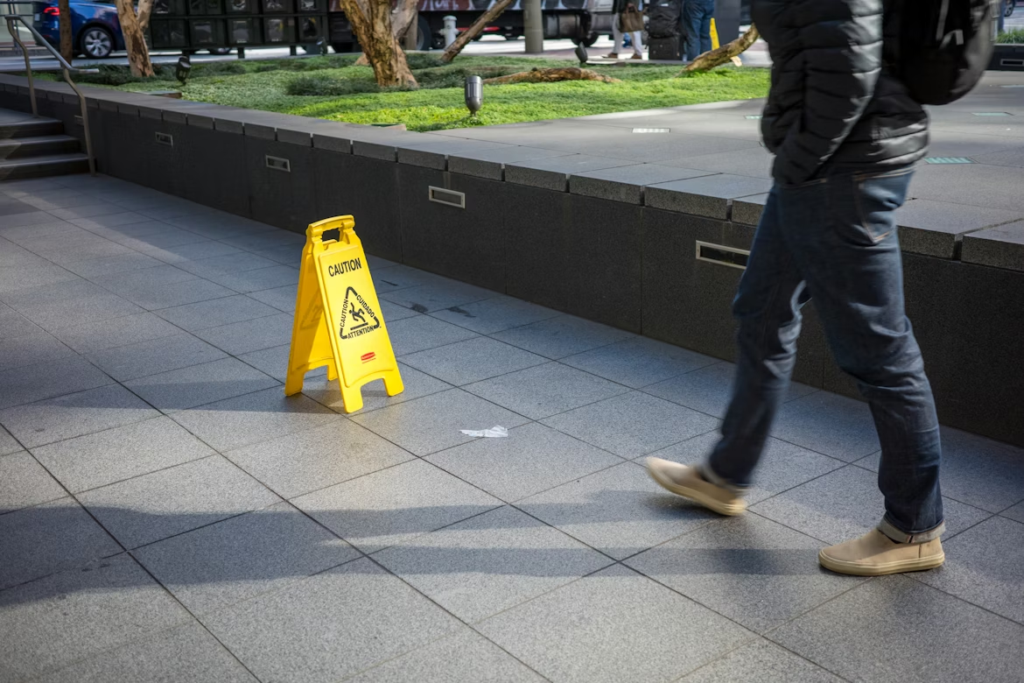
Florida’s modified comparative negligence rule requires courts to assign fault percentages to all parties involved. Common victim conduct that reduces compensation includes distracted walking, inappropriate footwear for conditions, ignoring posted warnings, or entering obviously dangerous areas. Property owners often argue that victims assumed obvious risks, particularly in cases involving weather-related hazards or clearly marked wet areas.
The burden of proof remains on slip and fall victims to establish each element of negligence through clear and convincing evidence. Courts examine whether alternative explanations exist for the accident and whether the property owner took reasonable steps to prevent injuries. Success often depends on demonstrating that reasonable property management would have prevented the dangerous condition entirely.
Common Types of Slip and Fall Injuries and Their Effect on Claim Outcomes
Fractures and broken bones represent the most serious and well-documented slip and fall injuries, particularly hip fractures among elderly victims and wrist fractures from instinctive fall-breaking attempts. These injuries require extensive medical documentation, often involving surgery, rehabilitation, and long-term complications that support significant damage claims. Emergency room records, orthopedic evaluations, and physical therapy documentation create clear injury timelines that courts find compelling.
Traumatic brain injuries from head impacts during falls can have devastating long-term consequences but may be initially underdiagnosed. Concussion symptoms like memory problems, headaches, and cognitive difficulties may not appear immediately, making prompt medical evaluation crucial. These injuries often require neurological testing and expert medical testimony to establish the connection between the fall and ongoing symptoms.
Soft tissue injuries including sprains, strains, and muscle tears are common but more challenging to prove in court. Insurance companies frequently dispute soft tissue claims as exaggerated or pre-existing, making comprehensive medical documentation essential. Physical therapy records, MRI results, and consistent symptom reporting help establish credibility for these less visible injuries.
The severity and permanence of injuries directly impact potential compensation amounts, with cases involving permanent disability, extensive medical treatment, or loss of earning capacity commanding higher settlements. Courts consider medical expenses, lost wages, pain and suffering, and future care needs when calculating damages. Well-documented injuries with clear causation to the fall incident provide the strongest foundation for maximum compensation recovery.
Understanding how Florida courts evaluate evidence, assign fault, and calculate damages provides accident victims with realistic expectations and helps guide critical decisions about case strategy. The state’s emphasis on comparative negligence means that even successful cases require careful attention to victim conduct and property owner duties to maximize potential recovery.