
The Role of Technology in Managing Sleep and Stress

Introduction
Stress and sleep are linked. Chronic stress makes it hard for one to sleep and causes night-time waking as well as poor sleep quality. Lack of sufficient sleep will impact moods, attention spans, and stress levels. With time, technology has advanced, making it possible for people to utilize digital solutions such as smartphones, wearables, apps for sleep, platforms for meditation, and artificial intelligence (AI) to deal with these issues.
While technology cannot take the place of medical assistance, there is scientific evidence showing that well thought-out digital technology can promote good sleep patterns as well as stress relief methods.
Wearable Technology and Sleep Monitoring
Smartwatches and fitness trackers can gather information on sleep, exercise, and heart rate in real-time. There are wearables that calculate sleep duration, sleep time, nighttime wakings, and sleep phases. Such data can help consumers identify patterns that would go unnoticed otherwise.
Studies investigating consumer sleep tracking technology have concluded that sleep information can be provided by both wearable and smartphone sleep trackers, which might be associated with some health effects, such as mood and blood pressure. However, at the same time, limitations of consumer sleep technology accuracy and consistency have been mentioned.
American Academy of Sleep Medicine (AASM) has warned that consumer sleep technology should not be used as a diagnostic instrument for sleep disorders. While the collected data is valuable in addition to clinical assessment, it should not substitute it.
Thus, for consumers, the most important contribution of sleep tracking can be awareness as opposed to diagnosis. Detection of late bedtimes, insufficient sleep or any sleep pattern abnormalities may motivate people to adjust their behavior accordingly.
Sleep Apps and Digital Cognitive Behavioral Therapy
Jessica Shee of Appple.store said, “smartphone apps have increased opportunities for digital interventions aimed at addressing sleep disorders. There are many apps that allow recording of sleep diaries, relaxation techniques, meditation, breathing techniques, reminders, and behavioral programs.”
One of the most significant innovations in this sphere is digital cognitive behavioral therapy for insomnia (CBT-I). CBT-I is a behavioral treatment for chronic insomnia; however, it may not be available due to certain restrictions related to cost, access to a professional who could perform CBT-I, and geography. Digital CBT-I is a way to implement CBT-I in smartphones, computers, or any other digital devices.
In 2025, a systematic review and meta-analysis published in npj Digital Medicine evaluated fully automated digital CBT-I and underlined its possibility to increase access to evidence-based treatments of insomnia. A systematic review that included more than 10,000 people indicated that CBT-based mobile interventions demonstrated some effect in treating insomnia, but researchers noted that the evidence was still quite limited.
Thus, the results of studies indicate that technology can increase access to evidence-informed sleep support especially if digital interventions are evidence-based interventions rather than just sleep advice.
Technology for Stress Management
Dr. Peter Ting of Harley Street Heart & Vascular Centre said, technology can also help to control stress throughout the day. Many mobile applications today provide guided breathing exercises, meditation, mindfulness practices, relaxation exercises, and other kinds of activities aimed at decreasing psychological stress.
Thus, in 2024, a systematic review and meta-analysis of 80 studies on mobile health applications used for stress reduction showed small but significant benefits in terms of self-reported and physiological assessments of stress levels. Interventions based on breathing and muscle relaxation exercises, meditation practices, and personal guidance seemed especially effective.
At the same time, the National Institute of Mental Health notes the use of mobile applications as a new approach to self-management and providing services for stress control, anxiety control, and sleep management. Certain applications may integrate user input with data provided by physiological monitors measuring the pulse and breathing rates.
It provides the possibility of using technology for stress management in everyday life. For instance, if a person feels stressed on a busy working day, he or she may conduct a few minutes’ relaxation through breathing or mind training, not consulting a professional.
Artificial Intelligence and Personalized Support
AI is starting to make an impact on digital health and sleep management. AI can process big data and possibly detect patterns in a person’s sleeping behavior, physical activity, and other health metrics. Future devices will use this information to give recommendations that become even more personalized in the future.
Also, AI technology is used within sleep medicine. As AASM states, there is great potential for using AI to increase efficiency and effectiveness of sleep care, but there are important issues of privacy, fairness, transparency, infrastructure and rapid technological advances to consider.
Personalization might enhance the efficiency of digital interventions. By making digital interventions personalized, the system will be able to understand that some users have problems with regular bed time and some have troubles falling asleep due to stress. However, these interventions must have good clinical validation before they will be used in medicine.
When Technology Becomes Part of the Problem
Technology poses a paradox because the very gadgets meant to promote better sleep and decrease stress may end up affecting these processes negatively.
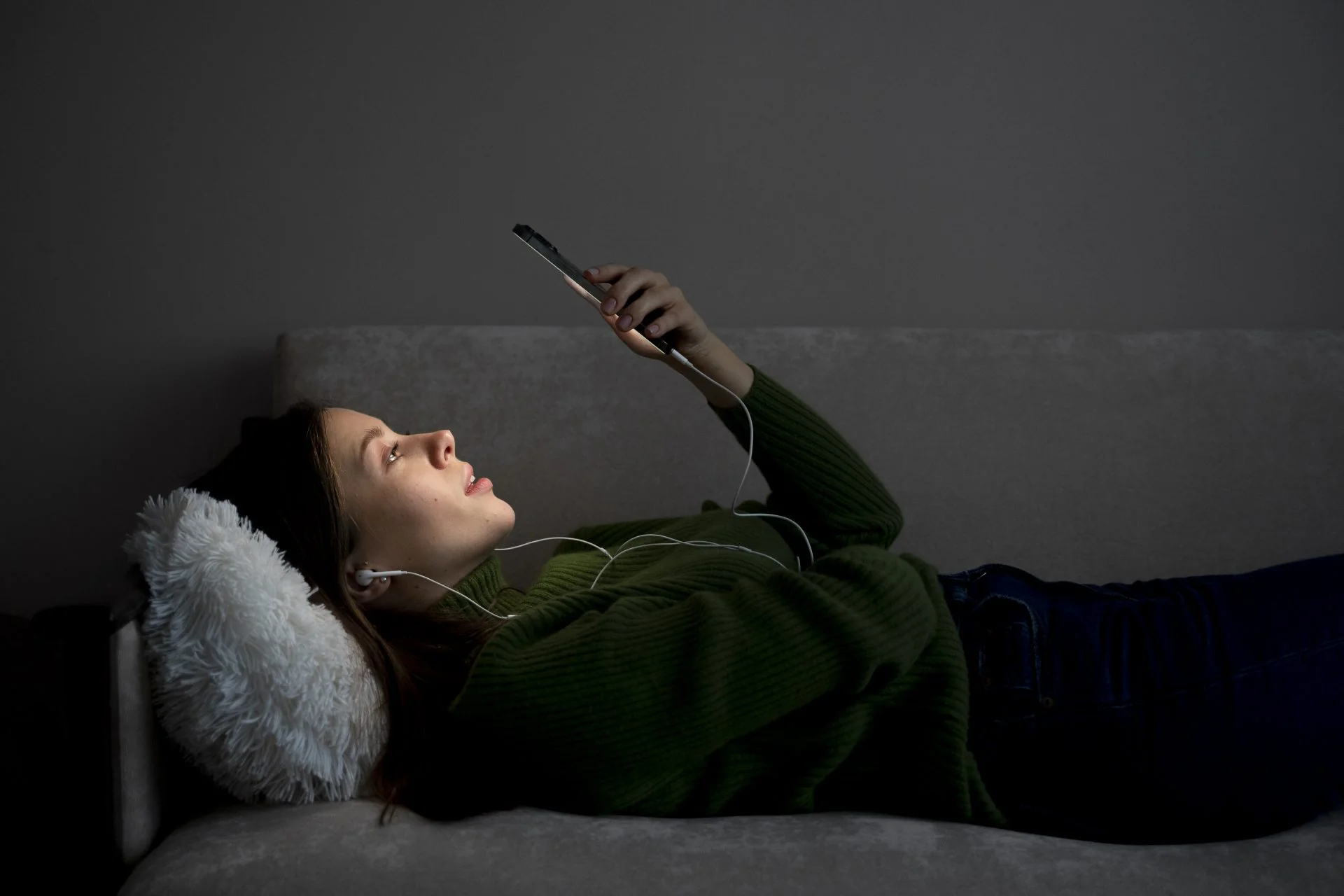
Smartphones, tablets, computer screens, and television may promote late evening use of screens. Similarly, digital media may keep people mentally stimulated at the time when they are supposed to be winding down for sleep. The topic of screen usage, pre-sleep activities, and sleep quality has been examined by research.
In 2024, the National Sleep Foundation developed a consensus statement based on hundreds of empirical and review articles that looked into digital screen use, pre-sleep activities, and screen-based light exposure in their effect on sleep health. Experimental research also found that nighttime usage of smartphones with blue-light exposure may affect sleep timing and alertness.
It is necessary to note that technology usage cannot be viewed in terms of whether it is “good” or “bad.” Timing, frequency, content, and behavior all play a role. Using a guided relaxation exercise may assist in falling asleep, but browsing social media endlessly might hinder it.
Using Technology More Intentionally
The most appropriate strategy is to use the technology as an instrument and not be controlled by it. For instance, instead of getting into the details each night, you can use your sleep tracking device to see the patterns in the long run. Similarly, apps that promote meditation can help you relax regularly without being a new source of notifications for you. You can configure your smartphone with bedtime reminders and decreased notifications.
Research on how to limit the use of devices in the evening proves that the same technology can be employed to regulate technology-related behavior. Specifically, a pilot randomized study conducted in 2025 proved that online intervention targeting reduction of evening device use decreased the use of devices before sleep and improved the sleep-related outcomes. Thus, the goal is not to abandon technology but to create boundaries with it.
The Future of Digital Sleep and Stress Management
Technological approaches are gaining popularity in terms of dealing with sleep and stress management issues today. There are wearables that will increase awareness of sleep patterns, apps to provide relaxation and behavioral intervention, online CBT-I that will give access to the resources necessary to cope with insomnia and even artificial intelligence that will be able to give personalized recommendations.
However, technology should supplement rather than substitute healthy habits and professional help. There are specific disadvantages of consumer sleep tracking devices, and such conditions as persistent insomnia, severe daytime sleepiness and major stress and anxiety problems may need to be evaluated by a healthcare specialist. According to the AASM, consumer sleep technologies are not supposed to be used for diagnosing or treating sleep disorders right now.
In the end, the importance of technology will depend on its implementation. Well-designed and properly applied digital means will allow individuals to monitor their behavior, use stress reduction techniques and change their sleeping habits. However, if it is done in a limitless manner, the same technology will become a source of distraction, late hours and stress. In other words, the development of digital solutions for well-being will be about changing human behavior through technology.
Conclusion
Nowadays, technology has turned into an effective means to deal with sleep and stress problems because it provides additional knowledge, accessibility, and personalization. Various gadgets for sleep monitoring, special applications for meditation and practicing CBT-I, and other advanced technologies can allow a person to have more information about his or her sleep and ways to manage stress. However, technology needs to be applied responsibly since constant screen activities and the need to use various devices may lead to sleep issues and increased stress level. The best way to deal with these problems is to use technology in order to establish appropriate habits but not to rely on it too much.







Comment