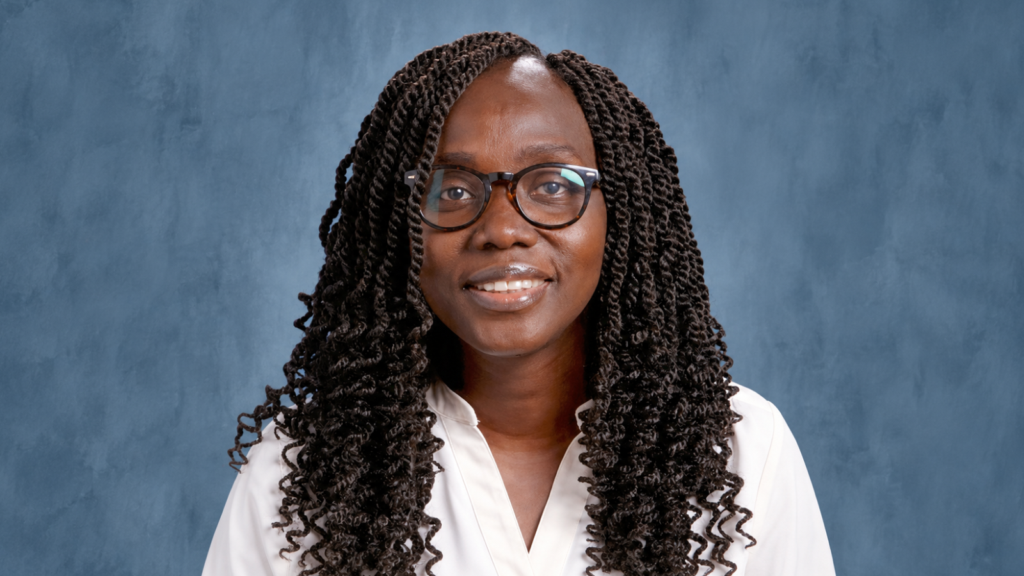
LONDON. A donation of desks and books gives a school something tangible. Patricia Mouboua wants donors to ask a harder question: what changes for pupils after the materials arrive?
Mouboua coordinated education and community activities in Kinshasa between 2018 and 2021 with CIDE RDC Solidarité, a local NGO. She says UK charities, universities and diaspora groups supporting schools in the Democratic Republic of Congo should involve teachers and families when deciding what help a school needs and how to judge its results.
“A desk, a book or a set of school supplies answers an immediate need, but it does not complete the work,” she said. “You still have to ask how the child will be taught, whether the teacher has suitable methods and whether anyone will follow what happens after the distribution.”
Mouboua served as Deputy Provincial Coordinator and later Provincial Coordinator with CIDE before managing its education programme. Her work included visiting schools, identifying needs, coordinating volunteers, mobilising contributions and organising support for classrooms.
Some activities relied on members pooling money and other resources to meet priorities identified by the community. Mouboua said those decisions worked best when the people closest to a school helped set them.
“You cannot design an effective response from a distance and assume every school has the same problem,” she said. “The teachers and families usually know where the pressure is greatest. Our responsibility was to listen, agree on priorities and organise a response that matched the resources available.”
Records from December 2020 document support for a school activity under CIDE’s J’ai mon école programme. Photographs and video from the period show pupils, classroom materials and furniture, with Mouboua taking part as Provincial Coordinator.
She said a handover was often the most visible part of the work, although planning and follow-up mattered as much.
“Community work becomes credible when people know who is responsible, what need is being addressed and how the support reaches the intended pupils,” Mouboua said. “The visible donation is only one stage.”
Her school visits also shifted her attention toward teaching. During education activities, she shared literacy approaches with teachers and pupils and examined how curriculum, assessment and classroom practice affected the use of donated materials.
“Improving the physical classroom matters because children need a safe and appropriate learning environment in which to learn and succeed,” she said. “Lasting progress also depends on what teachers and pupils are able to do in that classroom.”
For organisations funding education projects, Mouboua recommends agreeing with schools on the need before choosing materials. She said partners should discuss how teachers will use the support and return to assess whether pupils benefited.
“I began asking what happened after the photographs were taken,” she said. “Did the pupils use the materials? Did the support make the teacher’s work easier? Did anyone return to the school? Those questions separate a completed distribution from a serious education programme.”
She also cautioned against treating contributions from families and volunteers as a replacement for sustained funding.
“Small contributions do not replace sustained investment,” she said. “They show why local organisation matters. When people share responsibility and keep records, they are better placed to continue useful work and hold partners accountable.”
An April 2021 CIDE publication records the establishment of a local coordination in Kintambo and identifies Mouboua and the Kinshasa team as organisers. She said local structures helped share responsibility and reduced dependence on one person.
Her coordination work faced another test during the COVID-19 pandemic. A CIDE publication dated 1 March 2021 records her participation in a protective-mask distribution at Beach Ngobila, described as the team’s third such exercise. She also appeared as a panellist at a March 2021 conference on women and human development.
“The pandemic forced us to change plans while keeping people informed and responsibilities clear,” she said. “It showed me that community leadership is also about adapting without losing accountability.”
Changes to websites and online services later made some records from that period unavailable. Surviving organisational publications, photographs, video, social media posts and a professional attestation document her role. Mouboua said the experience strengthened her view that organisations should record their decisions, activities and results as the work happens.
“Documentation protects the history of the work and the people who contributed to it,” she said. “It also allows an organisation to examine what worked, explain its decisions and improve the next activity.”
Mouboua has since developed her work in literacy and numeracy, instructional design, teacher professional learning and educational technology. Through Toyekola Elongo, she is exploring how those areas support community-based education.
She says partnerships across countries should give local educators a role in setting priorities, carrying out activities and assessing the results.
“A partnership is stronger when local educators are present when the problem is defined, not only when materials are ready to be distributed,” she said. “They should have a voice in planning, delivery and evaluation.”
“International partners should ask what will remain in the school after the activity ends,” she added. “Resources matter, but so do teacher knowledge, local coordination, documentation and the ability of a community to continue the work.”
A school receives desks, books and supplies. What happens after the handover?
For Patricia Mouboua, who coordinated education and community activities in Kinshasa between 2018 and 2021, the answer depends on whether teachers have the support to use those resources and whether anyone returns to see how pupils are learning.
“A desk, a book or a set of school supplies answers an immediate need, but it does not complete the work,” she said. “You still have to ask how the child will be taught, whether the teacher has suitable methods and whether anyone will follow what happens after the distribution.”
Mouboua worked with CIDE RDC Solidarité, a local organisation that helped schools identify needs and organise community support. She says UK charities and institutions working with schools in the Democratic Republic of Congo should involve teachers and families from the start, when they decide what support a school needs.