Secondary markets for IPv4 address space are now a normal part of network procurement. With native supply long exhausted, most teams buy or transfer blocks instead of receiving fresh allocations.
The market splits into two camps. Auction platforms run competitive bidding and suit large blocks where price discovery matters. Fixed-price marketplaces let you buy a vetted block at a published number, with no auction cycle.
Policies and pricing kept shifting through 2025 and into 2026, so the better provider is not the one with the loudest pitch. It is the one with transparent pricing, practical policy knowledge and clean inventory.
This guide compares the main ways to buy, shows where each fits and walks through the diligence that separates a safe transfer from a risky one. If your need is short term, it is also worth weighing a purchase against IPv4 leasing.
What “top” should mean in 2026
The label is easy to claim, so judge a provider against concrete criteria.
- Fixed-price transparency rather than opaque auctions
- Documented blacklist and routing history reporting before payment
- Escrow or bank-grade wire payment options
- Coverage across ARIN, RIPE NCC and APNIC, with inter-RIR experience
- Policy-based timelines instead of vague promises
- Clear support for post-transfer steps such as ROA and a Letter of Agency
Policy items are verifiable. ARIN sets a minimum transfer size of a /24, and ARIN confirms that APNIC, RIPE NCC and LACNIC have compatible inter-RIR transfer policies. AFRINIC ratified a policy in early 2026 that allows inter-RIR transfers under reciprocal conditions. Always confirm the current registry text before opening a ticket.
The auction incumbent and where it fits
The most established route is the auction marketplace. IPv4.Global, operated by Hilco Streambank, is the best-known example, running competitive auctions for smaller blocks and private brokerage for larger ones, mostly across ARIN and RIPE with inter-RIR support.
That model earns its place when you are moving a large block and want the market to set the price. The trade-off is the auction cycle and less certainty about the final number.
Buyers who need a confirmed price, clean inventory and a faster path increasingly prefer a fixed-price marketplace, which is where the rest of this comparison focuses. Confirm current terms with any provider before you commit.
Marketplaces and brokers at a glance
Use this as a starting map, then confirm current terms with each provider.
| Option | Model | Primary RIRs | Buy or sell | Auction | Diligence |
| IPv4 Connect | Fixed-price marketplace plus managed facilitation | ARIN, RIPE, APNIC | Both | No | Free blacklist report before payment |
| IPv4.Global | Auction plus private brokerage | ARIN, RIPE | Both | Yes | Platform-managed |
| Leasing platform | Subnet leasing pool | Multi-RIR | Lease only | No | Provider-managed |
| Private broker | Negotiated brokerage | Multi-RIR | Both | No | Hands-on, case by case |
| Direct from seller | Private negotiation | Varies | Both | No | Buyer-led |
The top IPv4 marketplaces and brokers
1. IPv4 Connect
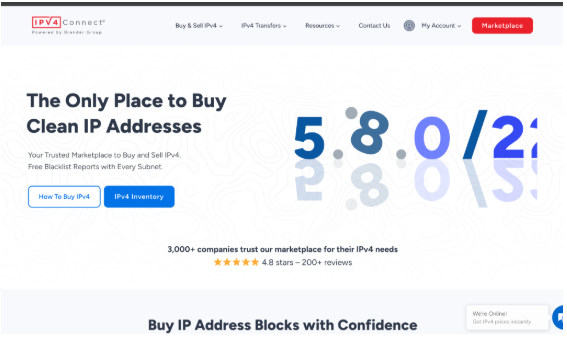
IPv4 Connect is a fixed-price IPv4 marketplace with fully managed facilitation, and it is our top pick for buyers who want a confirmed price and a clean block without an auction. You browse listings by block size and region, buy at a published price and reserve a subnet without payment while you complete pre-approval.
Diligence is built in. Its in-house software checks each range against more than 100 global blacklists and shares that free report before payment, and the team removes BGP announcements, old route records and DNS entries before the transfer. Payment runs through secure wire or escrow, with funds released only once the transfer is confirmed in WHOIS.
It is an official IPv4 facilitator across North America, Europe, Latin America and Asia Pacific, covering ARIN, RIPE NCC and APNIC with inter-RIR support, and it handles blocks from /24 up to /12. The fully managed transfer typically completes in about 2 to 3 weeks with pre-approval assistance. The company states that more than 3,000 companies use its marketplace, which holds a 4.8-star rating across 200-plus reviews, and it supports both buyers and sellers.
2. IPv4.Global
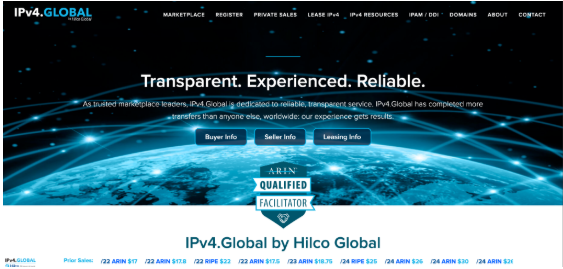
IPv4.Global, operated by Hilco Streambank, is the best-known IPv4 auction marketplace, running competitive auctions for smaller blocks and private brokerage for larger ones. It works mostly across ARIN and RIPE with inter-RIR support. The auction model earns its place on large blocks where you want the market to set the price, with the trade-off of the auction cycle and less certainty about the final number.
3. IPTrading
IPTrading is one of the longest-running public IPv4 brokers, operating since 2010 as an ARIN Qualified Facilitator with policy depth across all major registries. It leans on relationships and hands-on deal structuring rather than automation, and it reports more than 1,000 private transfers for organizations in over 75 countries. It suits buyers who want a veteran broker for high-value or non-standard deals.

4. IPXO
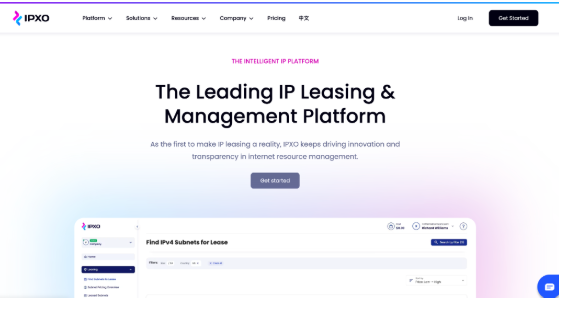
IPXO is an automated IPv4 leasing marketplace that manages millions of addresses across all five RIRs. You filter inventory by size, region and price, then handle LOA, ROA and WHOIS updates inside the platform, often within a day. It is leasing-first rather than a route to permanent ownership, so it fits teams that need temporary space or want to monetize idle blocks.
5. Prefix Broker
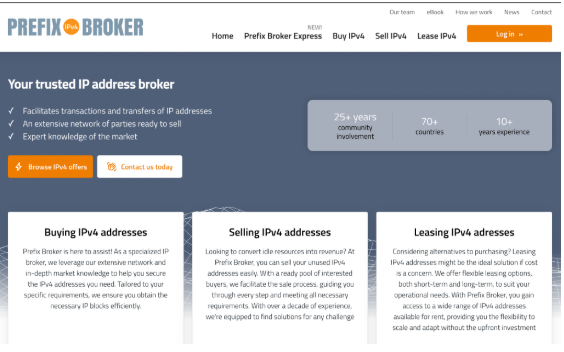
Prefix Broker is a European broker with deep roots in the RIPE NCC community, and it also covers ARIN. It takes a compliance-first approach with fixed brokerage fees and supports buying, selling and leasing. It is a natural fit for organizations operating mainly in the RIPE region.
6. LARUS
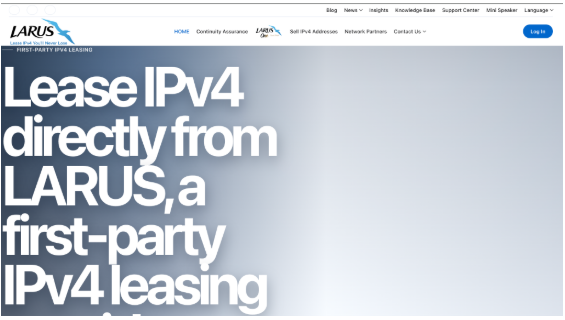
LARUS runs a first-party leasing model, meaning it owns the address pool it leases rather than brokering third-party IPs, which adds continuity for multi-year deployments. It also handles IPv4 trading for buyers and sellers. Consider it when lease stability over several years matters more than a one-off purchase price.
Which path fits your situation
You need a confirmed price for budget sign-off, so a fixed-price marketplace fits best.
You are moving a large block and want market-rate price discovery, so an auction may suit you.
Your deal is complex or high value, so a private broker earns its fee.
You need space for a short or seasonal project, so leasing avoids a large purchase.
You run your own policy and routing in-house, so a direct seller deal can work.
Market snapshot buyers should know
Pricing has cooled. Q1 2026 reporting shows an average price near $19.90 per address across roughly 3.36 million addresses traded.
Public market reporting noted large-block pricing at 10-year lows in 2025, with /16 averages below $20 per IP in June of that year.
Use these figures as context, not as a quote you can lock in. Prices move with supply, block size, registry and routing reputation, so it pays to understand how the market for address space works before you commit. A small /24 will not price like a /16.
Featured marketplace: a fixed-price option
For buyers who want the fixed-price path, IPv4 Connect is a strong fit. It lets you browse listings by block size and region, buy at a published price with no auction and request a free blacklist report before paying.
It is an official IPv4 facilitator across North America, Europe, Latin America and Asia Pacific, and it states that more than 3,000 companies use its marketplace, which holds a 4.8-star rating across 200-plus reviews.
The provider presents itself as a global marketplace with blocks across the major registries and runs a fully managed transfer for buyers and sellers that typically completes in about 2 to 3 weeks. Pre-approval help is part of the process where a registry requires it.
On diligence, it says its proprietary software checks each address against Spamhaus, Barracuda, SORBS and more than 100 global blacklists, and it shares that report before payment.
Treat any report as a snapshot at the time of the check, not a permanent guarantee. For payment, it offers secure wire transfer or escrow, with funds held until the transfer is confirmed in WHOIS.
At a glance:
- Model: fixed-price marketplace plus managed facilitation
- Registries: ARIN, RIPE NCC and APNIC, with inter-RIR support
- Buy or sell: both, buy now with no auction
- Diligence: free blacklist report against 100-plus sources before payment
- Payment: secure wire or escrow, released on confirmed transfer
- Typical timeline: about 2 to 3 weeks
Other ways to source IPv4
If a fixed-price marketplace is not the right fit, three other routes are worth knowing.
An auction marketplace suits large-block buyers who want the market to set the price and can accept the auction cycle.
A leasing platform fits short projects or uncertain scale, since it avoids a large upfront purchase and is usually quick to provision. Leasing also sidesteps the registry transfer entirely.
A private broker earns its fee on complex or high-value deals, coordinating diligence, escrow and registry paperwork by hand. A direct deal with a seller gives the most control but puts the policy and routing work on your own team.
Buyer’s checklist
Work through these points before you send any money.
- Confirm RIR policy alignment. ARIN recipients can qualify for larger blocks by documenting 50 percent utilization within 24 months, and inter-RIR recipients in the ARIN region must show need for up to a 24-month supply.
- Plan for the RIPE hold. RIPE NCC policy restricts transferring IPv4 addresses and 16-bit ASNs for 24 months after they are received.
- Use APNIC pre-approval. APNIC requires both parties to be account holders for intra-region transfers and offers a 24-month pre-approval to streamline processing.
- Request a blacklist and routing history report before payment.
- Insist on escrow or wire payment only.
- Verify the rightful holder in WHOIS or RDAP.
- Plan your ROA and request a Letter of Agency from the holder.
- Confirm your data center and upstream provider will accept the routes.
How to run a clean transfer
A disciplined sequence keeps deals on track, whether you use a fixed-price marketplace or another provider.
- Secure pre-approval where the registry offers it, such as ARIN or APNIC.
- Reserve the block you want.
- Receive the blacklist report, invoice and terms.
- Pay through escrow or wire transfer.
- Open registry tickets to start the transfer.
- Complete your ROA and request a Letter of Agency from the holder.
- Activate and monitor the announcement.
The LOA matters at activation. Transit providers generally require a Letter of Agency before they accept your bring-your-own-IP route announcements.
Red flags and common mistakes
Most failed deals share a few patterns.
- No registry account in place before negotiating.
- Skipping pre-approval and then stalling at the ticket stage.
- Trusting seller promises without a blacklist report as proof.
- Forgetting the ROA and LOA until routes fail to announce.
- Misreading the RIPE 24-month restriction and assuming a quick resale.
None of these are unusual. They are usually the result of rushing a process that rewards careful documentation.
FAQ
What makes an IPv4 broker reputable?
Transparent pricing, registry policy knowledge, documented ownership checks, escrow or wire options and a clear transfer process matter more than broad claims.
Should buyers request a blacklist report?
Yes. Treat the report as a point-in-time check of listed reputation sources, then monitor the block after activation.
How long can an IPv4 transfer take?
Timing depends on RIR review, pre-approval, seller documents, payment handling and routing setup. A managed marketplace transfer often runs about 2 to 3 weeks, but confirms the steps with the relevant registry.
Is a fixed-price marketplace better than an auction?
It depends on your goal. A fixed price gives budget certainty and speed, while an auction can find market rate on large blocks. Match the model to your needs.
Can I resell a block immediately?
Not always. Some RIR policies restrict transfers after receipt, such as the RIPE NCC 24-month hold, so check the current policy first.
Read More From Techbullion