
Beyond the Spreadsheet: How AI and the Cloud Are Making Supply Chains Proactive, Not Reactive

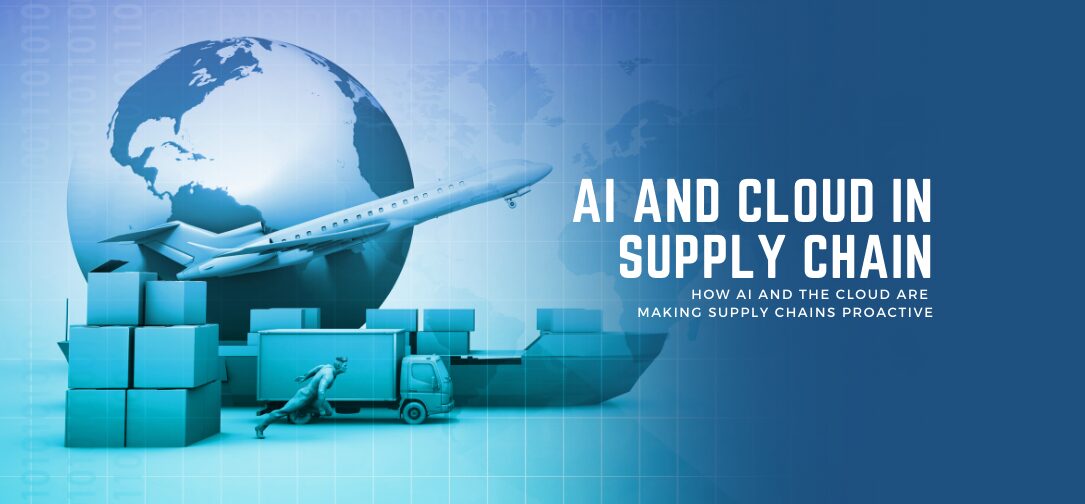
When you look at today’s supply chain networks, they face constant disruption from economic volatility and also from increasing demands for sustainability. When you want to tackle these, the more traditional software lacks the agility to manage the complex problems, which can lead to unexpected costs and inefficiencies. One way to look forward is a shift to cloud-native solutions, which offers a fundamental change in the way we envision supply chain and it helps unlock various benefits including scalability, visibility, and intelligent, proactive decision-making that can help companies thrive in a competitive environment. In this article, we look at what are these problems and understand how modern cloud platforms solve these legacy challenges and drive tangible business value.
The Current Challenges
Supply chain networks keep evolving. Today’s supply chain networks operate in an environment of constant change and unpredictability. Now more often than before, it’s no longer about managing a predictable flow of goods, but rather, it’s about navigating a complex web of interconnected challenges. Some of these challenges are listed below.
The Problem of Persistent Disruptions
Disruptions have become a constant operational reality. From my experience building at-scale systems, I know that legacy platforms are usually designed for a “happy path” of stability. They tend to lack architectural flexibility. Examples include a sudden trade dispute, a key port shutting down, or even a natural disaster. These systems are often brittle and when commodity prices swing wildly because of geopolitical uncertainty, the planning and procurement systems built on top of them start to crumble. The legacy platforms were built to react, but the speed of modern disruption means that by the time you’ve reacted, you’ve already lost.
The Problem of Economic Headwinds
After the boom of the post-covid economy settled, there has been a constant economic squeeze. We’re now seeing rising costs for everything from materials to freight. The idea of offsetting this with incremental productivity gains will only take you so far because these economic squeeze are expected to last a while. When inflation is high for example, you can’t just tweak the old system for a 2% gain; you need a major improvement in efficiency. This reality forces a move away from legacy systems and toward new, technology-driven solutions just to remain competitive.
The Problem of Data Fragmentation
From my perspective, this is the root of all the other problems. I’ve seen how a company’s most critical data is fragmented across dozens of systems: ERPs, warehouse management platforms, and even countless spreadsheets that act as a poor substitute for a real database. Oftentimes, there is no single source of truth, no unified data model.
Although you may be attempting to achieve end-to-end visibility, your data is essentially a collection of inconsistent, out-of-sync caches. With this discrepancy, making a critical, real-time decision is impossible. This forces planners to guess, and in a large scale system, guesswork always leads to either costly overstocks or stock-outs.
The Problem of Evolving Demands
Consumer habits keep evolving. Customers and regulators require everything from rapid, same-day fulfillment on one side to provable ethical sourcing and full traceability to another. Legacy systems, which were designed to track cost and basic inventory, don’t have the data management capabilities to handle these new demands. Bolting on these features is not a viable long-term strategy.
The Problem of Cybersecurity
As we’ve connected our supply chains, we’ve exponentially increased the attack surface. Any interconnected system is a target. A single breach in a supplier’s network can cascade through the entire ecosystem, leading to data theft and operational paralysis. In today’s environment, building on a foundation that wasn’t designed with modern, zero-trust security principles in mind is an unacceptable risk.
The New Way: Cloud-Native Solutions as an Answer
Now that we know about these deeply entrenched problems, let’s talk about a new generation of cloud-native supply chain solutions that have emerged. These solutions aren’t just patches on an old system but they are designed from the ground up to address the modern challenges we’ve discussed above with intelligence and agility.
The Shift to Intelligent Operations
Powered by a strategic integration of Artificial Intelligence (AI), Machine Learning (ML), and even Generative AI, the new approach is all about moving from being reactive to being proactive. Generative AI is the talk of the town and using these technologies, we can automate mundane tasks, drive predictive analytics to forecast issues before they happen, and provide adaptive, data-driven recommendations. As an example, AI and ML can help identify the most resilient suppliers and mitigate risks, thereby turning a potential disaster into a manageable event. Generative AI can even streamline operations by answering complex supply chain questions in plain English, reducing manual effort and speeding up decision cycles.
Core Benefits of Cloud Adoption
More often than not, the cloud provides the perfect foundation for a modern supply chain. It offers the agility and scalability needed to handle today’s volatility without a massive upfront investment. Instead of building costly data centers and even costlier maintenance, businesses can pay only for the resources they use, adapting quickly to changing market conditions. This sort of agility allows companies to innovate faster and get new products to market more rapidly. The most advanced cloud technologies also provide robust, built-in security measures and compliance standards, which provide the peace of mind that a digitally transformed supply chain needs.
A Closer Look: How Cloud-Native Capabilities Solve Problems
Modern cloud applications are purpose-built to tackle the intricate problems of supply chain management head-on. They do this by unifying data, using machine learning for actionable insights, and fostering seamless collaboration.
Solving the Problem of Data Fragmentation with a Unified Data Lake
The fundamental answer to data fragmentation is a centralized, unified data lake. In my experience, without this, every other effort will fail. This is why platforms like AWS Supply Chain are built around this very concept: creating a single source of truth by ingesting and harmonizing data from dozens of scattered systems.
These platforms have advanced data ingestion capabilities. They can pull data from existing systems like SAP S/4HANA, process electronic messages (EDI), and even ingest data from simple cloud storage buckets like Amazon S3. The magic lies in the intelligent unification process. Instead of rigid, manual integration, these solutions use machine learning and natural language processing to understand, extract, and transform incompatible data into a unified model. Some even use generative AI to automatically map and ingest data, drastically reducing the manual effort that used to be a major bottleneck. The result is a harmonized data foundation that enables a true end-to-end view of the supply chain, which is essential for accurate forecasting and resilient operations.
The unified data lake is organized around a comprehensive data model. This model defines the structure, relationships, and meaning of every piece of data—from master data like product and site to transactional data like inbound_order and inv_level. This structured approach ensures data quality and allows for sophisticated analytics. It’s the blueprint that transforms a pile of data into a powerful, usable asset.
Solving the Problem of Reactive Decision-Making with Intelligent Insights
Once there is a clean, unified data set, you can start doing something truly powerful with it. This is where Cloud-native solutions come to leverage machine learning to move from a reactive to a proactive state.
For example, solutions like AWS Supply Chain have a feature that automatically analyzes data from the unified data lake to generate insights into potential risks—like an impending overstock or a critical stock-out. These insights are often presented on an intuitive visualization map, making complex, real-time inventory health data easy to understand at a glance. You can see, for instance, which locations are at risk of a stock-out and act immediately, before the issue escalates.
These solutions go beyond simple alerts. They can apply machine learning models to generate more accurate vendor lead-time predictions, allowing planners to abandon outdated, static assumptions. This continuous learning process refines recommendations over time, ensuring your planning models are always based on the most current and accurate information
Solving the Problem of Inefficient Planning and Limited Collaboration
Siloed data and manual processes often make planning inefficient and collaboration difficult. Cloud-native solutions tackle these issues head-on.
They provide robust planning capabilities that generate more accurate forecasts and adapt to dynamic market conditions. A key concept in some of these solutions, such as AWS Supply Chain, is “Forecast Value Add” (FVA), a metric that measures the distinct effectiveness of both machine-generated forecasts and human adjustments. This helps teams understand exactly where they are adding value and where they might be creating noise, allowing for continuous process improvement.
To address the problem of limited visibility, many of these platforms offer an “N-Tier Visibility” feature that extends the view of the supply chain to external partners. This enables real-time collaboration with suppliers, helping to confirm orders and proactively identify material shortages across the entire network. Complementing this, built-in collaboration tools allow teams to chat and message each other directly within the platform, where risks and recommended actions are presented. This reduces communication errors and delays, helping teams reach consensus and implement plans much faster.
Solving the Problems of Sustainability and Manual Data Interaction
With increasing global focus on environmental responsibility, and the need for more intuitive data interaction, modern supply chain solutions integrate dedicated features for sustainability and generative AI.
Cloud-native solutions often include features to securely and efficiently collect auditable environmental and social governance (ESG) data from a supplier network, transforming a compliance burden into a data-driven capability. Furthermore, interactive generative AI assistants, such as those found in platforms like AWS Supply Chain (e.g., Amazon Q), analyze data in the unified data lake and provide important operational insights. Their purpose is to simplify finding answers to complex supply chain questions by allowing non-technical users to query data in natural language, significantly reducing reliance on specialized data scientists and accelerating decision-making.
Conclusion: The Future is Intelligent, Integrated, and Resilient
In conclusion, the complexities of the modern supply chain demand a shift from traditional and often fragmented approaches to intelligent, integrated, and resilient operations. Cloud-native applications are built to address these challenges head-on.
By unifying a disjointed data into a comprehensive data lake, all while leveraging advanced machine learning and generative AI for predictive insights and automation, and fostering seamless collaboration across the entire network, these cloud native solutions empower businesses to make faster, more informed decisions. The foundational work on data lakes, APIs, and data models is not just a static technical achievement; it is the enabling platform for continuous innovation in supply chain intelligence. These solutions position enterprises to leverage future technologies like advanced AI and IoT for truly autonomous operations.






Comment