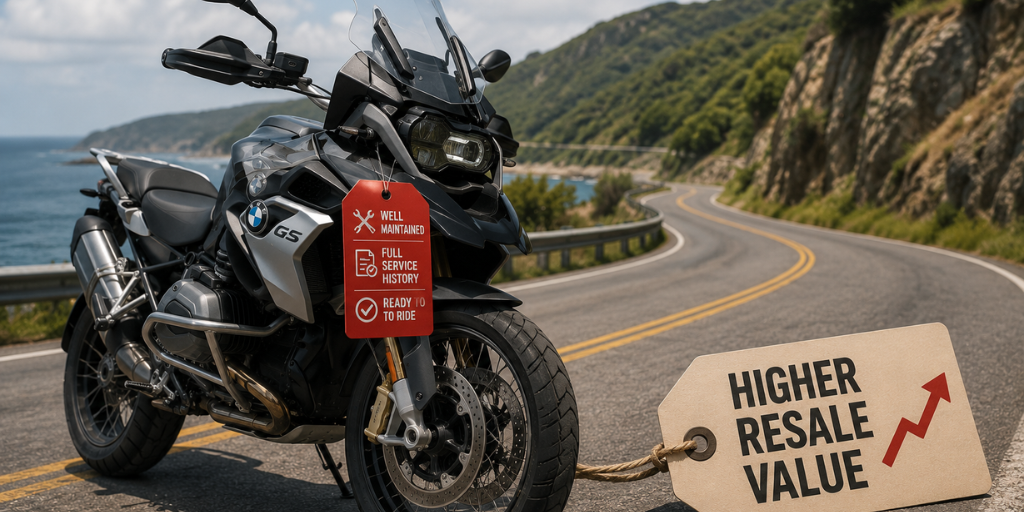
The biggest mistakes include skipping scheduled services, delaying valve inspections, neglecting final drive maintenance, ignoring software updates, using poor-quality replacement parts, and failing to keep service records.
Buyers and BMW motorcycle dealers in Florida often value a well-maintained motorcycle with complete documentation over one with lower mileage but an uncertain maintenance history.
BMW motorcycles have earned a reputation for exceptional engineering, long-distance comfort, and impressive durability. That’s one reason they continue to hold their value better than many other motorcycles. However, resale value isn’t determined by the BMW badge alone.
As BMW motorcycle dealers in Florida, we’ve evaluated motorcycles that looked nearly identical on paper but differed by thousands of dollars in trade-in value. Surprisingly, mileage wasn’t always the deciding factor.
The difference was almost always maintenance.
If you’re planning to sell your BMW in the future or simply want to protect your investment, here are the maintenance mistakes we see most often and why they matter to buyers.
Skipping Scheduled Valve Inspections
One of the most common mistakes owners make is postponing valve clearance inspections because the motorcycle still feels perfectly normal.
BMW engines are designed to last, but they’re also engineered around scheduled maintenance. Valve inspections aren’t optional recommendations—they’re part of keeping the engine performing as intended.
When buyers or dealerships discover there’s no documentation for a major valve service, they immediately begin calculating the cost of completing it themselves. That uncertainty often reduces the motorcycle’s resale value.
From our experience, documented maintenance creates far more confidence than simply saying the motorcycle “runs great.”
Assuming the Shaft Drive Never Needs Service
Many riders purchase a BMW specifically because of its shaft-drive system.
Unfortunately, some interpret “low maintenance” as “maintenance free.”
During inspections, we always review final drive service history. Fluid changes, seal condition, bearing wear, and leaks all help us understand how well the motorcycle has been maintained.
A neglected final drive can become one of the most expensive repair concerns on a used BMW, making buyers far more cautious during negotiations.
Ignoring Software Updates
Modern BMW motorcycles rely on sophisticated electronics.
Ride modes, ABS Pro, Dynamic Traction Control, TFT displays, cruise control, and electronic suspension all depend on software working correctly.
Many owners don’t realize that manufacturers periodically release software updates to improve performance, reliability, and system functionality.
When a motorcycle has documented software updates completed during regular servicing, buyers see it as evidence that the motorcycle received professional care throughout its life.
In today’s market, electronic maintenance is becoming almost as important as mechanical maintenance.
Waiting Too Long to Fix Small Problems
One of the easiest ways to reduce resale value is allowing small issues to accumulate.
A weak battery.
A leaking fork seal.
An ABS warning light.
A minor oil seep.
Individually, these problems may seem insignificant.
Collectively, they suggest deferred maintenance.
As dealers, we’ve learned that buyers notice these details immediately. They begin wondering what other maintenance may have been postponed.
Addressing small repairs early usually costs far less than allowing them to affect buyer confidence later.
Choosing Cheap Replacement Parts
BMW motorcycles occupy the premium end of the motorcycle market.
Because of that, buyers expect premium maintenance.
Installing low-cost brake pads, filters, electrical components, mirrors, or controls may save money in the short term, but it can negatively affect resale value.
Buyers often recognize inexpensive replacement parts and may question whether other maintenance decisions were made the same way.
Using genuine BMW components or reputable aftermarket brands helps preserve confidence during resale.
Failing to Keep Maintenance Records
One statement we hear regularly is:
“I changed the oil myself.”
There’s absolutely nothing wrong with owner-performed maintenance.
The problem arises when there’s no documentation.
Receipts, service dates, mileage records, and notes about the work completed help establish credibility.
Without documentation, buyers have little evidence that recommended maintenance actually occurred.
When comparing two similar motorcycles, complete records almost always make one stand out.
Overlooking Annual Service Because Mileage Is Low
Another common misconception is that maintenance depends only on mileage.
Many BMW owners ride relatively few miles each year.
Even so, fluids continue to age. Brake fluid absorbs moisture. Engine oil degrades over time. Batteries slowly discharge, and seals can deteriorate during long periods of storage.
Annual maintenance remains important even if the motorcycle spends much of the year in the garage.
Ignoring time-based service intervals often becomes apparent during dealership inspections.
Poor Long-Term Storage Habits
Storage practices can have a surprising impact on resale value.
We’ve inspected motorcycles with extremely low mileage that required significant work because they sat unused for years.
Old fuel, flat-spotted tires, corroded battery terminals, moisture buildup, and neglected rubber components are all common problems associated with improper storage.
Ironically, a regularly ridden BMW with documented maintenance is often a better purchase than one that has barely been used.
Heavy Performance Modifications
Many owners assume performance upgrades automatically increase value.
That’s rarely the case.
Aftermarket ECU tuning, loud exhaust systems, suspension modifications, or extensive electrical accessories may appeal to certain riders, but they also reduce the number of potential buyers.
Most dealerships prefer motorcycles that remain close to factory specifications because they’re easier to evaluate and appeal to a broader audience.
If modifications have been made, retaining the original components can help preserve resale value.
Key Takeaways
- Scheduled valve inspections are critical for preserving resale value.
- Final drive maintenance should never be overlooked.
- Software updates are becoming increasingly important on modern BMW motorcycles.
- Small repairs should be addressed before they become larger concerns.
- Quality replacement parts inspire greater buyer confidence.
- Complete service records often matter more than low mileage.
- Annual maintenance remains important even for motorcycles ridden infrequently.
- Stock or lightly modified motorcycles generally appeal to more buyers.