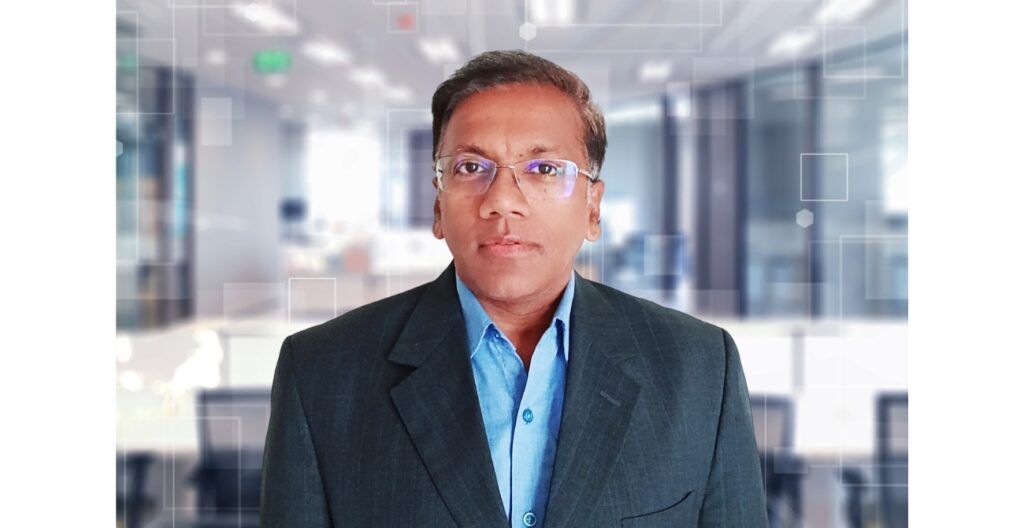
In an era where cloud computing and AI are redefining enterprise technology, innovators like Suresh Pairu Subramanyam are architecting the digital infrastructure powering Fortune 500 companies. With over two decades of global experience, Suresh has led large-scale cloud migrations, AI-driven data strategies, and secure DevOps transformations—fundamentally reshaping how businesses harness data to gain a competitive advantage.
Suresh’s journey began with a relentless drive to solve complex problems through code. Starting as a software engineer, he quickly advanced into enterprise architecture and cloud innovation, recognizing the transformative potential of modernizing legacy systems. His leadership has been instrumental in re-engineering core platforms in the financial sector, most notably overhauling card processing systems using microservices and cloud-native architectures. These initiatives enabled real-time processing, enhanced security, and seamless digital integration.
He also spearheaded the development of AI-powered analytics pipelines on Microsoft Azure, covering raw data ingestion to predictive modeling. These solutions utilized services such as Azure Data Factory, Azure Machine Learning, Databricks, and Synapse. As a result, model deployment and training were automated, reducing operational costs by millions and enabling real-time enterprise decision-making.
Today, Suresh’s expertise in data architecture, DevSecOps, and Agile leadership continues to shape how organizations convert raw data into strategic intelligence, demonstrating that the highest purpose of technology lies in empowering insight and impact.
Revolutionizing Enterprise Tech: Cloud and Data Modernization
Suresh’s approach to digital transformation is rooted in three pillars: scalability, automation, and cross-functional collaboration. For example, he architected an Azure Data Factory solution for a global energy client that automated ETL processes, reducing manual intervention by 75% and saving $2M annually. By leveraging dynamic pipelines and AI-driven data mapping, the team transformed siloed datasets into actionable insights in near real-time.
He also provided strategic guidance to investment management organizations, leading the migration from legacy monolithic systems to cloud-native microservices. This transformation improved system resilience and reduced feature deployment cycles from weeks to hours. Key to this success was integrating infrastructure-as-code using Terraform and fostering a DevOps-first culture across teams.
Beyond Technology: Agile Leadership and Pair Programming
At a leading investment firm, Suresh introduced mandatory pair programming for critical modules, which resulted in a 25% reduction in production defects within six months. This practice also fostered a culture of mentorship—junior developers paired with senior architects, accelerating onboarding by as much as 40%.
At a major U.S. healthcare organization, Suresh coached a 50-person engineering team in adopting Scrum@Scale. By aligning sprints with business KPIs, the team delivered a customer analytics platform 30% ahead of schedule. These results reflected his belief that process discipline, combined with cultural buy-in, drives transformative results.
The Future of AI and Cloud
Looking ahead, Suresh sees the convergence of edge computing and AI-as-a-Service (AIaaS) as the next frontier. He is currently prototyping AI-at-the-edge solutions using Azure Percept and PyTorch to support predictive maintenance in manufacturing. These systems are designed to reduce unplanned downtime by 15% by enabling IoT devices to run machine learning models locally.
Suresh’s team is also exploring LLM-powered chatbots to automate DevOps functions—resolving Tier-1 support tickets and moving toward a zero-ops infrastructure. His vision is one where AI not only accelerates development but autonomously optimizes cost, security, and reliability across cloud environments.
A Global Lens: Insights from Three Continents
Suresh’s cross-continental career—from Australia to India to the United States—has enriched his technical and leadership toolkit. In Australia, his work prioritized compliance and scalability in regulated industries. In India, he led high-throughput agile teams delivering cost-effective, performance-optimized solutions. In the U.S., he operated at the cutting edge of enterprise-scale cloud adoption, driving product-centric thinking.
One example: in India, Suresh led engineering teams delivering multiple client projects under tight constraints. These experiences later informed his work at a U.S. financial firm, where he applied progressive web app (PWA) principles to users and assets onboarding, boosting completion rates by 20%.
At a Leading healthcare organization, he embedded HIPAA-compliant encryption in CI/CD pipelines to ensure security without compromising speed. Australia’s startup ecosystem, in contrast, reinforced his commitment to experimentation—an ethos he now brings to Fortune 500 clients adopting AI MVPs. His global experience informs architectures that are globally scalable yet locally adaptable.
Cybersecurity and DevOps: A Unified Model
Suresh emphasizes that cybersecurity is non-negotiable in DevOps. At a major financial firm, he led the adoption of CyberArk for Privileged Access Management (PAM), eliminating hard-coded secrets, password rotation and reducing the attack surface by 60%. He also introduced automated security gates in Jenkins CI pipelines, integrating static code analysis tools like Checkmarx to block deployments with vulnerabilities.
The secure DevOps framework Suresh advocates includes:
- Shift-left security: Incorporating threat modeling into sprint planning.
- Zero-trust pipelines: Enforcing artifact signing and SBOMs (Software Bill of Materials).
- Runtime protection: Leveraging Azure Defender for real-time detection.
- Compliance-as-code: Implementing Open Policy Agent (OPA) to enforce policy consistency.
This approach has helped teams release software faster, with dramatically fewer vulnerabilities, striking the ideal balance between speed and security.
Mentorship and Multiplier Impact
According to Suresh Pairu Subramanyam, effective tech leadership means mastering fundamentals before driving disruption. He prioritizes mentorship, coaching engineers not just in technology but also in communication, decision-making, and postmortem analysis. His belief is simple: progress beats perfection.
Suresh launched an internal “Cloud Guild” program where senior architects mentor junior staff through certification bootcamps. One protégé even became the youngest Azure Solutions Architect in the company within a year. He views leadership not as personal success, but as the ability to multiply excellence across teams.
Suresh Pairu Subramanyam believes that the future belongs to those who build bridges between data and decisions, between code and commerce, and between today’s constraints and tomorrow’s opportunities. His work continues to shape the future of enterprise technology, where systems are not just smart but also scalable, secure, and human-centric.