Steel is one of the most recycled materials in the world, and for good reason. It is strong, abundant, and valuable enough that recovering it makes economic sense at scale. Steel recycling has been a core part of the metals industry for well over a century, and today it plays a central role in how construction, manufacturing, and infrastructure projects source their materials.
Understanding how steel recycling works, who participates in it, and why it matters helps businesses, contractors, and facility operators make better decisions about the scrap metal they generate.
Why Steel Is One of the Most Recycled Materials on Earth
Unlike many materials that degrade during the recycling process, steel loses none of its structural properties when it is melted down and recast. A steel beam made from 100% recycled content performs identically to one made from virgin ore. This is the core reason steel recycling rates are higher than almost any other material across both commercial and consumer streams.
Steel is also magnetic, which makes it easier to separate from mixed waste streams using industrial magnets. That separability lowers the cost of recovery and makes steel recycling viable even in complex waste environments where other materials are harder to isolate.
The result is a recycling loop that is both well established and genuinely efficient. Steel from demolished buildings, decommissioned equipment, retired vehicles, and industrial scrap moves into the recycling stream and comes back as structural steel, sheet metal, pipe, rebar, and hundreds of other products.
What Goes Into Steel Recycling
Steel recycling starts with collection. Scrap metal is gathered from a wide range of sources and brought to processing facilities where it is sorted, prepared, and sold to steel mills that melt it down for reuse.
Sources of Recyclable Steel
The supply of material for steel recycling comes from three primary categories.
Home scrap is generated within steel mills themselves, from trimmings, off-cuts, and production waste. This material never leaves the plant and feeds directly back into production.
Industrial scrap comes from manufacturing operations, fabrication shops, construction sites, and industrial facilities. This includes cut-offs from structural steel fabrication, stamping waste from automotive plants, and surplus material from infrastructure projects.
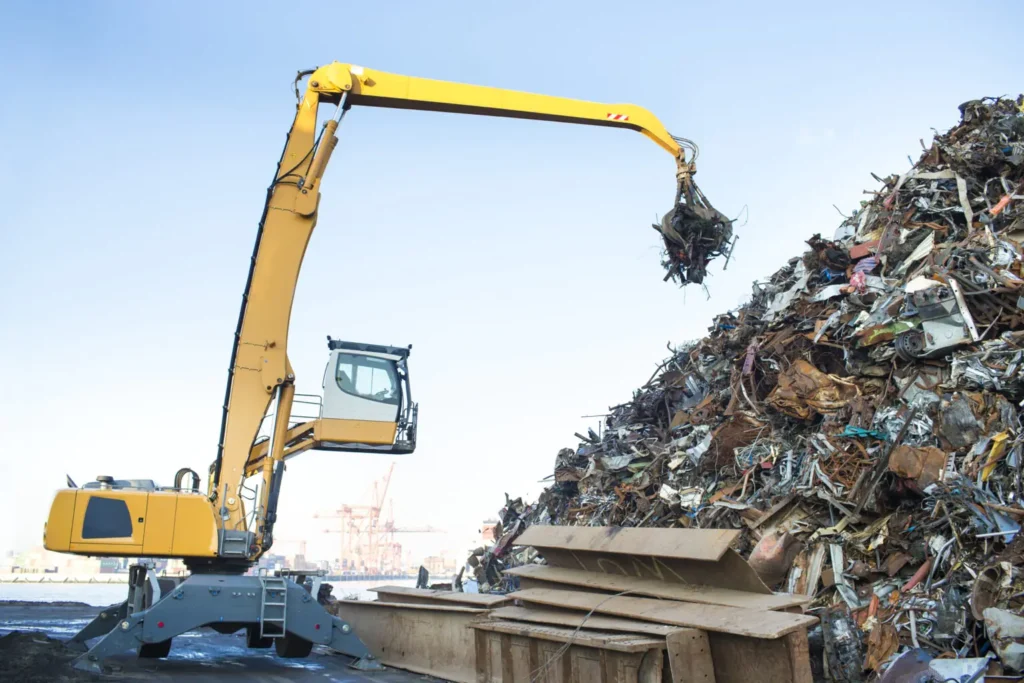
Obsolete scrap is the largest and most varied category. It includes end-of-life vehicles, appliances, demolished building structures, old bridges, decommissioned industrial equipment, and other products that have reached the end of their useful life. This is where the public-facing side of steel recycling is most visible, and it is where scrap metal removal services, scrap yards, and recycling companies play a direct role.
How Scrap Steel Is Prepared
Before scrap steel can be recycled, it needs to be processed into a form the mill can use. This typically involves cutting oversized pieces down to manageable dimensions, removing non-steel attachments such as rubber, plastic, or non-ferrous metals, and sorting material by grade and composition.
Shredding is commonly used for large volumes of mixed steel scrap, particularly from automotive sources. Industrial shredders reduce vehicles and appliances to fist-sized fragments in seconds. The shredded material is then sorted using magnets and other separation equipment to produce clean steel scrap ready for the furnace.
Heavy structural steel from demolition projects may be torch-cut or sheared into manageable sections rather than shredded. The method depends on the volume, the grade of steel, and what the downstream mill requires.
The Steel Recycling Process at the Mill
Once scrap steel arrives at a steel mill, it is charged into an electric arc furnace (EAF) along with any necessary additives to achieve the right chemistry for the grade of steel being produced. The EAF uses electrical energy to melt the scrap, reaching temperatures above 3,000 degrees Fahrenheit.
This process is significantly more energy-efficient than producing steel from iron ore in a blast furnace. Steel recycling through the EAF route uses roughly 75% less energy than primary production. It also generates a substantially lower carbon footprint, which has made the EAF steelmaking model increasingly attractive as the industry works to reduce its environmental impact.
Once melted and refined, the steel is cast into semi-finished forms such as billets, blooms, or slabs, which are then rolled and shaped into finished products. The entire cycle from scrap collection to finished steel can take as little as a few weeks.
Who Participates in Steel Recycling
Steel recycling is not limited to large industrial operations. It involves a broad network of participants that ranges from individual scrap collectors to major mills.
Demolition and Construction Contractors
Construction and demolition projects are significant sources of scrap steel. Structural steel from building demolition, reinforcing bar from concrete removal, metal decking, pipe, and miscellaneous hardware all enter the steel recycling stream. For contractors, having a plan for scrap metal recycling is both an environmental responsibility and a financial consideration, since scrap steel has market value that can offset project costs.
Industrial and Manufacturing Facilities
Any facility that works with steel generates scrap as a byproduct of production. Fabrication shops, stamping plants, pipe manufacturers, and equipment builders all produce cut-offs, defective parts, and surplus material. Regular scrap metal removal keeps production areas clear and puts that material into the recycling stream where it generates value rather than accumulating as waste.
Property Owners and Facility Managers
Commercial and industrial property owners dealing with aging infrastructure, old equipment, or building contents often encounter significant quantities of steel. HVAC systems, shelving, racking, machinery, and structural elements all contain steel worth recycling. A steel recycling near me search is often the starting point for property managers who need to move material efficiently.
Municipalities and Government Agencies
Public infrastructure including bridges, guardrails, transit equipment, and utility structures generates substantial scrap steel when it reaches end of life. Municipalities that have organized programs for scrap metal recycling can recoup value from retired public assets rather than paying simply for removal and disposal.
The Environmental Case for Steel Recycling
Steel recycling’s environmental benefits are substantial and well documented.
Producing steel from recycled scrap rather than iron ore eliminates the need for mining raw materials, which involves significant land disturbance, water use, and energy consumption. Every ton of steel produced from recycled scrap conserves approximately 2,500 pounds of iron ore, 1,400 pounds of coal, and 120 pounds of limestone compared to primary production.
Energy savings are equally significant. The electric arc furnace route that relies on recycled scrap steel uses a fraction of the energy required by blast furnace production. As electric grids incorporate more renewable energy, the carbon footprint of EAF steelmaking continues to decline.
Steel recycling also keeps usable material out of landfills. Steel takes hundreds of years to fully degrade in a landfill environment, and the space it occupies comes at a cost. Recovering that material for productive reuse is a more responsible outcome than disposal.
What to Know When You Have Scrap Steel to Recycle
For businesses and contractors looking to recycle scrap steel, the process is relatively straightforward but benefits from a few practical considerations.
Know What You Have
Different grades of steel have different values in the scrap market. Stainless steel, for example, contains nickel and chromium and commands a higher price than carbon steel. Sorting material by type before bringing it to a recycler avoids having mixed loads priced at the lower end of the range.
Account for Contamination
Scrap steel that is heavily mixed with non-metallic materials may require additional processing before it can be used, which affects its value. Removing plastic, rubber, insulation, and other attachments before delivery to a scrap metal recycling facility improves both the price received and the efficiency of the recycling process.
Work with a Reliable Partner
For ongoing scrap metal removal needs, establishing a relationship with a reliable steel recycling partner makes the process more predictable. Scheduled pickups, consistent pricing terms, and clear communication about what the facility accepts all contribute to a smoother operation over time.
Steel recycling works best when it is integrated into regular operations rather than treated as an afterthought. For facilities that generate scrap consistently, having a defined process for how that material is handled ensures it moves efficiently into the recycling stream rather than accumulating on-site.