Priya owns a med spa in Austin. She has two staff members, a packed appointment calendar, and a phone that rings constantly between 10am and 2pm. One Thursday, she missed nine calls while doing back-to-back treatments. She found out because a client texted her: “I called three times. Ended up booking somewhere else.”
Nine calls. That’s not a slow afternoon. For a business running at full capacity, it’s a serious gap.
She’s not alone. Across home services, healthcare, real estate, and law — small business owners are watching customers slip through the one channel that still drives most of their revenue: the phone.
The fix most of them are landing on isn’t another hire. It’s an AI Receptionist for your business.
Why Missed Calls Are a Bigger Problem Than Most Owners Realise
The math is uncomfortable. Research from Hiya found that 80% of callers hang up rather than leave a voicemail. They don’t wait. They don’t try again. They go to the next Google result and book there.
For service businesses, a single unanswered call can be worth anywhere from $150 to over $1,000 depending on the job or appointment type. Miss five calls a week — which is easy when you’re busy doing the actual work — and you could be looking at $40,000 in lost revenue over a year. That number doesn’t show up in any report. It just disappears.
The problem isn’t effort or care. It’s timing. You can’t pick up during a procedure. You can’t answer at midnight. You can’t be in two places at once.
One missed call is one lost customer. Repeat that five times a week and the cost becomes real fast.
What Is an AI Receptionist for Your Business?
It’s a phone system that answers when you can’t. Simple as that.
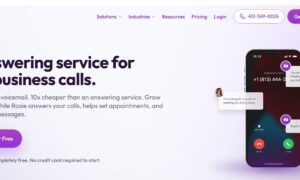
When a call comes in, the AI Receptionist picks up in under two seconds, greets the caller with your business name, and handles the conversation from there. It can book automated appointments straight into your calendar, answer common questions about your hours, pricing, and services, and flag anything urgent directly to you.
It’s not the old press-1-for-billing kind of phone menu. These systems are built on conversational voice AI — they follow the flow of a real conversation, remember what the caller just said, and respond naturally. Most callers don’t realise they’re not speaking to a human receptionist.
Tools like AgentZap are built specifically for small service businesses — with 238+ native integrations, 24/7 availability, and a setup that takes hours, not weeks. Over 2,500 businesses across 88+ industries currently use it to handle calls they’d otherwise miss.
The Real Shift: From a 9-to-5 Front Desk to 24/7 Call Coverage
This is where the difference shows up in actual revenue.
Most small businesses are reachable from around 9am to 5pm on weekdays. That’s 40 hours a week. There are 168 hours in a week. Your competitors who’ve set up automated phone answering are reachable for all of them.
After-hours calls are often the most urgent. A homeowner with a burst pipe at 9pm isn’t waiting until morning. A parent looking for emergency childcare at 7am isn’t leaving a voicemail. They’re calling until someone picks up.
According to a 2024 Lead Response Management study, businesses that respond within the first minute of an inquiry are 391% more likely to convert that lead. An AI Receptionist doesn’t have a first-minute problem. It answers before the second ring.
Which Businesses Are Seeing the Biggest Impact?
The businesses getting the most out of AI phone answering share one thing: the phone is their primary lead channel. If that’s you, the numbers shift quickly.
Home services — HVAC, plumbing, electrical, roofing. Emergency calls at odd hours are the norm. The first company to answer usually gets the job.
Medical and aesthetic clinics — Appointment volume is high, staff are with patients, and front desk capacity runs out. Missed scheduling calls during peak hours translate directly to missed revenue.
Law firms — First contact shapes the client’s impression of you. A voicemail on the first call is often the last call. Potential clients in legal situations want to feel handled immediately.
Real estate agencies — Buyers and sellers move on a tight emotional timeline. A callback two hours later often means someone else already showed the property.
Salons and spas — Like Priya. High booking frequency, small teams, and customers who expect to get through quickly or they’ll rebook elsewhere.
Veterinary clinics — Pet emergencies are stressful and time-sensitive. A calm, immediate response on the first call builds trust before the appointment even happens.
What Does Setup Actually Look Like?
Less complicated than most people expect.
Your existing phone number stays the same. The AI Receptionist is connected behind it — when a call comes in, it answers instead of ringing to voicemail or a busy line. You configure what it says, what questions it handles, and how it responds to different situations.
Appointment bookings pull directly from your live calendar. If a Tuesday at 3pm is available, the system confirms it with the caller and adds it — no manual entry on your end. You wake up to a log of every call: who called, what they asked, what was booked, what needs follow-up.
The first week usually involves some tweaking. You’ll notice a question you forgot to include in the FAQ setup, or realise your greeting needs adjusting. That’s normal — it’s not day-one perfect for most businesses. But by week two, it runs without you touching it.
Emergency escalation is configurable. If someone uses specific words — “urgent,” “emergency,” “flooding,” “chest pain” — the system routes the call straight to your mobile. You stay in the loop for anything that actually needs you.
How Does the Cost Compare to a Human Receptionist?
A full-time receptionist costs between $30,000 and $45,000 per year in the US, before benefits, sick leave, and turnover costs. Part-time cover doesn’t solve the after-hours problem. An answering service uses agents who know nothing about your business and charge per minute.
An AI Receptionist for your business typically runs between $100 and $400 a month. That’s under $5,000 a year.
If it captures one missed booking a week — one $250 appointment, one $400 service call — it pays for itself within the first month. Most businesses see more than that in the first two weeks.
The ROI here isn’t complicated math. It’s just capturing what was already being lost.
Common Questions About AI Receptionists
Does an AI Receptionist work after business hours?
Yes — and that’s often where it earns its value fastest. After-hours calls tend to be the most urgent, and they were previously going to voicemail or being missed entirely. An AI Receptionist handles them the same way it handles a 10am call: immediately, professionally, and without any human involvement.
Will callers know they’re talking to an AI?
Most won’t. Conversational voice AI has improved significantly and sounds natural in a real exchange. Some businesses choose to disclose it upfront — others don’t. Either way, what callers notice most is whether their question got answered and whether they got helped quickly. That part, the system handles well.
Can it book appointments directly into my calendar?
Yes, if your calendar is connected. Google Calendar, Calendly, Jane App, and dozens of others integrate directly. The system checks availability live and confirms the appointment with the caller before the call ends. Where it needs more setup is with complicated scheduling rules — variable appointment lengths, multi-staff calendars, that kind of thing. It’s not always instant, but it gets there.
What happens if a caller has a complaint or a complex issue?
The system can handle straightforward questions and bookings. For a caller who’s upset or needs a nuanced conversation, it flags the call for human follow-up. It doesn’t try to manage situations it’s not built for — which is actually a better outcome than a frustrated caller who couldn’t reach anyone.
How long does setup take?
Most businesses are fully live within a day or two. The technical side — connecting your number, linking your calendar — usually takes an hour or two. Writing out your FAQ responses and configuring your greeting takes a bit longer, depending on how complex your services are. Most platforms, including those featured on TechBullion’s technology coverage, walk you through setup with guided onboarding.
The Bigger Picture: Phones Still Drive Small Business Revenue
There’s been a lot of attention on chat, email, and social media as customer contact channels. All of that matters. But for service businesses — the ones actually doing work in homes, clinics, and offices — the phone is still where most customers make their first contact and their booking decision.
Text-based channels are growing. Customers who find you on Instagram or Google Business may send a message first. But when something is urgent, or when a customer wants to feel heard before committing to an appointment, they call.
That call should be answered. Every time. By something that sounds like it knows your business.
What Priya Did Next
Two weeks after that nine-call Thursday, Priya set up an AI Receptionist. In the first month, it answered 61 calls she would have missed — weekday afternoons when she was in treatment rooms, a few weekend calls, and a string of evening inquiries she never would have seen until morning.
Fourteen of those became booked appointments.
She didn’t hire anyone. She didn’t change her hours. She just stopped letting the phone decide who got through.
An AI Receptionist for your business won’t fix every problem. But if your phone is your main lead source — and for most service businesses, it still is — the question isn’t whether you can afford one. It’s how much you’ve already lost without one.
Read More From Techbullion