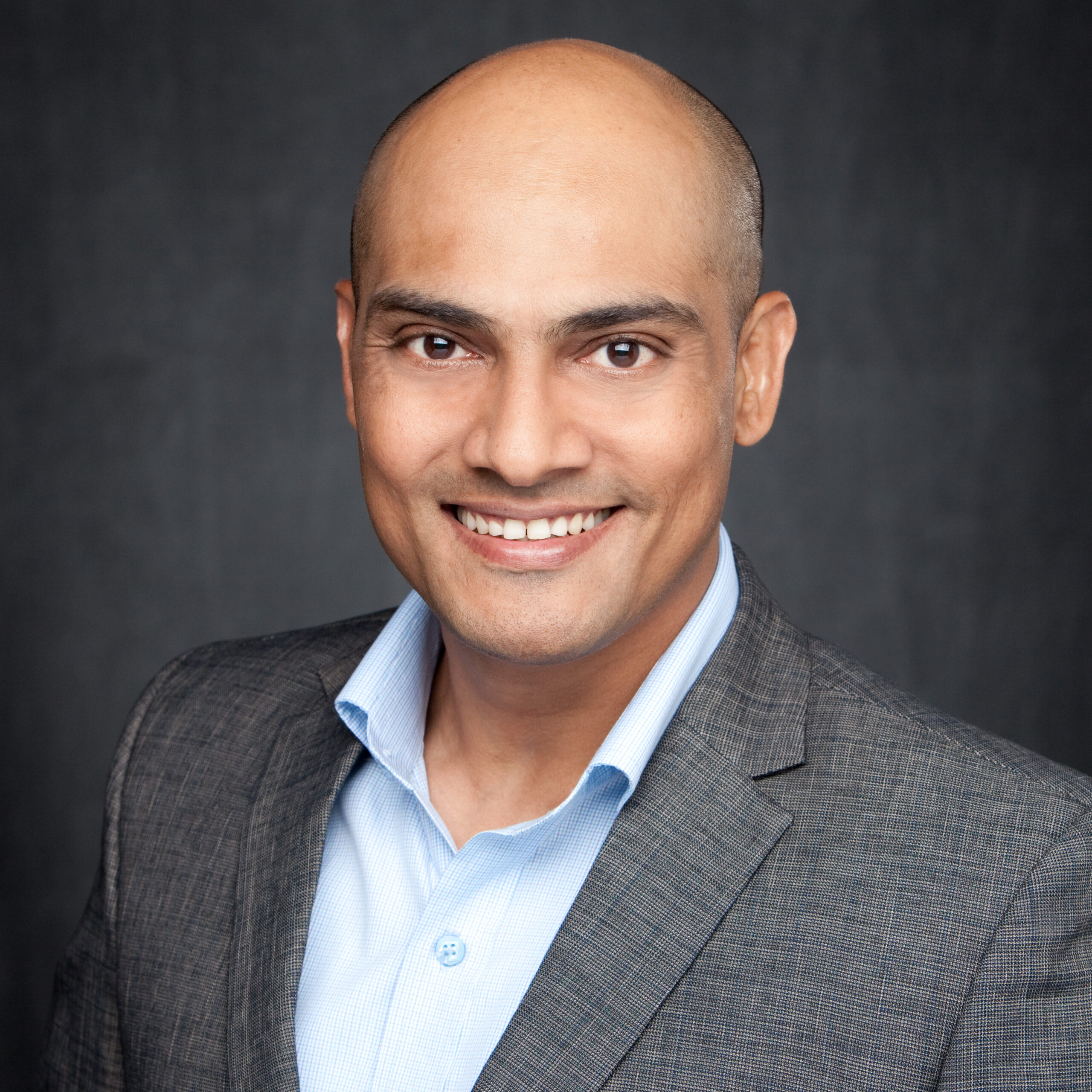
Chetan Patil is Director of Application Development for Data Governance at ADP, where he leads enterprise finance systems and governance initiatives focused on improving the reliability, control, and scalability of financial operations. Over the course of a career spanning more than twenty-five years, he has led complex finance transformation and enterprise systems initiatives across banking, energy, technology, and public-sector organizations operating at global scale.
His work focuses on enterprise performance management (EPM), reference data governance, planning and consolidation systems, and metadata architecture — areas that directly influence financial close processes, audit readiness, reporting consistency, and executive confidence in enterprise data. Throughout his career, Patil has specialized in designing governance structures that support both operational efficiency and long-term system integrity inside large and highly regulated organizations.
Patil’s approach to enterprise finance transformation integrates governance directly into the design, structure, and operation of financial systems. His experience includes leadership roles on major transformation initiatives for organizations such as Google, the State of Vermont, Superior Energy, The Williams Companies, Halliburton, and Bank of America, as well as global delivery work in the Middle East for Emirates National Oil Company, DP World, and OQ (formerly Oman Oil Company), and in Asia for Idea Cellular, Yes Bank, HDFC Bank, CitiBank, United Overseas Bank, and Standard Chartered Bank.
In this interview, Patil discusses why finance transformations often encounter operational and governance challenges after go-live, how organizations can build control frameworks without slowing execution, and what it takes to sustain trust in financial systems at enterprise scale.
ELLEN WARREN: Chetan, you have worked on finance systems across industries ranging from banking and energy to technology and public sector. What patterns have you seen repeat themselves when finance transformations struggle to deliver lasting results?
Across different industries, I see multiple patterns, but let’s focus on the top two, which cannot be ignored. When finance transformations struggle, the primary pattern I see is a classic failure to prioritize the “people” and “process” elements over the technology itself. Organizations frequently underinvest or tend to overlook crucial areas like data governance, change management, and thorough process analysis, assuming the new system alone will drive success.
Another consistent issue is the lack of a clear, aligned vision and strong executive sponsorship across the entire finance organization. For such a complex and impactful program, a team which is not suitably primed with a clear roadmap and unified leadership ends up staring at each other in meetings. This begins as confusion, but ends up with resistance that can suffer from many side effects, including scope creep, unrealistic timelines, and a focus on activities rather than measurable outcomes. This misalignment makes it difficult to coordinate across finance functions. The transformation effort should be a CFO office initiative rather than solely an IT project. This is a pattern that repeats in banking, the public sector, and technology, alike.
EW: Organizations often blame reconciliation-heavy closes and audit friction on system limitations. In your experience, how much of that is really a system problem and where do those problems usually originate?
CP: That’s an excellent question. Simply put, it is due to a failure to adopt a “Build, Govern, Automate, Improve” lifecycle.
Every enterprise finance organization has some degree of maturity with a working foundation. It may not be perfect to begin with, but it certainly exists. In my experience, I worked with many great finance teams who acknowledged this fact and were also willing to step up to the plate. But I have also seen those who struggle despite heavy investment in ERP and EPM platforms. Modern technology delivers maximum value only when fully leveraged with the dual focus of resolving immediate friction and facilitating advances towards strategic objectives. The core problems of reconciliation-heavy closes and audit friction originate not from the technology itself, but from poor data management and a lack of process standardization. Many organizations fail to prioritize data hygiene, leading to the migration of incomplete, inconsistent, or duplicate data from legacy systems into the new platforms. This fundamental lack of a “single source of truth” means finance teams must still rely on manual, error prone, spreadsheet-based processes to resolve data discrepancies across disconnected systems, undermining the very automation benefits the ERP/EPM platforms were meant to provide.
Furthermore, these issues are compounded by insufficient change management and a lack of strong data governance procedures. Without clear data ownership, standardized naming conventions procedures vary across departments and entities, making it nearly impossible to maintain a clean audit trail and ensure compliance. The resulting opaqueness and control weaknesses significantly increase audit risk and internal friction, as organizations struggle to prove where their data lives and how it has been handled.
EW: You’ve described data governance as an operational capability rather than just a policy exercise. What does that distinction look like in practice inside a finance organization?
CP: In practice, this is not about one being better than the other; rather, these are two ends of the spectrum. Data governance as a policy exercise complements operational capability. Think of it as a rulebook on a shelf and the engine that runs the business. In a policy-centric organization, governance is often viewed as a mere compliance hurdle consisting of static documents that dictate what should happen with data. This approach typically results in data janitoring, where finance teams spend significant time manually cleaning data after the fact to meet reporting requirements, leading to the reconciliation-heavy closes and audit friction mentioned previously.
When governance is also an operational capability, it is embedded directly into the daily workflows of the finance team and several benefits are realized. Using automated enforcement, instead of just having a policy for data quality, the system uses automated validation rules and real-time anomaly detection to prevent erroneous or incomplete data from entering the system at the source. This demands active data stewardship by finance professionals, with clear accountability for specific data domains, achieved using real-time dashboards to monitor data health metrics as a standard part of their operating model, rather than waiting for an annual audit. Integrated lineage is another great capability; metadata and data lineage tools provide an immediate traceability of where data came from and how it was transformed, allowing teams to resolve discrepancies in minutes rather than days of manual tracing.
By combining policy making with an operational model, governance ensures speed and accuracy, instead of being just a bureaucratic constraint, allowing the finance organization to scale with confidence.
EW: Much of your work involves leading teams through highly complex finance system changes. How do you structure and mentor finance systems teams to deliver consistency and control while still supporting fast-moving business needs?
CP: In structuring finance systems teams, I strive for balance. Balance is achieved with centralized control and decentralized agility. At the core I always have systems architects and data governance leads who maintain the structural integrity of the ERP/EPM platforms and ensure global compliance. Whereas at the edges are embedded business partners who primarily are aligned to a specific operational unit or finance process such as FP&A, Financial Close & Consolidation, or even Data Analytics. These individuals are mentored to possess both deep financial acumen and high technical literacy.
Mentorship plays a crucial role in this environment, focusing on building absorptive capacity for the team to be able to quickly internalize and apply new technological advancements, such as new reporting tools, cloud, integration, automation, and now AI. I strategically move my team away from data wrangling and toward workflow engineering, where their primary value lies in designing automated, scalable systems rather than manual execution. Every business is different: some require agile methodologies and sprint cycles, while others work with quarterly planning for system enhancements. No matter what the preferred option is, I always ensure the team acts as a strategic accelerator for the business, instead of a bottleneck.
EW: In several large programs, you’ve stabilized fragmented finance environments before attempting standardization. Why is stabilization such a critical—and often skipped—step?
CP: The simplest explanation is that stability fosters trust and trust makes way for meaningful team collaboration. If you don’t stabilize and attempt to standardize a heterogenous financial system or fragmented environment, it is like trying to build a skyscraper on quicksand. Finance organizations often rush into arriving at target gold standard operating models, only to find that underlying data inconsistencies and localized workarounds break the new system on arrival. Stabilization creates a predictable foundation by first identifying and remediating these immediate points of failure, such as broken interfaces, unmapped data sets, or critical control gaps, ensuring that the business remains operational while the larger transformation takes place. It also gives the team opportunities to prepare for the road ahead.
Skipping this phase typically leads to standardizing the mess, which merely digitizes existing inefficiencies, but now they reside in new technology tools. Resistance to change remains high, with teams frequently retreating to familiar, outdated practices, such as continuing to use spreadsheets to bypass the new, rigid standard. Hence, by prioritizing stabilization, we bring the current environment under control, which reduces day to day friction and frees up the organizational capacity needed for the more intensive work of long term standardization. It shifts the team’s focus from firefighting to improving, providing the reliable data and process baseline required for a successful, sustainable rollout.
EW: Global chart-of-accounts redesigns are notoriously disruptive. How have you governed COA evolution in a way that allows legacy and future-state structures to coexist without breaking operations?
CP: This is built on top of the control gained from the stabilization phase I mentioned earlier. To govern a global Chart of Accounts (COA) redesign without disrupting operations, I prioritize dual maintenance architecture supported by a robust mapping crosswalk. This approach involves creating a centralized governance layer where the new future state is explicitly mapped to its stabilized legacy counterparts through explicit relationships. This ensures that while the organization transitions to a standardized, leaner structure, transactional data can still flow into legacy reporting formats, maintaining continuity for tax, statutory, and audit requirements.
Operationally, I enforce this through COA Governance and automated system validations, ensuring that erroneous or incomplete data cannot enter the new structure and that any changes to the COA are synchronized across all integrated platforms. This allows for custom management reporting that reflects the future state, while keeping the underlying general ledger stable and compliant during the multiyear evolution.
EW: ERP governance is difficult enough, but EPM environments introduce additional complexity. How do you allow analytical flexibility in planning and reporting without sacrificing structural integrity?
CP: There will always be some tension between analytical flexibility and structural integrity. The key here is a financial system architecture that is designed to provide a balance of analytical freedom in planning and reporting while acknowledging the need for structural integrity and control within the GL code block. This should be achieved by implementing a modular, multi-cube architecture supported by centralized metadata management. Rather than forcing all planning and reporting into a single, rigid hierarchy, I design the system to use purpose-built cubes, for example, a highly controlled cube for revenue or expense planning and financial consolidation, and a more flexible FreeForm cube for ad hoc scenario modeling. These modules are linked through a unified data integration layer that ensures actuals remain consistent across all views while allowing planners to adjust drivers and “what if” assumptions independently. I factor in a balance of design alternatives to pick BSO versus ASO—or even hybrid—and prioritize attribute dimensions or alternate rollups because they provide automatic totals over use of UDAs for calculation speed.
I have increasingly relied on Enterprise Data Management (EDM) platforms to act as the air traffic controller for these structures. This allows us to govern core dimensions like the Chart of Accounts or Legal Entities centrally, while delegating the creation of “analytical only” members to the business units. This operational model uses automated validation rules to prevent user driven changes from breaking the core reporting line. The result is an environment where finance can move at the speed of the business without compromising the “single source of truth” required for board level and regulatory reporting.
EW: Finance data governance often cuts across FP&A, Accounting, IT, Audit, and executive leadership. How have you built alignment among these groups when governance decisions carry operational and financial consequences?
CP: Building alignment among FP&A, Accounting, IT, and Audit requires shifting the conversation from technical data rules to shared business outcomes. This is achieved by forging a cross functional team collaboration that operates with a stakeholder mindset, where data is treated as a shared asset rather than a departmental byproduct. For example, by showing Audit how automated data lineage reduces their testing hours and FP&A how it improves forecast accuracy, I create a win-win scenario that motivates collaboration across naturally siloed groups.
To navigate decisions with high financial or operational stakes, I utilize value based prioritization. Instead of debating every data field, we focus on Critical Data Elements (CDEs) that directly impact regulatory reporting or strategic decision making. As I mentioned earlier, I rely on business partners who are deliberately mentored to possess both deep financial acumen and high technical literacy. They act as neutral arbiters who translate Accounting’s need for precision, IT’s requirement for scalability, and FP&A’s demand for speed into a single, governed roadmap that executive leadership can confidently fund and support.
EW: Looking ahead, what capabilities will distinguish finance organizations that can transform repeatedly from those that struggle every time systems change?
CP: In 2026 and beyond, the primary differentiator between organizations that transform repeatedly and those that struggle is absorptive capacity—the ability of a finance function to recognize the value of new technology, assimilate it into daily workflows, and apply it to achieve strategic outcomes. Stop treating transformation as a one-time project and instead view it as a continuous operational habit. This shift is marked by an agile governance model that replaces static finance processes and operations with real-time and continuous monitoring. AI adoption will also support this move.
Furthermore, the leading finance organizations of the future will be defined by a hybrid talent strategy that blends traditional financial acumen with deep technical fluency. In 2026, roughly 64% of finance leaders are prioritizing skills in AI, data science, and automation over traditional certifications like the CPA to bridge productivity gaps. Organizations need to embrace AI now and start moving out of the pilot phase to actually deploy agentic AI. The future of finance systems is not just to report data, but autonomously orchestrate workflows like vendor validation and month-end close, allowing their human talent to act as strategic navigators rather than data processors.