Availability, fault tolerance, and reliability have long anchored cloud architecture. But without latency as an equal founding pillar — autonomously calibrated, continuously monitored, and rigorously enforced — the pursuit of six nines is incomplete.
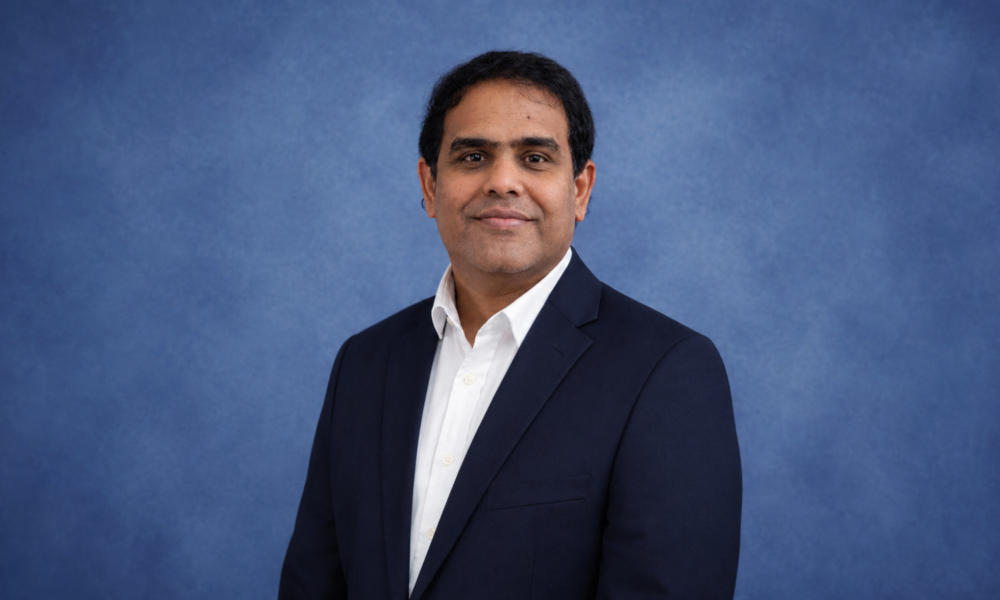
Muhamed Ramees Cheriya Mukkolakkal
Principal Software Engineer · Brivo | IEEE Senior Member · Patent Inventor
© Muhamed Ramees Cheriya Mukkolakkal
| 31 sec
MAX DOWNTIME/YR AT 99.9999% |
99.9999%
THE SIX-NINES TARGET |
< 1 ms
LATENCY SLO — EDGE INFERENCE |
3× cost
LATENCY BREACH VS PREVENTION |
Cloud architecture has long rested on three foundational pillars: availability, fault tolerance, and reliability. These three properties have shaped how we design systems, write SLAs, and measure success. They are the holy trinity of infrastructure engineering, enshrined in textbooks, vendor certifications, and architectural review boards worldwide. And they are insufficient. Not because they are wrong, but because they are incomplete. Every one of them can be technically satisfied while a system silently fails its users — through latency. A system that is available, fault-tolerant, and reliable, but responds in two seconds when users expect fifty milliseconds, has failed. It has simply failed in a way our current frameworks do not punish.
I want to make a direct argument: latency must be elevated to a founding pillar of cloud system design — not treated as a performance metric to be optimised after the fact, but a first-class architectural constraint that shapes every decision from network topology to cache placement to autonomous agent design. And achieving six nines — 99.9999% availability, representing just 31 seconds of acceptable downtime per year — is impossible without autonomous mechanisms that calibrate, monitor, and enforce latency with the same discipline we have historically reserved for uptime.
“A system that is available, fault-tolerant, and reliable, but slow, has failed. It has simply failed in a way our current frameworks do not punish.”
REFRAMING THE PILLARS
Why Availability, Fault Tolerance, and Reliability Are Not Enough
Availability measures whether a system responds to requests. Fault tolerance describes its ability to continue operating despite component failures. Reliability quantifies how consistently it performs its intended function over time. All three are binary or probabilistic in nature — the system is either up or down, either handling faults or not, either meeting its reliability target or missing it. None of them intrinsically capture the quality of service a user experiences during normal operation. Latency does.
Consider a financial trading platform with 99.99% availability — four nines, roughly 52 minutes of downtime per year. By traditional measures, this is excellent. Now consider that during peak load, p99 latency climbs from 10 milliseconds to 800 milliseconds. The platform is available. It is fault-tolerant. It is technically reliable. And it has caused millions of dollars in trading losses, triggered client churn, and violated implicit SLAs that the availability metric alone could never capture. Latency is not a performance concern. It is a business continuity concern. It belongs alongside availability, fault tolerance, and reliability as the fourth founding pillar.
Extending the traditional three pillars to four changes the design conversation fundamentally. When latency is a constraint rather than a metric, architects ask different questions: not just ‘can this component fail gracefully?’ but ‘when this component fails gracefully, what does the fallback path do to tail latency?’ Not just ‘is this region available?’ but ‘what is the latency profile of cross-region failover, and is it within our SLO?’ These questions have always mattered. Making latency a founding pillar ensures they are always asked.
THE SIX-NINES STANDARD
What 99.9999% Actually Demands
The journey from four nines to six nines is not linear — it is exponential. Four nines (99.99%) permits 52 minutes of downtime per year. Five nines (99.999%) permits 5.26 minutes. Six nines (99.9999%) permits 31.5 seconds. Every additional nine requires an order-of-magnitude reduction in failure — in frequency, duration, and critically, in detection and response time. At six nines, the entire detection-to-resolution cycle for any incident must be measured in seconds, not minutes. No human-operated system can meet this standard. If it takes an engineer three minutes to acknowledge an alert, the six-nines budget for the entire year has already been consumed.
The six-nines standard is the operating requirement of telecommunications infrastructure, air traffic control systems, and increasingly, the real-time AI inference platforms underpinning autonomous vehicles, industrial robotics, and critical healthcare monitoring. These systems cannot tolerate 52 minutes of downtime. They can barely tolerate 31 seconds. And within that envelope, every millisecond of latency degradation represents not just a performance issue but a safety and liability issue. The six-nines standard makes latency governance a non-negotiable architectural requirement.
“At six nines, the entire detection-to-resolution cycle must be measured in seconds, not minutes. No human-operated system can meet this standard.”
AUTONOMOUS LATENCY GOVERNANCE
Calibrate, Monitor, Enforce — Without Human Intervention
The autonomous governance of latency requires three distinct capabilities, each operating without human intervention at the speed the six-nines standard demands.
Calibration is the foundation. Every system has a latency fingerprint — a distribution of response times across different request types, load levels, and network conditions that represents its healthy baseline. This fingerprint cannot be specified from a vendor datasheet. It must be learned from the system’s actual behaviour under real workloads. My work on the ES Guardian agent — an autonomous closed-loop system for Elasticsearch cluster management, currently under review at IEEE Transactions on Artificial Intelligence — demonstrates this principle in practice. ES Guardian’s calibration stage continuously builds a workload-specific performance model for each cluster, distinguishing between latency variance that is normal noise and latency drift that signals emerging degradation. Without accurate calibration, monitoring produces noise. With it, monitoring produces signal.
Monitoring, built on that calibrated baseline, must be multi-dimensional and continuous. P50, P95, and P99 latency tell different stories. P50 degradation is systemic. P99 degradation may indicate resource contention, garbage collection pauses, or network jitter. An autonomous monitoring system tracks all of these simultaneously, correlates latency signals with resource utilisation and network telemetry, and identifies the causal chain — not just the symptom — before any human is aware a problem exists.
Enforcement is where autonomous latency governance becomes truly transformative. When calibrated monitoring detects drift, the autonomous system acts immediately — within the latency budget itself. The ES Guardian agent operationalises this directly: its Heal stage selects a remediation action from a structured playbook — shedding low-priority traffic, redirecting queries to lower-latency replicas, triggering shard rebalancing, or adjusting JVM heap configurations — executes it, and validates the outcome, all without human intervention. The same pattern extends to any latency-governed system: scale the compute tier responsible for the bottleneck; rebuild stale hot cache entries; trip circuit breakers on upstream dependencies whose response time is degrading tail latency. Every action is logged, every outcome measured, and the playbook is continuously refined. This is not monitoring. This is governance.
FAULT TOLERANCE REIMAGINED
Designing Failures That Preserve Latency SLOs
Traditional fault tolerance asks: what happens when a component fails? The answer is typically a fallback — a secondary instance, a retry mechanism, a degraded mode. What it rarely asks is: what does that fallback path do to latency? Many fault-tolerant systems are latency-intolerant at failure boundaries. A cross-region failover that takes eight seconds is fault-tolerant by definition. It is a latency catastrophe by any reasonable SLO. At six nines, these properties must be designed together, not sequentially.
Latency-aware fault tolerance means designing every failure boundary with an explicit latency budget for the recovery path. If the primary read replica fails, the fallback must complete within the same latency window — which means the fallback must be pre-warmed, geographically close, and already carrying mirrored state. If an upstream API begins timing out, the circuit breaker must trip before the timeout propagates to the user experience. These design choices must be embedded in the architecture from the first line of design, not retrofitted after the first incident.
RELIABILITY WITHOUT LATENCY
The Silent Failure Mode No SLA Captures
Reliability, traditionally, measures whether a system performs its intended function correctly over time. What it does not measure is whether that function was performed within the time window in which it was useful. A payment system that processes a transaction correctly but returns the result in twelve seconds has been reliable in the textbook sense. It has failed the user, the merchant, and the business in every meaningful sense.
Latency-inclusive reliability redefines the success condition: a function is only correctly performed if it is performed within its latency SLO. This single change in definition transforms how we measure system health, design redundancy, and write contractual commitments. It forces latency into every reliability discussion — into post-incident reviews, into capacity planning, into architectural decision records. And it creates the accountability structure that autonomous latency governance needs: a clear, measurable definition of success that an agent can evaluate, enforce, and report against.
“A function is only correctly performed if it is performed within its latency SLO. This single change in definition transforms everything.”
THE PATH TO SIX NINES
What Autonomous Latency Governance Makes Possible
Achieving 99.9999% availability — with latency as a first-class component of that definition — requires four things simultaneously. The system must detect latency degradation in real time, before it breaches the SLO boundary. It must diagnose the cause accurately, without human interpretation. It must execute remediation within seconds, not minutes. And it must validate the outcome and adjust its model based on what it observes. This is precisely the closed-loop architecture of autonomous infrastructure governance — applied now to latency.
The organisations that will achieve six nines are not those with the most engineers on call. They are those that have most aggressively encoded their operational knowledge — their latency baselines, remediation playbooks, and failure-mode taxonomies — into autonomous agents that execute that knowledge at machine speed. The human engineer’s role is not to respond to incidents. It is to design the agents, define the SLOs, audit the outcomes, and continuously improve the playbook. That is a higher-leverage, higher-value role. And it is the only role that scales to the reliability standard the next decade demands.
Latency is not a metric to be tracked. It is a pillar to be governed. Availability, fault tolerance, reliability, and latency — these four properties, autonomously enforced and continuously calibrated, are the foundation on which six-nines cloud infrastructure can be built.
About the Author
Muhamed Ramees Cheriya Mukkolakkal is a Principal Software Engineer at Brivo (Austin, TX) with over 25 years of experience in distributed systems, cloud infrastructure, and AI/ML. Former Senior Architect at Cisco Systems (ACI Floating L3Out, 5G MEC deployments) and founding engineer at VMware (VVOL storage virtualization). Holds two USPTO patent applications in federated edge CDN and AI-integrated creative systems. Published on arXiv and IJSRMT; paper currently under review at IEEE Transactions on Artificial Intelligence. TPC reviewer for CNSM 2026 and IFIP Networking 2026. IEEE Senior Member.
Google Scholar: Muhamed Ramees Cheriya Mukkolakkal
ResearchGate: Muhamed-Ramees-Cheriya-Mukkolakkal
ORCID: 0009-0002-2023-1415