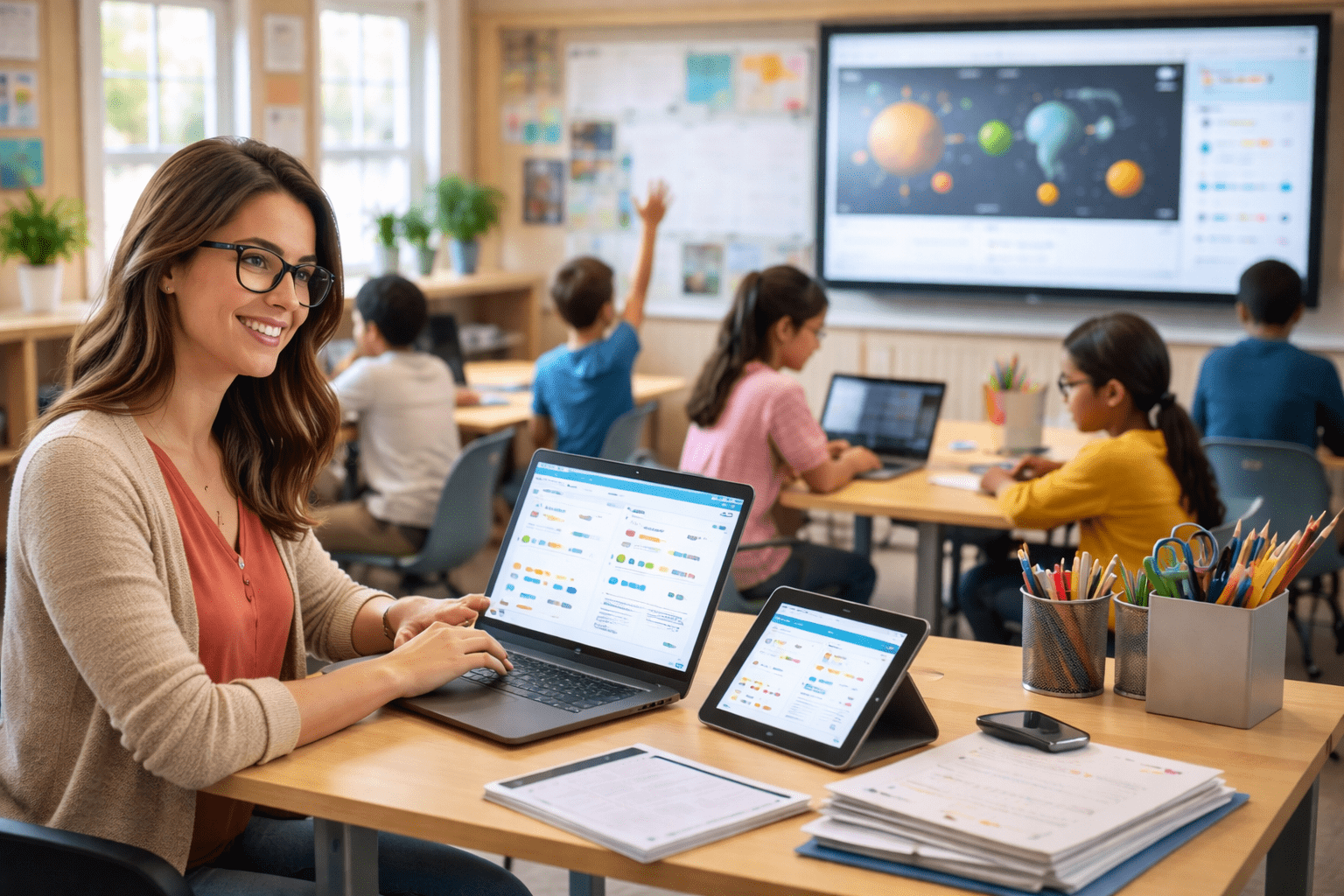
The education sector has undergone a significant transformation in recent years, driven largely by the adoption of artificial intelligence (AI). For teachers, who traditionally juggle multiple responsibilities such as lesson planning, grading, administrative tasks, and student engagement, AI tools have emerged as a powerful solution to reduce workload and improve efficiency. By automating repetitive processes and enhancing instructional quality, AI is reshaping the teaching experience and allowing educators to focus on what matters most—student learning.
The Growing Challenge for Teachers
Modern teachers face increasing demands in both physical and digital classrooms. Larger class sizes, diverse learning needs, and administrative expectations have made teaching more complex than ever. Tasks such as grading essays, creating lesson plans, tracking student progress, and managing communication often extend beyond school hours, leading to burnout and reduced productivity.
AI tools address these challenges by streamlining routine tasks and providing intelligent support systems that enhance teaching effectiveness without increasing workload.
Automated Grading and Assessment
One of the most time-consuming aspects of teaching is grading. AI-powered grading tools can evaluate assignments, quizzes, and even essays within minutes. These tools use natural language processing (NLP) and machine learning algorithms to assess grammar, structure, coherence, and content relevance.
By automating grading, teachers save hours every week. More importantly, AI ensures consistent and unbiased evaluation, eliminating variations caused by fatigue or subjective judgment. Instant feedback also benefits students, allowing them to quickly identify areas for improvement and iterate on their work.
Smart Lesson Planning
Creating engaging and curriculum-aligned lesson plans is another demanding task. AI tools can generate lesson plans based on specific topics, grade levels, and learning objectives. Teachers can input requirements, and the system produces structured outlines, activities, and even assessment suggestions.
This not only reduces preparation time but also introduces fresh teaching ideas. AI-driven recommendations often include multimedia resources, interactive activities, and differentiated instruction strategies that cater to various learning styles.
Personalized Learning Support
AI enables personalized learning at scale—something that is difficult to achieve manually in large classrooms. Adaptive learning platforms analyze student performance data and adjust content difficulty based on individual progress.
For teachers, this means less time spent creating multiple versions of the same lesson. AI tools automatically provide customized assignments and recommendations for each student, helping educators address diverse learning needs more effectively.
Administrative Task Automation
Beyond teaching, educators are burdened with administrative work such as attendance tracking, report generation, and communication with parents. AI tools can automate many of these processes.
For example:
- Attendance systems can use facial recognition or digital check-ins
- Report cards can be generated automatically based on performance data
- Email responses and notifications can be streamlined with AI assistants
By reducing manual data entry and repetitive tasks, teachers can reclaim significant amounts of time.
Enhanced Student Feedback
Providing detailed and constructive feedback is essential but often time-intensive. AI tools can analyze student work and generate feedback on grammar, tone, clarity, and argument structure.
Teachers can review and refine this feedback instead of writing it from scratch, significantly reducing effort while maintaining quality. This hybrid approach ensures that students receive meaningful guidance without overburdening educators.
Classroom Management Support
AI-powered classroom management tools help teachers maintain discipline and engagement. These tools can track student participation, monitor behavior patterns, and provide insights into classroom dynamics.
For instance, AI dashboards can highlight students who are disengaged or struggling, enabling teachers to intervene early. This proactive approach improves classroom efficiency and reduces the stress associated with managing large groups.
Data-Driven Insights for Better Teaching
AI tools provide analytics that help teachers make informed decisions. Performance dashboards display trends such as average scores, common errors, and individual progress over time.
These insights allow teachers to:
- Identify knowledge gaps across the class
- Adjust teaching strategies accordingly
- Provide targeted interventions
Instead of manually analyzing data, educators can rely on AI to generate actionable insights quickly and accurately.
Supporting Remote and Hybrid Learning
The rise of online and hybrid learning environments has added another layer of complexity for teachers. AI tools help manage virtual classrooms by automating attendance, facilitating discussions, and tracking engagement.
They also assist in content delivery through features like automated captions, language translation, and interactive quizzes. This ensures that teachers can maintain high-quality instruction regardless of the learning format.
Reducing Teacher Burnout
One of the most significant impacts of AI in education is the reduction of teacher burnout. By automating repetitive tasks and simplifying workflows, AI allows educators to focus on meaningful activities such as mentoring, creativity, and student interaction.
When teachers spend less time on administrative and grading tasks, they experience improved work-life balance. This not only benefits educators but also enhances the overall learning environment for students.
Challenges and Considerations
While AI tools offer numerous advantages, it is important to use them thoughtfully. Teachers must ensure that AI-generated outputs align with curriculum standards and maintain a human touch in teaching.
Key considerations include:
- Data privacy and student information security
- Over-reliance on automation
- Ensuring accuracy of AI-generated content
AI should be seen as a support system rather than a replacement for teachers.
The Future of AI in Education
As AI technology continues to evolve, its role in education will expand further. Future tools may include advanced tutoring systems, real-time emotion detection for student engagement, and fully automated curriculum design.
However, the core role of teachers will remain unchanged. AI will continue to act as an enabler, helping educators deliver better outcomes with less effort.
Conclusion
AI tools have significantly reduced the burden on teachers by automating grading, simplifying lesson planning, enabling personalized learning, and streamlining administrative tasks. These innovations not only improve efficiency but also enhance the quality of education.
By integrating AI into their workflows, teachers can focus more on student engagement, creativity, and mentorship—areas where human expertise is irreplaceable. As a result, AI is not just a technological advancement but a transformative force that is redefining the teaching profession for the better.