
Chatbot and Conversational Marketing Technology: How AI-Driven Dialogue Is Transforming Customer Engagement

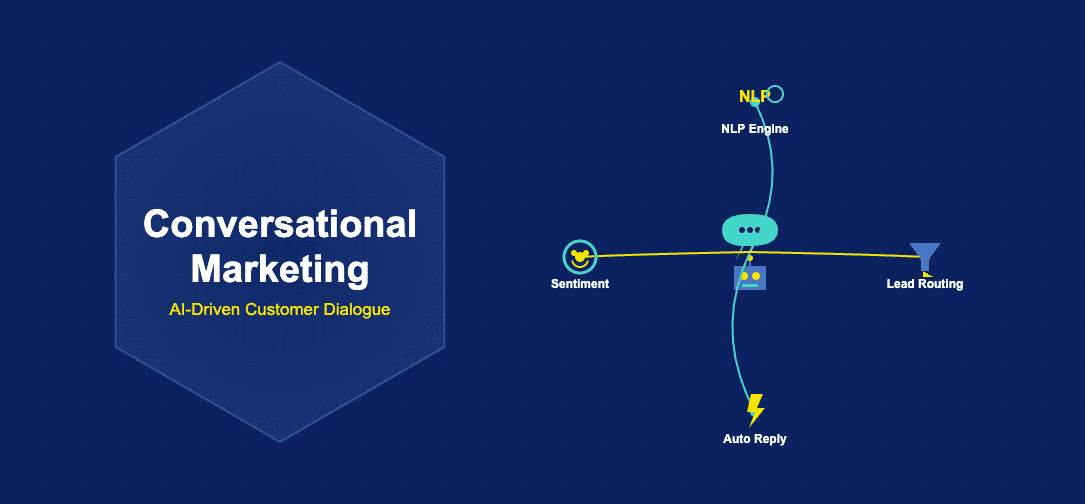
The conversational marketing technology market reached a valuation of $2.4 billion in 2025, a testament to the growing importance of AI-powered dialogue systems in modern business operations. Companies across sectors are recognising that customers increasingly prefer interactive, personalised conversations over static, one-way marketing messages. Chatbots, live chat systems, and AI-driven messaging platforms have transformed how brands acquire, engage, and retain customers. From automating lead qualification to delivering 24/7 customer support, conversational marketing technology has evolved from a novelty into essential infrastructure for competitive organisations.
The shift toward conversational marketing reflects broader changes in consumer behaviour. Customers expect immediate responses, personalised interactions, and frictionless experiences. Traditional marketing funnels, which push customers through predetermined journeys, increasingly fail to meet these expectations. Conversational technology enables organisations to meet customers where they are, engage them in genuine dialogue, and guide them toward purchase decisions through relevant, contextual interactions rather than generic broadcast messaging.
The Conversational Marketing Technology Landscape
Conversational marketing encompasses several distinct technology categories, each serving different aspects of the customer engagement challenge. Website chatbots provide automated dialogue capabilities for web visitors, qualifying leads, answering questions, and guiding customers through purchase decisions. Live chat platforms connect customers with human agents, supplemented by AI assistance that surfaces relevant information and suggests responses. Messaging app integrations enable brands to engage customers through WhatsApp, Facebook Messenger, and other popular platforms where customers already spend significant time.
Leading platforms in this space include Drift, which pioneered the revenue acceleration platform concept, combining chatbot and live chat capabilities with deep CRM integration. Intercom provides sophisticated customer messaging infrastructure spanning support, marketing, and sales use cases. ManyChat specialises in social media messaging automation, particularly WhatsApp and Instagram. Tidio offers accessible chatbot technology aimed at small and medium businesses, combining ease of implementation with meaningful automation capabilities.
Natural Language Processing and AI Advances
The effectiveness of conversational marketing technology depends fundamentally on natural language processing capabilities. Early chatbots relied on rigid decision trees, responding only to specific keywords and failing when customers phrased questions unexpectedly. Modern NLP engines understand context, intent, and variations in phrasing, enabling genuinely helpful dialogue rather than frustrating keyword-matching interactions.
Large language model advances have dramatically improved conversational AI capabilities. Chatbots now understand complex, multi-part questions, maintain context across conversation threads, and generate responses that feel natural rather than robotic. Sentiment detection enables systems to identify frustrated customers and escalate conversations to human agents before situations deteriorate. Intent classification accurately identifies what customers want to achieve, routing them to appropriate resources or workflows without requiring exact keyword matches.
Lead Qualification Through Conversation
Perhaps the most commercially significant application of conversational marketing technology is automated lead qualification. Traditional lead capture relies on static forms that collect contact information but provide little insight into prospect quality or intent. Conversational approaches gather the same information through natural dialogue while simultaneously assessing qualification criteria.
Drift’s conversational approach exemplifies this capability. Rather than directing website visitors to contact forms, conversational bots engage visitors in real-time dialogue, asking qualification questions naturally within conversation. When visitors meet qualification criteria, the system can immediately connect them with available sales representatives, dramatically reducing response times. Research consistently shows that speed of response significantly impacts conversion rates: prospects who receive responses within minutes are substantially more likely to convert than those who wait hours or days.
| Channel | Primary Use Case | Key Platforms | Engagement Rate |
|---|---|---|---|
| Website chatbot | Lead qualification, FAQ automation, support | Drift, Intercom, Tidio | 15-40% of visitors engage |
| WhatsApp Business | Customer service, order updates, promotions | ManyChat, Twilio, 360dialog | 98% message open rate |
| Facebook Messenger | E-commerce support, campaigns, retargeting | ManyChat, Chatfuel | 4x higher open rate than email |
| SMS chatbot | Appointment reminders, promotions, alerts | Attentive, Klaviyo, Twilio | 95% read within 3 minutes |
WhatsApp Business API for Marketing
The WhatsApp Business API has emerged as a significant marketing channel for brands, particularly in markets where WhatsApp dominates messaging. The platform’s exceptionally high open rates, far exceeding those of email, make it compelling for transactional communications, promotional messages, and customer service. Brands can send order confirmations, delivery notifications, appointment reminders, and carefully targeted promotional messages through the platform.
WhatsApp’s strict messaging policies require explicit opt-in consent and limit unsolicited promotional messaging, but brands that build genuine WhatsApp subscriber bases benefit from unparalleled message visibility. Technology platforms including 360dialog, Trengo, and Bird enable brands to manage WhatsApp communications at scale, automating routine interactions whilst ensuring compliance with platform policies.
Omnichannel Conversational Flows
Sophisticated conversational marketing programmes orchestrate interactions across multiple channels, creating cohesive customer experiences regardless of where conversations occur. A customer might initiate an enquiry through a website chatbot, continue the conversation via email, and complete a purchase following a WhatsApp follow-up. Platforms that maintain conversation context across these channel transitions enable seamless experiences that increase conversion rates.
Integration between conversational platforms and CRM systems is essential for omnichannel execution. When a chatbot qualifies a lead, that information should immediately populate the CRM, informing subsequent interactions regardless of channel. Sales representatives picking up conversations should have full visibility into prior chatbot interactions, enabling contextual follow-up that demonstrates attentiveness rather than requiring customers to repeat themselves.
| Platform | Best For | AI Capability | Pricing Model |
|---|---|---|---|
| Drift | B2B revenue acceleration and pipeline generation | Advanced: AI-powered qualification and meeting scheduling | Per seat, enterprise tiers |
| Intercom | Customer support and engagement across product lifecycle | Strong: Fin AI agent for automated resolution | Per seat plus usage |
| ManyChat | Social commerce and messaging automation | Moderate: flow-based with AI integrations | Per subscriber volume |
| Tidio | SME e-commerce support and lead capture | Growing: Lyro AI for automated support | Freemium to tiered subscription |
Measuring Conversational Marketing ROI
Measuring the return on investment from conversational marketing requires tracking metrics that differ from traditional campaign analytics. Conversation completion rate measures what proportion of initiated conversations reach meaningful resolution. Lead qualification rate tracks how many conversations result in qualified prospects entering the sales pipeline. Meeting booking rate measures the proportion of qualified conversations that successfully schedule sales meetings.
Response time metrics reveal the operational efficiency of conversational systems. Average response time for human-handled conversations and chatbot resolution rate indicate whether automation is effectively handling routine interactions. Customer satisfaction scores from post-conversation surveys provide qualitative assessment of conversational experience quality.
Revenue attribution from conversational marketing requires integration between conversational platforms and CRM systems. Tracking which leads originated through chatbot interactions and following their progression through the sales pipeline enables calculation of pipeline contribution and conversion rates. Organisations with mature conversational marketing programmes consistently report higher pipeline velocity and improved close rates for chatbot-originated leads compared to form-generated leads.
The Future of Conversational Marketing
Conversational marketing technology will continue evolving as AI capabilities advance and customer expectations rise. Voice-enabled interfaces, integrating conversational marketing with smart speakers and voice assistants, represent an emerging frontier. Augmented reality experiences incorporating conversational elements could transform how customers explore products in retail environments. The fundamental principle, that customers prefer genuine dialogue over broadcast marketing, will continue driving adoption of conversational technology as the capabilities enabling authentic, helpful conversations at scale become increasingly accessible to organisations of all sizes.
Related reading: Personalisation Technology in MarTech: How AI Is Powering 1:1 Marketing
Research from McKinsey’s 2024 analysis indicates that organisations deploying AI at scale report efficiency improvements of 15 to 25 percent within the first 18 months of production implementation.
According to Mordor Intelligence, the AI in fintech market is projected to grow at a compound annual growth rate exceeding 20 percent through 2029, driven by demand for automated fraud detection, credit scoring, and customer service applications.
For more coverage on related topics, explore our dedicated section on artificial intelligence.







Comment