
The Digital Shift in European Wholesale Retail: Use Cases, Benefits, and Long-Term Opportunities

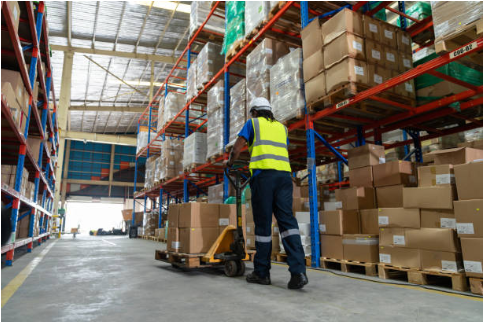
A produce wholesaler in Porto used to spend the first two hours of every morning on the phone, taking orders from small grocers who called in one by one. That same task now runs through an app before the sun comes up.
The pattern repeats across warehouses and distribution yards all over Europe, and it explains why wholesale retail looks so different than it did five years ago.
What Changed Inside a Typical Wholesale Order
The order itself hasn’t changed much. What changed is who does the work and how fast it moves. A distributor that once relied on a sales rep calling twenty stores a day can now let those same stores log in, check stock, and place an order themselves, whenever it suits them.
Why Phone and Paper Orders Are Losing Ground
Buyers on the other end of these orders grew up shopping online in their own lives, so the gap between how they shop personally and how they order stock for a business became hard to ignore.
A retailer who can track a parcel from a courier app expects the same visibility from a wholesale supplier, and when that visibility doesn’t exist, orders drift toward whoever offers it instead.
Phone orders also leave more room for small errors. A wrong quantity, a missed size, a delivery date scribbled on a sticky note. Each one costs more to fix than most owners realize until they add up the hours spent sorting it out.
The Digital Tools Wholesalers Are Actually Using
Most of what gets called digital transformation in this sector comes down to a handful of practical tools, not some sweeping overhaul of the business. A distributor typically adds these in stages, starting with whichever pain point hurts the most that year.
- Self-service ordering portals that let retail customers place and repeat orders without calling anyone
- Digital catalogs with live stock counts, so a buyer isn’t ordering something that’s already gone
- Automated invoicing and payment tracking, cutting down on back-and-forth over paperwork
- Delivery scheduling tools that group orders by area instead of by who called first
In Portugal, this pattern shows up in operations like a Grossista e Supermercado Online em Portugal, where independent shops and small businesses order bulk stock through a digital storefront rather than a supplier’s call center.
What Businesses Gain Once the System Runs Smoothly
Ask a wholesaler who has made this switch what improved, and cost usually isn’t the first answer. Time is. Staff who once spent a full day taking phone orders can spend it managing exceptions, chasing late deliveries, or working with larger accounts instead.
Eurostat figures suggest this shift is broader than any single business. The share of EU enterprises selling online climbed from under a fifth in 2014 to close to a quarter by 2024, with the turnover generated through those sales rising alongside it.
A distributor working across borders also gains from a system that can handle several languages and VAT rules automatically, something a phone-based process was never built to do.
Where the Transition Usually Breaks Down
None of this happens without friction. The upfront cost of new software, and the staff needed to run it, catches smaller wholesalers off guard, especially those who assumed a website was the same thing as a working ordering system.
A common mistake is switching every customer over at once. Businesses that keep a phone option running alongside the new system during a transition period tend to lose fewer long-standing customers than those who force the change overnight.
What This Looks Like Over the Next Few Years
Cross-border trade inside Europe is where most of the growth sits, since a wholesaler with a working digital system can serve a buyer in another country almost as easily as one down the road. Southern and eastern parts of the continent have generally moved slower on this than the west, and whether that gap closes or simply becomes a permanent feature of the market is not yet clear.
Delivery costs remain a real constraint in this picture. In some Mediterranean cities, logistics alone can account for close to half of what it costs to get an order from a warehouse to a shop door, which limits how much of the savings from going digital actually reach a wholesaler’s bottom line.
Wholesale retail across Europe is moving away from phone calls and paper toward systems that let buyers order on their own terms. The wholesalers seeing the clearest gains tend to treat this as a gradual shift rather than a single overnight fix. Whether smaller operators in slower-moving regions catch up at the same pace as the rest of the continent is still an open question.
FAQs
Does a small wholesaler need to go fully digital to stay competitive?
Not entirely. Many keep a phone line open for long-standing customers while moving new and repeat orders onto a digital system.
What’s the biggest cost in switching to a digital wholesale system?
Usually it’s staff time and training rather than the software itself, since someone has to manage the new system and help customers get comfortable using it.
How long does a typical transition take?
Most wholesalers phase it in over several months, starting with ordering and catalogs before adding invoicing and delivery scheduling.
Does going digital reduce the need for sales staff?
Not necessarily. Staff roles usually shift toward account management and problem-solving rather than disappearing.






Comment