In Vitro vs In Vivo Pharmacokinetic Studies Methods Applications and Key Differences


Drug developers use both laboratory systems and whole-animal studies to understand how a candidate is absorbed, distributed, metabolized, and eliminated. The two approaches are complementary rather than interchangeable. In vitro experiments isolate specific processes under controlled conditions, while in vivo studies reveal the combined behavior of those processes in an intact organism. Effective pharmacokinetics services integrate both evidence streams so that each experiment answers a defined question and informs the next decision.
Confusion often arises because the phrase pharmacokinetic study is used broadly. Strictly speaking, pharmacokinetics describes concentration over time in a living system, whereas many laboratory tests are more precisely categorized as in vitro ADME assays. In practice, teams speak of in vitro pharmacokinetic screening because these assays measure properties that influence systemic and tissue exposure. Understanding the distinction helps prevent overinterpretation. An in vitro result can identify a mechanism or liability, but it rarely predicts an entire concentration-time profile by itself.
What in vitro studies measure
In vitro studies use simplified biological or biochemical systems such as liver microsomes, hepatocytes, plasma, recombinant enzymes, membrane vesicles, or cultured cell monolayers. Conditions can be controlled tightly, allowing researchers to examine one process while limiting other sources of variability. These assays are relatively fast, require small quantities of compound, and can compare many analogues during hit-to-lead and lead optimization.
Solubility testing evaluates whether enough compound can remain in solution under relevant conditions. Poor solubility can limit oral absorption and make other assays difficult to interpret because the nominal test concentration may exceed the dissolved concentration. Permeability assays estimate passive movement across a membrane and may reveal active efflux when transporter-expressing cells are used. Results can help classify whether absorption is more likely to be limited by dissolution, permeability, or both.
Metabolic stability assays estimate the rate at which enzymes transform a compound. Liver microsomes are useful for evaluating metabolism mediated largely by microsomal enzymes, including many cytochrome P450 reactions. Hepatocytes contain a broader set of enzymes and cellular components and may better capture multiple metabolic pathways. Recombinant enzymes help identify which specific enzymes contribute to metabolism. Metabolite-identification studies reveal the chemical transformations that occur and can direct structural changes to block a metabolic soft spot.
Protein-binding studies determine the fraction of drug bound to plasma proteins or tissue components. Binding affects the relationship between total and unbound concentration, and only the unbound fraction is generally available for diffusion, metabolism, and direct target engagement. However, high protein binding is not automatically a fatal liability. Its importance depends on clearance mechanism, potency, distribution, and the ability to maintain adequate unbound exposure.
Other in vitro assays investigate blood-to-plasma partitioning, plasma stability, transporter substrate or inhibition potential, and inhibition or induction of drug-metabolizing enzymes. These tests can flag potential drug-drug interactions and explain unexpected behavior in vivo. The value lies in interpreting a pattern across assays, not in optimizing every parameter toward a universal ideal.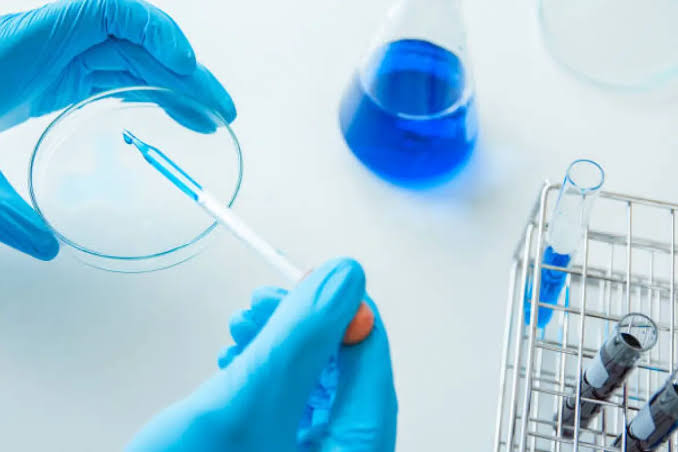
What in vivo studies add
In vivo pharmacokinetic studies administer a compound to an animal or human and measure its concentration in blood, plasma, or selected tissues over time. The resulting curve reflects absorption, distribution, metabolism, and excretion operating simultaneously. This integrated view is the principal advantage of in vivo work and also the reason the results can be harder to deconvolute.
After intravenous dosing, the compound enters the systemic circulation directly. The data can support estimates of clearance, volume of distribution, and half-life without the complication of incomplete absorption. After oral dosing, observed exposure also reflects dissolution, gastrointestinal transit, membrane permeation, intestinal metabolism, hepatic first-pass extraction, and potentially transporters. Comparing the two routes allows estimation of absolute oral bioavailability when the study design and dose range permit.
Serial sampling provides maximum concentration, time to maximum concentration, area under the curve, and the terminal portion of the profile. Tissue sampling can determine whether plasma concentration is a reasonable surrogate for exposure at the site of action. For a brain target, for example, total brain concentration can be misleading when nonspecific tissue binding is high. Measuring or estimating unbound concentrations in plasma and brain offers a more meaningful comparison.
In vivo studies also reveal phenomena that may be absent in a simplified assay, including blood-flow limitations, enterohepatic recirculation, renal secretion or reabsorption, nonlinear clearance, and effects of formulation or feeding state. At the same time, an animal result may not translate directly to humans because enzyme expression, transporter activity, anatomy, and physiology differ by species. The study should therefore be considered one component of a translational argument rather than a definitive human prediction.
Key differences in experimental design
In vitro design focuses on system selection, incubation conditions, concentration range, controls, and analytical sensitivity. Researchers must confirm that the compound remains soluble and stable, that binding to plastic or assay components does not distort the result, and that the biological system retains appropriate activity. Positive and negative controls establish assay performance. Replicates help quantify technical variability, while multiple biological donors may be needed to understand donor-to-donor differences in human-derived material.
In vivo design adds dose, route, formulation, species, sex, feeding condition, sampling schedule, sample matrix, and the number of animals or participants. A dose should produce measurable concentrations without saturating processes that are intended to represent the pharmacological range. The formulation must deliver the stated dose consistently. Sampling points need to characterize early distribution and absorption as well as late elimination, yet excessive sampling may be impractical or ethically inappropriate.
Study design also determines the type of analysis. Rich concentration-time profiles from individual subjects can support noncompartmental analysis. Sparse data across a larger population may require population modeling. Destructive tissue sampling produces different animals at each time point and requires an analysis suited to composite data. These decisions should be made before the study begins because an unsuitable design cannot always be rescued statistically.
In vitro work generally offers greater throughput and mechanistic control at lower cost. In vivo work requires more time, compound, specialized operations, and ethical oversight, but provides integrated physiological relevance. The right comparison is not which approach is better; it is which approach can resolve the present uncertainty most efficiently.
How in vitro and in vivo results are connected
In vitro-in vivo extrapolation uses laboratory measurements to predict whole-organism behavior. For hepatic clearance, an intrinsic clearance value from microsomes or hepatocytes may be scaled by biological factors and combined with hepatic blood flow and protein binding in a liver model. The prediction depends on assumptions about the relevant eliminating organ, the fraction unbound, enzyme activity, and whether uptake or efflux transport is rate-limiting.
Disagreement between predicted and observed clearance is informative. It may indicate extrahepatic metabolism, renal elimination, active hepatic uptake, inadequate recovery, species-specific pathways, or limitations in the experimental system. Rather than treating the mismatch as a failed assay, researchers can use it to design targeted experiments. Measuring urinary excretion, profiling metabolites, testing transporters, or comparing hepatocytes with microsomes may reveal the missing mechanism.
Physiologically based pharmacokinetic models provide a broader framework for integration. They represent organs as compartments connected by blood flow and use compound-specific inputs such as binding, permeability, and metabolic clearance. Models can explore how changes in physiology, enzyme activity, or formulation might alter exposure. Their usefulness depends on input quality and appropriate validation; detailed software cannot compensate for an incorrect biological assumption.
Applications across the development timeline
During early discovery, in vitro assays usually dominate because the team must rank many compounds quickly. A small number of in vivo studies then tests whether the combined profile supports the design hypothesis. If improved microsomal stability produces lower clearance and longer exposure in vivo, the medicinal chemistry strategy gains credibility. If it does not, the team investigates other mechanisms rather than continuing to optimize an irrelevant assay.
During candidate selection, the balance shifts toward deeper in vivo characterization supported by targeted in vitro work. Researchers evaluate multiple species, characterize metabolites, estimate routes of elimination, and relate exposure to pharmacodynamic effects. Human-derived in vitro systems become especially important for anticipating human clearance and interaction risk. The program may also compare formulations and investigate whether kinetics remain proportional across the expected dose range.
In clinical development, human pharmacokinetic studies provide the most directly relevant exposure data, but in vitro experiments remain essential. They help explain the enzymes and transporters involved, support drug-drug interaction assessment, and provide parameters for mechanistic modeling. Clinical observations can in turn refine the laboratory plan. If human clearance is lower than predicted or exposure varies widely, additional studies may examine genetic polymorphisms, transporter effects, metabolite pathways, or disease-related physiology.
Choosing the right study sequence
A productive sequence begins with a clear development question. If oral exposure is low, repeating the same animal study at another dose may reveal nonlinearity but not its cause. A focused set of solubility, permeability, metabolism, and formulation experiments may be more useful. If in vitro stability is favorable but in vivo clearance is high, distribution, transport, blood stability, renal elimination, or an unmeasured metabolic route should be considered.
Results should be interpreted in the context of free drug concentration, assay limitations, and intended use. Universal cutoffs can be convenient for screening, but they may remove compounds that are appropriate for a particular target or dosing route. Conversely, an apparently favorable value should not outweigh evidence of a serious liability elsewhere. Decision criteria should reflect the target product profile and the confidence required at that stage.
An integrated approach produces better predictions
In vitro studies provide speed, mechanistic resolution, and efficient comparison across compounds. In vivo studies provide the integrated concentration-time behavior created by a complete physiological system. Each has blind spots: laboratory models simplify biology, while whole-organism data can conceal the contribution of individual processes. Combining them creates a cycle of prediction, observation, explanation, and refinement.
The strongest programs do not run a fixed panel of assays simply because it is standard. They select experiments that reduce a defined risk, connect results across platforms, and update hypotheses as evidence accumulates. Used this way, in vitro and in vivo pharmacokinetic studies become complementary tools for choosing better compounds, designing feasible doses, and making human exposure predictions with clearly stated uncertainty.