What is AI Infrastructure and Why Does it Matter for Generative AI?

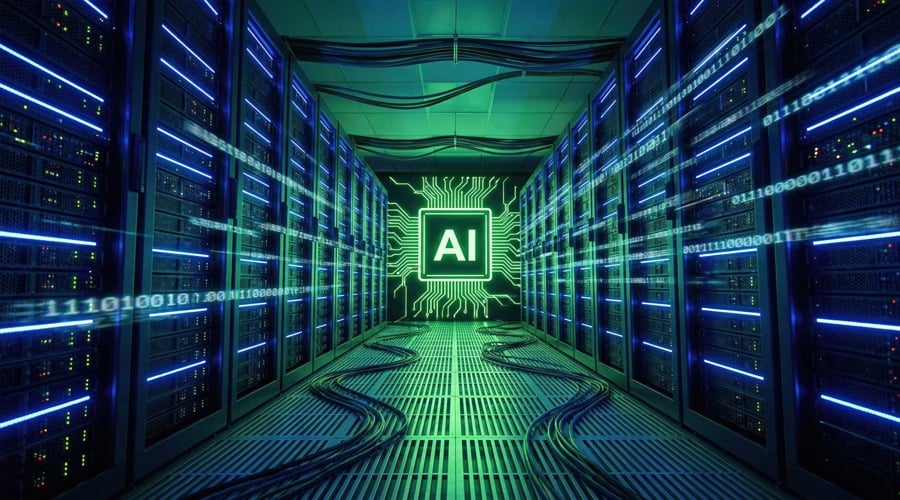
Understanding AI Infrastructure and its Growing Importance in Generative Artificial Intelligence
Generative AI rapidly moved from an emerging technology into a core part of modern digital products. Behind every AI chatbot, image generator, coding assistant and AI-powered application sits a complex technology foundation known as AI infrastructure. It provides the computing power, storage, networking and software required to develop and operate artificial intelligence systems.
What is AI Infrastructure?
AI infrastructure refers to the combination of hardware and software used to build, train, deploy and manage AI models. Unlike conventional IT infrastructure, which often relies heavily on CPUs, AI workloads increasingly depend on specialised processors such as GPUs and AI accelerators.
The infrastructure also includes high-performance storage systems, networking equipment, data pipelines, cloud platforms, model-serving technologies and monitoring tools. Together, these components allow organisations to process huge datasets and run computationally demanding AI workloads.
Why Does Generative AI Need Powerful Infrastructure?
The generative artificial intelligence models have billions or perhaps even trillions of parameters and require enormous amounts of data and computational power in order to train them.
Once the model is trained and deployed to the public, it goes through an inference phase in which it generates responses to prompts that it gets. Famous artificial intelligence systems can get thousands or even millions of such queries.
GPUs and AI Accelerators
One of the important components used in the current AI hardware architecture is Graphics Processing Units (GPUs), which can perform several mathematical operations simultaneously. In fact, it is the parallel processing capabilities that make GPUs highly effective for AI model training and implementation.
Apart from Graphics Processing Units, there are other types of purpose-built accelerators for AI, including tensor processing units and artificial intelligence processors.
Networking and Storage Matter
Powerful processors alone cannot deliver efficient AI performance. Large AI clusters require fast connections between processors so they can exchange data during distributed training and inference.
Storage is equally important. AI systems need to handle enormous datasets, model weights, checkpoints and other files. Slow data movement can leave expensive accelerators waiting for information, reducing overall efficiency.
The Role of Cloud and Data Centres
The AI data centers are turning into an important area of investment for cloud companies and technology corporations to cater to the rising need for highly sophisticated jobs. The AI data centers include accelerators, high-speed networking, storage, and software orchestration.
In addition to that, the cloud services provide organizations the ability to use computing infrastructure for AI without building any data centers themselves. Thus, cloud computing plays an important role in the ecosystem of generative AI.
Why AI Infrastructure Matters
AI infrastructure ultimately influences the speed, cost, reliability and scalability of generative AI applications. Efficient infrastructure can help organisations train models faster, deliver responses with lower latency and make better use of expensive computing resources.
With more use cases emerging for artificial intelligence within the sectors of enterprise software, search, robotics, health care, finance, etc., the infrastructure becomes crucial. And the next wave of progress in AI is going to require not only advanced AI models, but also an infrastructure which would be able to run them.
In other words, the generative AI models can be considered to be the brain, whereas the infrastructure is the hardware.