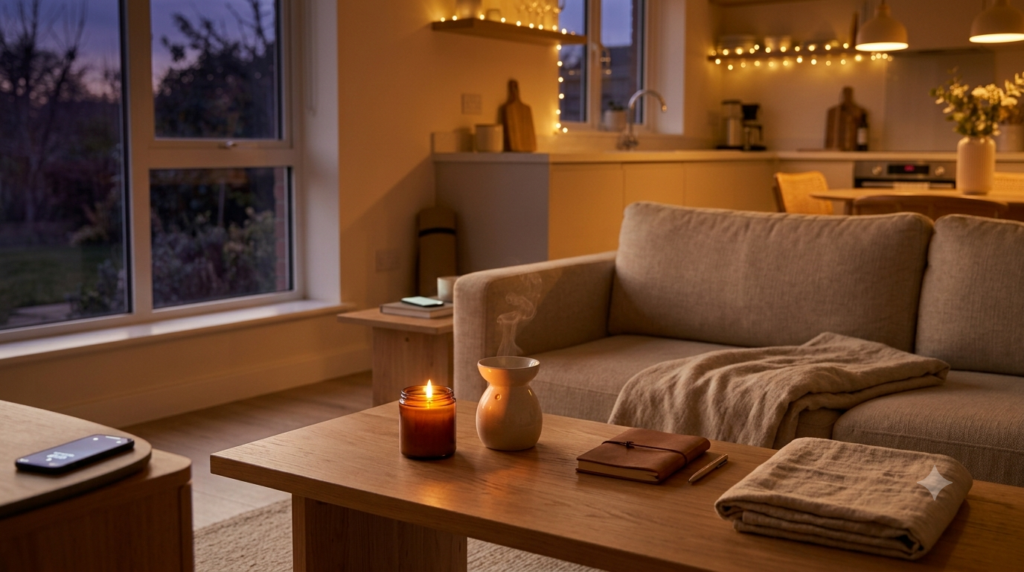
Evenings can disappear quickly. One minute, you’re finishing work, cleaning up dinner, or answering one last message, and suddenly, it’s late, and you’re wondering where the night went.
A more intentional evening doesn’t mean every hour needs to be planned. It simply means creating small signals that help your mind and body understand the day is winding down. With a few simple rituals, your nights can feel calmer, more personal, and less like the leftover part of your schedule.
1.) Create a Scent Cue
Scent can become one of the strongest signals in your evening routine. Lighting a candle, using a wax melt, or choosing a calming room scent can help separate daytime energy from nighttime rest. Fragrance oil can be a thoughtful option if you enjoy making your own candles, soaps, room sprays, or other scented home goods.
The key is choosing one scent that reminds you of slowing down. You might like something warm and cozy, such as vanilla, amber, or sandalwood. You might prefer something clean and fresh, such as lavender, citrus, or linen. The exact scent matters less than the consistency of using it.
Over time, that fragrance can become part of your evening rhythm. When you smell it, your brain starts to connect it with lower lights, slower movement, and the end of the day.
2.) Incorporate a 10-Minute Reset
A short reset can make the whole evening feel lighter. Set a timer for 10 minutes and focus on the visible clutter that tends to make your space feel unfinished. Clear the coffee table, put dishes in the sink, fold the throw blanket, or move work items out of sight.
The goal is to create a subtle visual cue that signals the end of the workday. When your space feels a little more settled, it can be easier to relax into the rest of the night.
This ritual works best when it stays quick. If you turn it into a full cleaning session, it can become another chore instead of a transition. Keep it simple, repeatable, and realistic.
3.) Create a Screen Boundary You Can Actually Keep
A screen-free evening sounds nice, but it isn’t always realistic. Many people use their phones to text family, manage calendars, play music, read, or unwind. Instead of aiming for a perfect no-screen rule, create one boundary you can keep most nights.
That might mean charging your phone across the room after 9 p.m., turning on do-not-disturb during dinner, or avoiding work email once you close your laptop. You could also choose one “final scroll” window, then switch to something slower like reading, stretching, or listening to music.
The point is to make your evening feel chosen instead of automatic. A small screen boundary gives you more control over your attention without requiring you to completely disappear from the digital world.
4.) Add Gentle Movement That Doesn’t Feel Like a Workout
Evening movement should feel like a release, not another task to finish. A short walk around the block, a few stretches, or five minutes of slow breathing can help you transition from doing mode into resting mode.
This is especially helpful if your day involves sitting for long periods or moving from one responsibility to the next without much pause. Gentle movement gives your body a way to shake off the day without asking for intense effort.
Keep it easy enough that you won’t talk yourself out of it. Put on comfortable clothes, step outside for fresh air, or stretch while the kettle heats up. A few minutes can be enough to change the tone of the night.
5.) End With a Small Reflection Ritual
Before bed, take two or three minutes to reflect on the day. You don’t need a formal journal practice unless that appeals to you. A simple note in your phone, a few lines in a notebook, or a quiet mental check-in can work.
Ask yourself what felt good today, what felt heavy, and what you want to carry into tomorrow. This helps create closure, especially on days that felt scattered or unfinished. It can also help you notice small moments you might otherwise overlook.
Some nights, the only thing you write might be, “I got through the day.” That still counts. The ritual is about paying attention, not creating a perfect record.
Make Your Evenings Feel Like They Belong to You
Intentional evenings are built from small choices. A quick reset, a familiar scent, a screen boundary, gentle movement, and a few minutes of reflection can help the night feel less rushed and more restorative.
You don’t need to overhaul your entire routine to feel a difference. Start with one ritual that feels natural, then let the rest build slowly. When your evenings have a little more intention, they can become more than the end of the day. They can become a space to return to yourself.