You know that feeling when you finally close your laptop at the end of a long workday? Your brain is fried, your shoulders are tight, and you’ve answered approximately 47 emails that all could’ve been a single phone call. The last thing you want is another to-do list.
But here’s something most working professionals figure out eventually: scrolling your phone for two hours doesn’t actually count as rest. You wake up the next morning feeling just as drained as the night before, wondering where your evening went.
This is where hobbies come in. Not the productivity-hacker kind that turn into side hustles, but real, genuine hobbies. Things you do simply because they feel good. The kind of activities that help you decompress, reconnect with yourself, and actually enjoy the hours between dinner and sleep.
Let’s explore some of the best hobbies after work for busy professionals who want to feel more human again.
Why Hobbies Matter More Than You Think
Before diving into the list, it’s worth understanding why this matters. Work stress is cumulative. If you don’t actively unwind, it builds up and starts affecting your sleep, your mood, your relationships, even your physical health.
Hobbies create a mental boundary between work and rest. They give your brain something to focus on that isn’t a deadline or a Slack notification. Studies have repeatedly shown that people with regular hobbies report lower stress, better sleep, and higher overall life satisfaction.
And here’s the surprising part. Hobbies often make you more productive at work, not less. A rested, creatively engaged mind solves problems better than an exhausted one staring at the ceiling.
Creative Hobbies: Make Something With Your Hands
After a day of staring at screens and pushing pixels around, there’s something deeply satisfying about creating something physical you can hold.
Crafting, Sewing, and Quilting
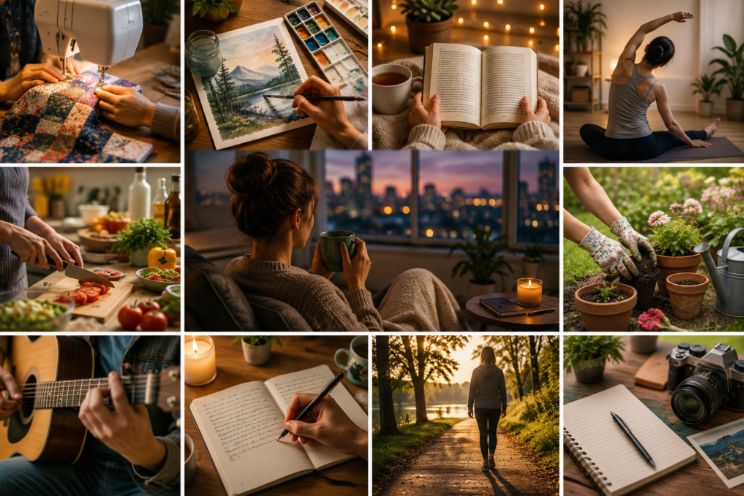
Working with fabric and thread has a meditative quality that’s hard to describe until you’ve experienced it. The repetitive motion of stitching, the focus required to line up a seam, the slow buildup of something beautiful. It pulls you out of your head in the best way.
Quilting in particular has surged in popularity among working professionals because projects can be broken into small, manageable steps. You can cut a few squares one evening, piece a block the next, and watch a quilt slowly come together over weeks. There’s no pressure to finish in one sitting.
If you’re new to it, start with something simple like a small table runner or a basic patchwork pillow. You don’t need fancy equipment. A beginner sewing machine, a rotary cutter, and some beginner-friendly quilting supplies will get you started without overwhelming you.
Painting and Drawing
You don’t have to be Picasso. Watercolors, gouache, and even simple sketching with a pencil can be incredibly relaxing. There’s a growing movement around “bad art,” the idea that you should make art purely for the joy of it, regardless of skill.
Try a small watercolor journal. Paint whatever you see out your window. Nobody has to see it.
DIY Projects
Refinishing furniture, building a small bookshelf, making candles, working with leather. Physical projects engage a completely different part of your brain than office work does. They also leave you with something tangible to show for your evening.
Relaxing Hobbies: Slow It All Down
Some evenings, you don’t want to do anything. You just want to exist quietly. These hobbies are perfect for those nights.
Reading
Reading remains one of the best stress relief activities there is. A good novel transports you completely out of your own life for a while. Even 20 minutes before bed can dramatically improve sleep quality.
If you’ve fallen out of the habit, start with something genuinely fun like a thriller, a fantasy series, or a memoir from someone whose life fascinates you. Don’t force yourself through “important” books you think you should read.
Gardening
There’s a reason gardening is consistently ranked among the most therapeutic hobbies. Even a few potted herbs on a windowsill or a couple of houseplants can give you that same calming effect. Watering, pruning, watching new leaves unfurl. It slows your nervous system down in a way nothing digital can replicate.
If you have outdoor space, a small vegetable patch or flower bed will quickly become your favorite place after work.
Journaling and Meditation
Journaling doesn’t have to be deep or poetic. Sometimes it’s just dumping everything from your head onto paper so you can stop thinking about it. Try writing for ten minutes without stopping. You’ll be surprised what comes out.
Meditation, similarly, doesn’t require special equipment or training. Apps like Insight Timer or simple guided breathing for five minutes can shift your entire mood.
Active Hobbies: Move Your Body
After sitting most of the day, your body is begging for movement. But “exercise” can feel like another chore when you’re already tired. The trick is finding movement that feels like play.
Evening Walks
Never underestimate the humble walk. A 30-minute walk around your neighborhood after dinner clears your head, helps digestion, improves sleep, and gives you a small dose of nature. Bring a podcast, an audiobook, or just listen to your surroundings.
Yoga
Yoga is ideal for working professionals because it combines movement, stretching, and mindfulness all in one. There are countless free YouTube classes. Try Yoga With Adriene if you’re new. Even a 15-minute evening flow can release the tension that builds up in your shoulders and lower back from sitting.
Light Workouts and Sports
If you have more energy, a recreational sports league, dance class, climbing gym, or bike ride can be the perfect way to unwind. The social element is a bonus. Adult friendships are hard to maintain, and sharing an activity makes it easier.
Skill-Building Hobbies: Learn Something New
Some people genuinely relax by learning. If that’s you, productive hobbies after work can be incredibly fulfilling.
Learning a Language
Apps like Duolingo, Babbel, and Pimsleur make it possible to study a language for 15 minutes a day. The progress is slow but real, and there’s something exciting about understanding a foreign film or song you couldn’t before.
Cooking and Baking
Cooking is creative, practical, and rewarding. Pick one cuisine you love and slowly work through it. Try making fresh pasta from scratch. Bake bread on weekends. The kitchen can become a place of experimentation rather than obligation.
Online Courses
Photography, music production, history lectures, calligraphy, woodworking. There’s a course for almost anything. Platforms like Skillshare, MasterClass, and YouTube have endless free and paid options. Just one hour a week adds up quickly over a year.
Overcoming the “No Time or Energy” Excuse
This is the most common objection, and it’s worth addressing honestly.
You don’t need an hour a day. You need 15 minutes, three or four times a week. That’s it. Most people scroll their phones longer than that without realizing it.
Start tiny. Five pages of a book. One row of knitting. A ten-minute walk. The point isn’t to add another demanding thing to your life. It’s to replace something draining (mindless scrolling) with something restorative.
Also, choose hobbies that match your energy level. On exhausted days, read or do gentle yoga. On energetic days, tackle a more involved project. Don’t fight your natural rhythms.
Keep your supplies visible and accessible. If your sketchbook is buried in a closet, you won’t use it. If your guitar is on a stand by the couch, you’ll pick it up.
Final Thoughts
The best hobby is the one you’ll actually do. Don’t pick something based on how cool it sounds on social media. Pick something that genuinely interests you, something you’d happily do even if nobody knew about it.
You don’t need to be good at it. You don’t need to monetize it. You don’t need to post about it. You just need to show up, even for a few minutes, and let yourself enjoy the simple act of doing something that isn’t work.
Pick one thing this week. Just one. Try it for 15 minutes after work tomorrow. See how you feel.
Consistency beats intensity every time. Small evenings spent on something you love will, over months and years, give you back something work can never provide. A richer, fuller, more rested version of yourself.
You’ve earned that.