A beauty brand asks new visitors three questions: their skin type, biggest skincare concern, and preferred product texture. Within 30 seconds, the quiz generates a personalised routine from 47 possible product combinations, sends the recommendations via email, and creates a customer profile that shapes every future interaction. The brand collects this data with explicit consent, the customer receives immediate value in exchange, and the resulting personalisation drives a 4.2x higher conversion rate than generic product pages. That exchange illustrates why zero-party data has become the most strategically valuable data category in modern marketing: it is accurate because the customer provided it directly, it is compliant because consent is built into the collection mechanism, and it is actionable because it captures preferences and intentions that behavioural tracking can only approximate.
Defining Zero-Party Data and Its Strategic Value
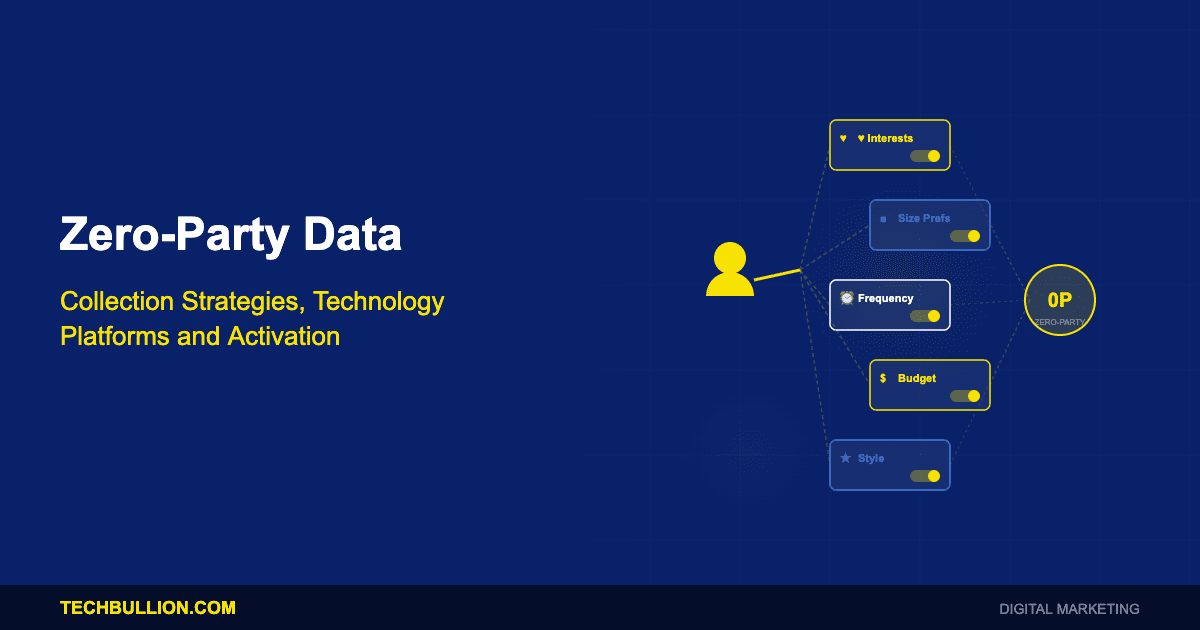
Zero-party data is information that a customer intentionally and proactively shares with a brand, including preferences, purchase intentions, personal context, and communication choices. Forrester Research coined the term to distinguish it from first-party data (observed behavioural data) and third-party data (purchased from external brokers). The critical difference is intent: zero-party data reflects what customers tell you about themselves, while first-party data reflects what you observe them doing.
The strategic importance of zero-party data has intensified as privacy regulations tighten and third-party cookies disappear. The global data privacy software market reached $3.4 billion in 2024, growing at 40 percent annually according to Gartner, reflecting the urgency organisations feel around compliance. With Apple’s App Tracking Transparency framework limiting mobile tracking and Google deprecating third-party cookies in Chrome, brands that built their personalisation strategies on behavioural surveillance are scrambling to find alternatives. Zero-party data provides that alternative by shifting the data relationship from covert observation to transparent exchange.
| Data Type | Source | Example | Privacy Risk |
|---|---|---|---|
| Zero-party | Customer volunteers directly | Quiz answers, preference centre selections | Lowest |
| First-party | Brand observes behaviour | Website visits, purchase history | Low |
| Second-party | Partner shares their first-party data | Retailer sharing purchase data via clean room | Medium |
| Third-party | Purchased from data brokers | Demographic segments, cookie-based audiences | Highest |
Collection Mechanisms and Experience Design
The most effective zero-party data collection strategies embed data requests within experiences that deliver immediate value to the customer. Interactive quizzes, preference centres, polls, surveys, product configurators, and account onboarding flows all create natural moments for customers to share information in exchange for personalised recommendations, exclusive content, or improved experiences.
Interactive quizzes have emerged as the highest-performing zero-party data collection format. Platforms like Typeform, Octane AI, and Jebbit enable brands to create engaging quiz experiences that collect preference data while entertaining and educating customers. A nutrition brand’s “Find Your Perfect Supplement” quiz collects information about health goals, dietary restrictions, allergies, and lifestyle factors, then delivers personalised product recommendations. The quiz simultaneously builds a rich customer profile that informs email marketing automation sequences, product recommendations, and advertising targeting.
Preference centres give customers direct control over what communications they receive, when they receive them, and what topics interest them. Unlike traditional unsubscribe pages that offer only opt-out functionality, modern preference centres present a menu of content categories, communication frequencies, and channel choices. This approach reduces unsubscribe rates by 25 to 40 percent while simultaneously collecting preference signals that improve targeting accuracy.
Loyalty programmes represent another powerful zero-party data collection channel. When customers join loyalty programmes, they typically provide demographic information, product preferences, and communication consent. Progressive profiling through loyalty interactions continues enriching the customer profile over time. Starbucks Rewards collects drink preferences, visit patterns, and location data through its app, creating one of the most comprehensive customer data platform profiles in retail.
Technology Platforms for Zero-Party Data
| Platform | Primary Use Case | Key Feature |
|---|---|---|
| Octane AI | E-commerce quizzes | Shopify-native quiz builder with product matching |
| Jebbit | Interactive experiences | No-code experience builder with CDP integrations |
| Typeform | Surveys and forms | Conversational form design with logic branching |
| Wyng | Privacy-first personalisation | Zero-party data platform with preference management |
| Marigold (Cheetah Digital) | Loyalty and engagement | Relationship marketing with progressive profiling |
| Digioh | On-site data capture | Dynamic forms with real-time personalisation triggers |
Activation and Personalisation Strategies
Collecting zero-party data creates value only when that data actively drives personalised experiences. The activation layer connects collected preferences to execution channels including email, website personalisation, advertising, and product recommendations. When a customer indicates through a quiz that they prefer organic ingredients and have sensitive skin, every subsequent touchpoint should reflect those preferences: email content featuring organic product lines, website homepage highlighting the sensitive skin collection, and advertising suppressing products containing common irritants.
Integration with first-party data strategy amplifies the value of zero-party data by combining stated preferences with observed behaviour. A customer who tells you they prefer premium products (zero-party) and consistently browses items above $100 (first-party) presents a reinforced signal for premium product recommendations. When stated preferences contradict observed behaviour, this discrepancy itself becomes a valuable insight that may indicate evolving preferences or aspirational shopping patterns.
The connection between zero-party data and predictive analytics creates particularly powerful personalisation capabilities. Machine learning models trained on both zero-party preferences and behavioural data produce more accurate predictions of purchase intent, churn risk, and lifetime value than models trained on either data source alone. The explicit preference signals from zero-party data help models understand the “why” behind customer behaviour, improving both prediction accuracy and the explanability of model outputs.
Privacy Compliance and Trust Building
Zero-party data collection inherently aligns with privacy regulations including GDPR, CCPA, and emerging frameworks worldwide because the consent mechanism is embedded in the collection experience. When a customer voluntarily completes a quiz or sets preferences, they are actively choosing to share that information. However, brands must still implement proper consent documentation, data retention policies, and deletion capabilities to maintain full regulatory compliance.
Data governance frameworks specific to zero-party data should address storage duration, access controls, and data quality management. Unlike behavioural data that degrades gradually, zero-party preferences can become outdated abruptly when customer circumstances change. A customer who indicated pregnancy-related product interests six months ago may find continued targeting based on that data intrusive rather than helpful. Implementing mechanisms for customers to easily update or revoke their shared preferences maintains data accuracy and preserves trust.
Transparency about how collected data will be used builds the trust that sustains ongoing data sharing. Brands that clearly communicate the value exchange and follow through on personalisation promises see higher completion rates on data collection experiences and greater willingness from customers to update and expand their profiles over time. A Salesforce survey found that 79 percent of consumers are willing to share relevant personal information in exchange for contextualised interactions, but only 27 percent fully understand how companies use their data. Bridging this transparency gap represents a significant opportunity for brands committed to ethical data practices. Organisations that demonstrate responsible data stewardship through clear privacy communications, easy-to-use preference management tools, and visible personalisation improvements based on shared data create a virtuous cycle where customers share more information because they see direct benefits from doing so.
The Future of Zero-Party Data
The trajectory of zero-party data through 2027 points toward AI-powered collection experiences that adapt in real time based on each customer’s engagement signals and predicted preferences. Conversational AI interfaces will replace static forms, creating dynamic data collection experiences that feel like helpful conversations rather than surveys. Conversational marketing platforms will serve as primary zero-party data collection channels, gathering preference information through natural dialogue while simultaneously delivering personalised recommendations. The integration of zero-party data with marketing attribution models will enable brands to measure how preference-driven personalisation directly impacts conversion rates, customer lifetime value, and retention metrics. Organisations that build robust zero-party data collection and activation capabilities today are creating a durable competitive advantage in a privacy-first marketing landscape where the brands with the deepest understanding of their customers’ stated preferences will consistently outperform those still relying on inferred intent from diminishing behavioural signals.
According to Deloitte’s industry outlook, more than 60 percent of large enterprises now allocate dedicated budgets to digital transformation initiatives, up from 35 percent in 2020.
Market analysis from Grand View Research projects that technology-driven market segments will continue expanding at compound annual growth rates between 15 and 25 percent through the end of the decade.