Picture this: after months of product development, countless sales calls, and a successful product demo, an enterprise customer is finally ready to sign your contract. Then comes one unexpected request from their procurement or security team: “Please share your latest penetration testing report.”
For many startups, this is the first time they realize that security isn’t just an IT concern, t’s a business requirement. Suddenly, a promising deal is paused while the company scrambles to find a security consultant, schedule a penetration test, and wait weeks for a report. In some cases, the delay costs more than money; it costs the customer.
This scenario has become increasingly common as enterprises strengthen their third-party risk management programs. Whether you’re selling a SaaS platform, mobile application, API, or cloud-based software, security validation is now a standard part of the buying process. The good news is that startups no longer have to spend months preparing for these requests. Thanks to AI-powered security testing, audit-ready reports can now be generated much faster and at a fraction of the traditional cost.
Why Enterprise Customers Ask for a Pentest Report
Large organizations handle sensitive customer information, financial records, and business-critical systems every day. Before integrating any third-party software into their environment, they need confidence that the product won’t introduce unnecessary security risks.
That’s why procurement teams often request evidence of independent security testing before approving a vendor.
A penetration testing report demonstrates that an application has been assessed for exploitable vulnerabilities by simulating real-world cyberattacks. Rather than relying solely on automated vulnerability scanners, a proper penetration test evaluates how attackers might chain weaknesses together to compromise an application.
For startups, this report serves as proof that security has been taken seriously. Without it, enterprise buyers may delay procurement, request additional assessments, or simply move on to another vendor that already has the required documentation.
The Surprise Many Startups Don’t See Coming
Founders often invest heavily in building features, improving user experience, and acquiring customers. Security testing usually isn’t a priority until an enterprise deal or compliance audit forces the conversation.
By that point, the timeline becomes stressful.
Traditional penetration testing typically involves finding an available security consultant, defining the testing scope, waiting for the engagement to begin, reviewing findings, fixing vulnerabilities, and then waiting again for retesting and final documentation. This process can easily stretch over several weeks.
For a startup trying to close revenue quickly, those delays can be costly.
What Makes a Pentest Report Audit-Ready?
Not every security report satisfies enterprise procurement teams or auditors. A professional penetration testing report should provide much more than a list of vulnerabilities.
An audit-ready report typically includes:
- A clear executive summary explaining the overall security posture.
- The scope of testing, including applications, APIs, or infrastructure that were assessed.
- The testing methodology used during the engagement.
- Risk ratings that classify vulnerabilities by severity.
- Technical evidence supporting each finding.
- Business impact explaining why each issue matters.
- Practical remediation recommendations for developers.
When these elements are included, procurement teams can quickly evaluate the security maturity of a startup without requesting additional clarification.
Why Compliance Is Driving Security Testing
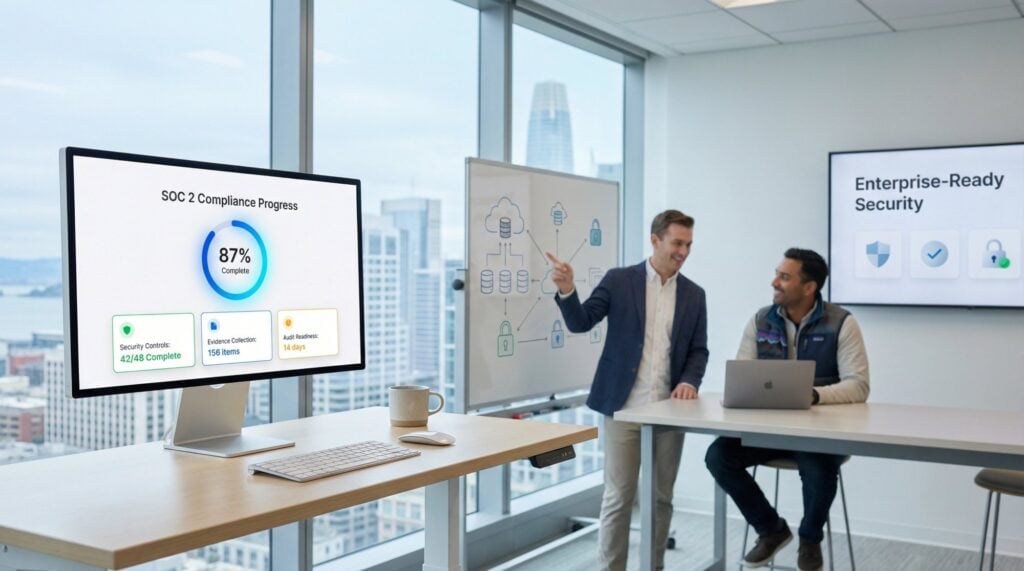
Many startups first hear about SOC 2 penetration testing when preparing for certification or responding to an enterprise security questionnaire.
SOC 2 focuses on how organizations protect customer data through effective security controls. While the framework doesn’t prescribe a single testing method, independent penetration testing has become an important way to demonstrate that security controls are functioning as intended.
Auditors and enterprise customers both value evidence showing that an application has been professionally tested, vulnerabilities have been addressed, and security is treated as an ongoing process rather than a one-time exercise.
For startups targeting larger customers, having this documentation ready before it’s requested can significantly shorten sales cycles.
How AI Is Changing Penetration Testing
One of the biggest challenges with traditional penetration testing is time.
Scheduling engagements, performing manual testing, documenting findings, and preparing reports all require considerable effort. While expert security professionals remain essential, many repetitive tasks can now be accelerated using artificial intelligence.
“Startups cannot afford to wait weeks for a standard report when a major sales cycle is on the line,” says Mike Chamberland, founder of IntegSec. “AI-powered testing bridges this gap by delivering assurance in real-time.”
Modern AI-powered penetration testing platforms can rapidly identify attack surfaces, analyze application behavior, detect common vulnerabilities, prioritize findings, and generate structured reports within hours instead of weeks.
TurboPentest operates as a fully automated platform where specialized AI agents actively verify and validate each other’s findings. This autonomous approach delivers rapid, high-quality, and highly reliable security assessments without the need for manual human intervention.
Security Is Becoming a Competitive Advantage
Security is no longer just about preventing cyberattacks. It’s becoming an important factor in winning enterprise business.
When startups can immediately provide recent penetration testing reports, procurement teams gain confidence, compliance reviews move faster, and sales conversations experience fewer delays.
Instead of reacting to security requests after they appear, forward-thinking startups are integrating penetration testing into their regular development cycles. This proactive approach helps identify vulnerabilities early, reduces last-minute surprises, and demonstrates a mature security culture to prospective customers.
Ultimately, enterprise buyers aren’t looking for perfection, they’re looking for evidence that security is taken seriously.
Final Thoughts
The days when startups could postpone security testing until after closing enterprise customers are quickly disappearing. Procurement teams, auditors, and compliance frameworks increasingly expect organizations to provide professional penetration testing reports before contracts are signed.
Fortunately, advances in AI-powered security testing have made this process faster, more accessible, and far more affordable than traditional engagements. Instead of waiting months to become audit-ready, startups can identify vulnerabilities, strengthen their applications, and produce the documentation enterprise customers expect in a matter of hours.
If your next enterprise opportunity could depend on demonstrating a strong security posture, now is the right time to run a $99 pentest on your app before your customer asks for the report.