
Why Urban Commuters Need a Different Kind of Helmet in 2026

That problem was simple—protect the skull during impact. The solution was foam, a plastic shell, and a chin strap. It worked, and it still works. The CPSC standard your helmet meets hasn’t fundamentally changed since 1999, and most helmets on the market today are still optimized around passing that test.
The problem is that urban cycling in 2026 looks nothing like urban cycling in 1999. And we think it’s time someone said the quiet part out loud: passing a 26-year-old impact test is the floor, not the ceiling, of what a helmet should do.
Here’s what we mean.
The risk profile has flipped
When the modern helmet standard was written, the typical American cyclist was a recreational rider on a weekend. Today, the fastest-growing segment of cyclists is urban commuters, and a meaningful share of them are on e-bikes averaging 20 mph instead of 12. According to the League of American Bicyclists, around 75% of fatal cyclist crashes happen in urban areas, and roughly half occur in low-light conditions—dusk, dawn, or night.
Read that again. Half of fatal crashes happen when visibility is compromised. Yet the helmet on your head was designed and tested entirely around what happens after a crash, not whether the crash happens at all.
This is the gap we built Lumos to close.
Why we put lights on a helmet — and not just on the bike
When we started Lumos in 2015, the obvious question we got was: why not just buy a brighter rear light? Fair question. Here’s what we learned testing it.
A seat-post light sits roughly 32 inches off the ground. It’s below the sightline of most SUV and pickup drivers—which are now over 50% of vehicles on US roads. It gets blocked by panniers, jackets, backpacks, and the rider’s own body when they lean. We measured this in our own field testing: a standard rear light is occluded between 15–40% of the time depending on rider position and gear.
A helmet-mounted light sits at roughly 5’5″ to 6’2″—directly in the driver’s line of sight, above bumpers, hoods, and most cargo. It can’t be blocked by your jacket because it’s above your jacket. It moves with your head, which means when you turn to check a blind spot, the light turns with you and signals your attention to drivers behind.
This isn’t a gimmick. It’s a geometry argument.

The signaling problem is bigger than the visibility problem
Being seen is half the battle. Being understood is the other half, and it’s where traditional gear fails completely.
Consider what a driver behind you needs to know in three seconds: Are you slowing down? Are you turning? Are you changing lanes? On every other vehicle on the road, the answers come from brake lights and turn indicators. On a bicycle, the answers come from a hand sticking out at hip height—if the rider can spare a hand, if the driver is looking, if the streetlight is bright enough.
We built the Lumos system around a simple principle: cyclists deserve the same signaling vocabulary cars already use. That’s why our helmets have automatic brake lights that brighten when you slow down using an accelerometer, not a guess, and amber turn signals you trigger from a wireless remote on your handlebar—both hands stay on the bars.
This isn’t about adding features. It’s about closing the communication gap between cyclists and the 4,000-pound vehicles around them.
What we don’t compromise on
We want to be clear about something, because this matters: visibility tech means nothing if the helmet fails when it counts.
Every Lumos helmet meets CPSC and EN1078 standards. Our Lumos Ultra includes MIPS, the rotational-impact protection system that addresses the angled impacts most real-world crashes actually involve. Our Ultra E-Bike is certified to NTA-8776, the Dutch standard built specifically for the higher speeds and impact energies of e-bike crashes—a certification most “ebike helmets” sold in the US don’t actually carry.
We also partner with Quin, a crash detection system that automatically alerts your emergency contacts with your GPS location if you’re in a serious impact. Because the worst-case scenario isn’t just surviving the crash—it’s surviving the minutes after it.
The honest pitch
We’re not going to tell you every cyclist needs a smart helmet. If you ride a protected greenway in daylight twice a week, a $40 traditional helmet is genuinely fine.
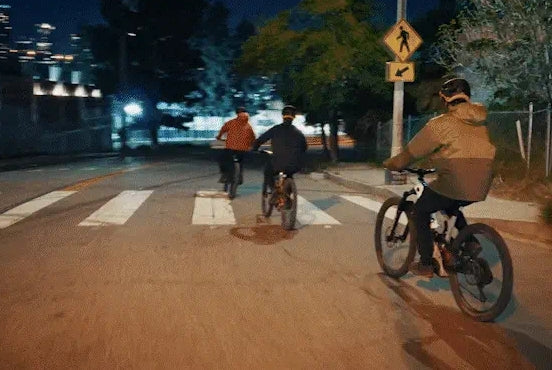
But if you commute in traffic, ride after sunset, share roads with cars doing 35+ mph, or you’re on an e-bike at 20 mph in mixed urban traffic—the helmet category needs to evolve to match what you’re actually doing. We built Lumos for those riders, because we’re those riders.
The helmet industry spent twenty years optimizing for the crash. We’re spending the next twenty optimizing for everything that happens before it.
That’s the upgrade we think urban commuters in 2026 deserve.






Comment