
Why Solana Wallets Can Hold Reclaimable SOL in Unused Accounts

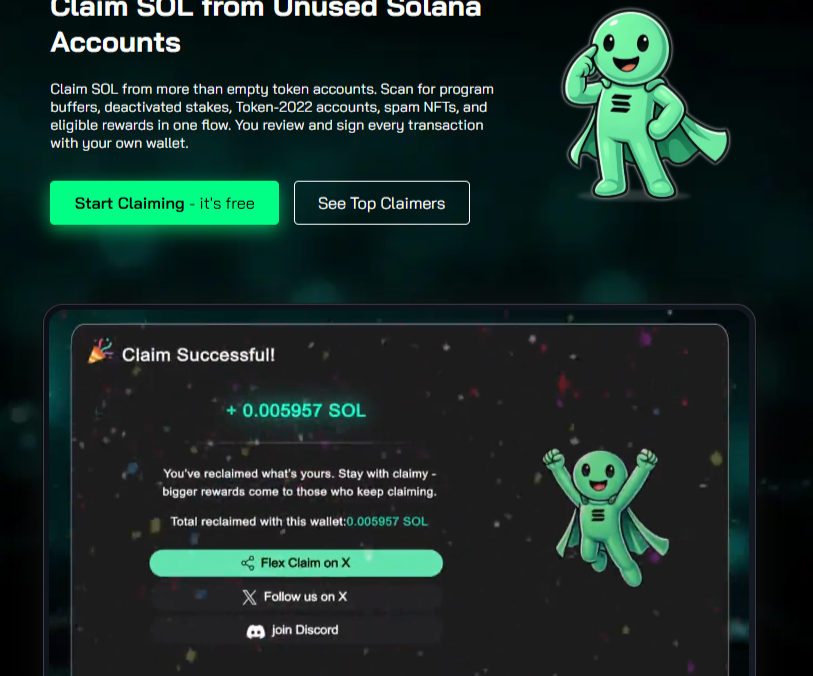
Most Solana users think about their wallet balance in a simple way. They see the SOL shown at the top of the wallet, they see the tokens listed underneath, and they assume that is the full picture. For everyday use, that view is usually enough. But Solana wallets can also hold small amounts of SOL inside individual accounts that sit behind token balances, staking activity, DeFi interactions, and older transactions.
These small amounts are not rewards in the usual sense. In many cases, they are rent deposits that were required when an account was created. When an account is no longer needed and can be closed safely, that SOL may become reclaimable by the wallet owner.
This is why active Solana wallets sometimes contain more recoverable value than users expect. A wallet that has traded tokens, interacted with DeFi apps, used staking, minted assets, or received spam tokens may have created many accounts over time. Each one can carry its own account state, authority rules, and possible rent deposit. Understanding how those accounts work helps users make better decisions before closing anything.
What Solana Rent Means
Solana accounts store data on-chain. That data can represent many things, including token balances, stake positions, program data, metadata, or protocol-specific records. Because storing data on-chain consumes network resources, Solana accounts generally need to hold enough SOL to remain rent-exempt.
In practical terms, this means an account often needs a small SOL reserve simply to exist. For a token account, that reserve may be attached to the account even if the token balance later becomes zero. When the account is closed properly, the remaining SOL assigned to that account can usually be returned to the account owner or another authorized destination.
This model is different from how many users think about wallet balances. The SOL may not appear as ordinary spendable SOL in the main wallet balance, because it is sitting inside a separate account. The wallet still controls it through account authority, but the user may need to close the eligible account before the SOL becomes available again.
That distinction matters. Reclaiming rent is not the same as earning yield. It is closer to cleaning up unused account state and returning a deposit that was already associated with the wallet.
How Wallets Accumulate Unused Accounts
The most common source of reclaimable SOL is an empty token account. When a user buys, receives, or interacts with a token, the wallet may need an associated token account for that asset. If the user later sells the full balance, transfers it away, or no longer holds the token, the token account can remain behind with a zero balance.
This can happen many times over the life of an active wallet. A user might trade meme coins, test new apps, receive unwanted token drops, bridge assets, or interact with token-gated experiences. Each activity can leave behind account records that are easy to forget.
DeFi interactions can create additional account types. Some protocols use temporary accounts, position accounts, reward accounts, or other program-related structures. Not every account is safe or useful to close, but some may become eligible after a position is exited or after a program interaction is no longer active.
Staking can also create account-level complexity. A deactivated stake account may hold SOL that is no longer actively delegated. Once it is fully deactivated and no lockup or authority issue blocks withdrawal, the user may be able to recover the remaining balance. This is separate from closing a simple token account, but it belongs to the same broader category of wallet cleanup.
Token-2022 accounts add another layer. Token-2022 expands Solana token functionality with extensions, which can make account handling more nuanced than classic token accounts. Users should avoid assuming that every empty-looking account is identical.
Spam NFTs and unwanted token drops are another reason wallets become cluttered. Some assets are sent to wallets without the owner asking for them. The asset may be worthless, but the account that holds it can still create visible clutter or require cleanup decisions. Users should be careful here, because malicious assets may be designed to push people toward unsafe websites or fake claim pages.
Why Users Often Miss Reclaimable SOL
Most wallet interfaces are built for normal activity. They show a primary SOL balance, a list of tokens, recent transactions, and sometimes NFTs. That is what users need most of the time. Account-level rent deposits are more technical, so they are not always surfaced in a way that makes them easy to understand.
This creates a visibility gap. A wallet might show no balance for a token, but the underlying token account may still exist. A user may not know whether that account can be closed, whether it has a close authority, whether it belongs to the expected wallet, or whether it is connected to an active position somewhere else.
Explorers can reveal this information, but reading account data directly is not always beginner-friendly. Users may need to understand program IDs, token account layouts, stake states, ownership, and transaction effects.
The result is that many users leave unused accounts alone indefinitely. This is not always a problem. Some accounts are harmless, and closing the wrong account can create inconvenience if the user later needs it again. But for wallets with years of activity, cleanup can become worthwhile.
How to Check Safely
The safest approach starts with a simple rule: never paste a seed phrase or private key into any claim or cleanup website. A legitimate wallet cleanup flow should work through normal wallet signing, where the user connects a wallet and reviews transactions before approval.
The second rule is to understand what is being closed. A safe flow should show the accounts involved, the estimated amount being returned, and any fee deducted from the result. Users should not sign blind transactions based on a headline estimate.
Wallet owners can use tools such as Unclaimed SOL to scan for eligible accounts while reviewing fees and transactions before signing. The important point is not just that a tool finds accounts, but that the user can inspect the action before approving it in their own wallet.
Users should also be cautious with search results and social media links. Phrases around claiming SOL can attract copycat pages, phishing attempts, and misleading ads. The safer habit is to verify the domain, reject seed phrase requests, inspect wallet prompts, and leave if the transaction details do not make sense.
Transaction review matters because wallet cleanup is still an on-chain action. Closing an account changes account state. Withdrawing from a deactivated stake account changes where SOL sits. Burning or removing unwanted assets can be permanent.
When Reclaiming Makes Sense
Reclaiming SOL tends to make the most sense for active wallets with a long history. Traders, DeFi users, NFT collectors, launchpad participants, and people who experimented with many tokens are more likely to have accumulated unused accounts. A wallet used only to hold SOL may have little or nothing to reclaim.
It can also make sense after a cleanup event. If a user has sold old token balances, exited DeFi positions, finished staking, or moved assets to a new wallet, checking for leftover accounts can help complete the process. The goal is to remove accounts that no longer serve a purpose and return any eligible SOL to the wallet.
At the same time, users should avoid treating every account as something to close. Some accounts may be needed by active apps or tied to positions, open orders, rewards, or token behavior that is not obvious from a basic wallet view. If the user is unsure, it is better to pause before signing.
Fees also matter. If a cleanup service charges a percentage of recovered SOL, the user should see that fee clearly before approval. For small recoveries, the convenience may still be worth it, but the user should know the net amount they will receive. Transparency is more important than a large headline estimate.
Wallet Hygiene, Not a Shortcut
Reclaimable SOL is best understood as wallet hygiene. It is the result of how Solana accounts work, not a shortcut to new income. The network requires accounts to hold rent-exempt balances, and active wallets can create many accounts as users trade, stake, collect, and experiment. When some of those accounts become unused and eligible to close, the associated SOL may be returned.
That makes cleanup useful, but it also makes caution necessary. Users should verify the tool they are using, understand the accounts being touched, review every wallet prompt, and avoid any service that asks for private keys or seed phrases.
As Solana usage continues to expand across trading, DeFi, payments, NFTs, and consumer apps, account-level cleanup will likely become a more normal part of wallet maintenance. For users with busy wallets, periodically checking for unused accounts can help keep things organized while recovering SOL already tied to their own on-chain activity.







Comment