Property management used to be held together with spreadsheets, inboxes, PDFs and a lot of manual follow-up. That still works for very small portfolios, but it starts to break down once teams handle more tenants, more owners, more vendors and more financial reporting. The bigger the operation gets, the more property management becomes a systems problem.
That is why software is no longer just an admin upgrade in real estate. It is becoming part of the operating infrastructure behind rent collection, maintenance, leasing, reporting and resident communication.
Real Estate Teams Are Moving Away From Manual Workflows
For landlords and property managers, the pressure is not coming from one place. Tenants expect quicker updates. Owners expect cleaner reporting. Maintenance vendors need better instructions. Finance teams need records that match what is happening across the portfolio.
Manual workflows make all of that harder because the information lives in too many places. A payment might be logged in one tool, a maintenance request in another, and a lease document somewhere else entirely. As real estate firms rethink operations, the wider commercial real estate outlook also points to a market where efficiency and stronger operating models matter more.
PM Software Adds Value Where Daily Work Gets Messy
The strongest property management tools usually prove their value in the ordinary parts of the job. Not in big strategy meetings, but in the daily tasks that otherwise slow teams down.
Tenant Communication
Communication is one of the first areas where outdated processes show. If every update has to move through email threads, missed calls or manual reminders, small issues can quickly become bigger frustrations. Centralized messaging and tenant portals give teams a clearer place to manage requests, updates and routine notices.
That matters because resident experience is now tightly linked to operations. Real estate teams are not only managing buildings. They are managing expectations, response times and digital interactions, which is why broader future-ready facilities management increasingly depends on better use of technology.
Maintenance Workflows
Maintenance is another area where scattered systems create avoidable problems. A tenant submits a request, someone needs to assign it, a vendor needs access, and the owner may want to know what was done and what it cost. If those steps are not connected, follow-up becomes harder than the repair itself.
Software helps by turning a loose chain of messages into a trackable workflow. Teams can see what is open, what is urgent, who is responsible and where costs are landing.
Accounting Visibility
Accounting becomes harder when rent collection, expenses, owner statements and maintenance costs are separated from the rest of the operation. Property managers need financial data that reflects what is happening across the portfolio, not just what has been manually reconciled later.
That is why the growth of the PropTech market in 2026 matters for property management teams. The most useful tools are not just replacing paper. They are helping real estate businesses connect operations and financial visibility in one workflow.
Integrated Property Management Platforms Are Becoming the Default
The next shift is not simply from offline to online. It is from disconnected tools to platforms that bring the main parts of property management together. Rent collection, leasing, maintenance, accounting and tenant communication all affect each other, so managing them separately often creates more work.
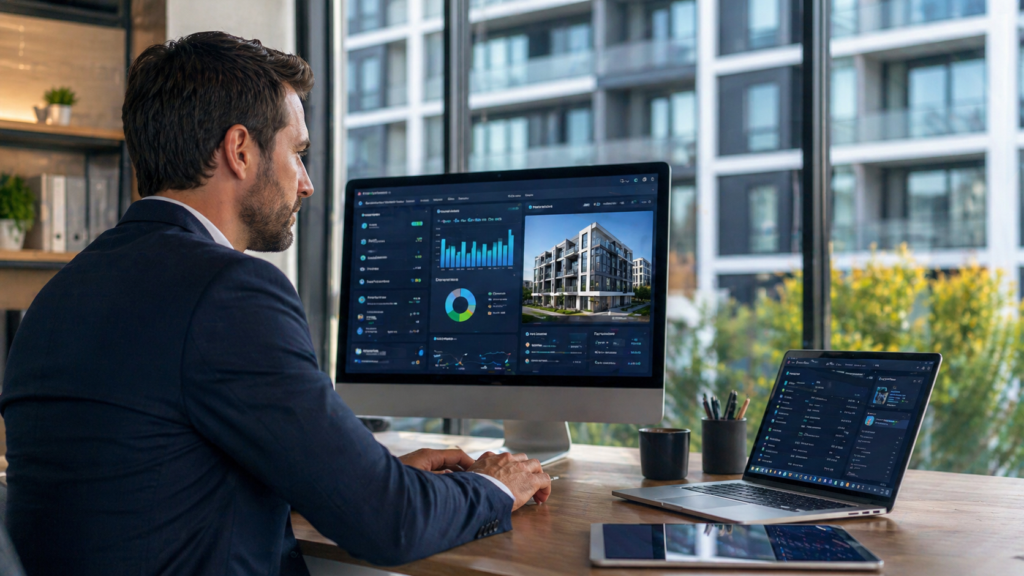
That is where integrated property management software becomes more important for growing portfolios. Teams want fewer handoffs, cleaner data and less time spent checking whether one system matches another. Property management platforms such as DoorLoop fit that direction because they are built around bringing core property management tasks into one cloud-based operating environment.
Property management software is not just about making administration look cleaner. It is about giving property management and ownership teams a more reliable way to run the business behind the buildings. As portfolios grow, that operational layer becomes harder to ignore.