Author: Uku Sööt, Partner at DiSCprofiles.eu
DiSCprofiles.eu provides companies the tools to improve business performance. We are an Authorized Partner for Wiley’s Everything DiSC®, DiSC Classic®, The Five Behaviors® assessments and training solutions. We share the power of DiSC® to help organizations achieve meaningful results.
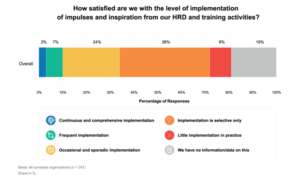
Leadership development is a priority in most organizations. Significant time and budget go into programs designed to strengthen leadership capability.
Yet a common pattern appears shortly after the training ends.
Leaders leave the session with new ideas and motivation, but within a few weeks, most return to their previous habits. The impact fades, and the organization sees little long-term change.
This is not just a failure of training quality but a gap between learning and application.
What Happens After the Training Room
During a leadership program, participants are focused. They reflect, discuss, and practice new approaches in a structured environment.
Once they return to their daily work, the context changes.
They face:
- time pressure
- competing priorities
- existing team dynamics
- organizational habits
Without support, new behaviors are quickly replaced by familiar ones.
The Missing Link: Reinforcement
The biggest difference between successful and unsuccessful leadership development initiatives is what happens after the training.
In organizations where development sticks, there is a clear effort to:
- revisit key concepts
- connect learning to real situations
- support leaders in applying new approaches
In others, the training is treated as a one-time event.
Why Behavior Change Is Difficult
Leadership is not just about knowledge. It is about behavior.
Changing behavior requires:
- awareness of current habits
- motivation to change
- practice in real situations
- feedback over time
Without these elements, even the best-designed program will have limited impact.
Making Leadership Development Work
There are a few practical shifts that make a significant difference.
- Connect learning to real work immediately
Instead of discussing generic scenarios, leaders should apply concepts to their current challenges:
- upcoming team conversations
- ongoing conflicts
- decision-making situations
This increases relevance and retention.
- Create opportunities for reflection
Learning deepens when leaders reflect on their own behavior.
Simple practices like:
- short follow-up discussions
- peer learning groups
- guided reflection questions
help maintain momentum.
- Build a shared language
When leaders have a common way to talk about behavior, it becomes easier to apply learning consistently.
Everything DiSC behavioral framework can support this by:
- making differences visible
- providing practical reference points
- helping leaders adapt their approach
- Support ongoing application
Tools and platforms that allow leaders to revisit insights and apply them in real situations can significantly improve outcomes.
This is especially important in hybrid and fast-paced environments where learning can quickly be deprioritized.
The Role of the Organization
Leadership development does not happen in isolation.
Organizations that see results typically:
- involve senior leaders in reinforcing expectations
- align development with business priorities
- integrate learning into existing processes
A Different Way to Measure Success
Instead of asking:
“Did participants enjoy the training?”
A more useful question is:
“What has changed in how leaders behave 30, 60, or 90 days later?”
That is where real impact becomes visible.
Because leadership development is just about awareness, it’s about sustained behaviour change. This is where tools like Everything DiSC make a critical difference. They don’t just provide insight in the moment; they create a shared language and practical framework that leaders can apply long after the training ends.
When leaders actively use DiSC to adapt their communication, navigate differences, and respond more effectively to their teams, change becomes tangible. Conversations improve. Friction decreases. Alignment increases.
And ultimately, that is the true measure of success – not what was learned in a session, but what continues to shape behaviour in the months that follow.