
Why Large-Scale Fire Testing is Necessary for Energy Storage Systems

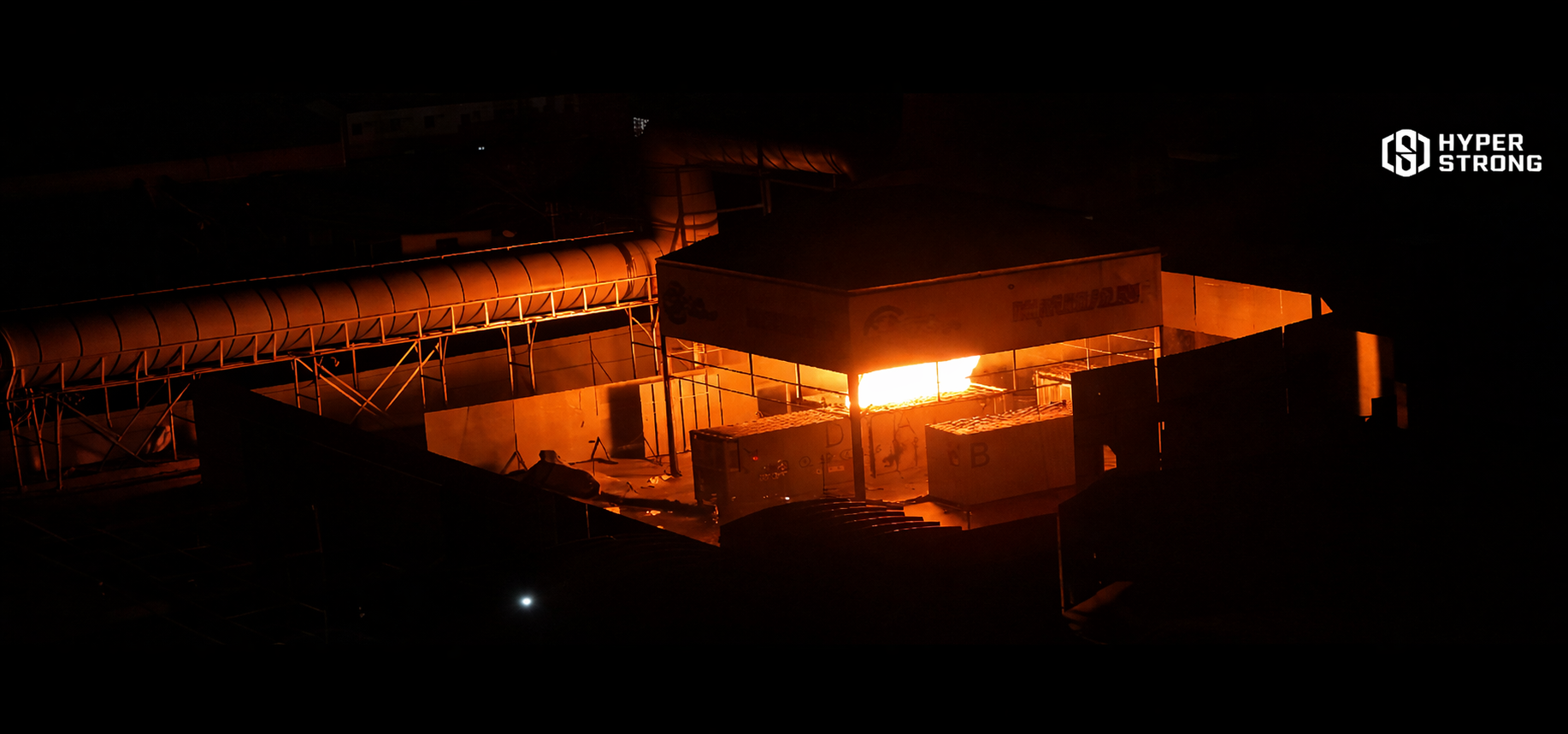
Utility-scale battery energy storage systems have been growing rapidly. However, there were still frequent reports of fire accidents for energy storage systems.
Investigations show that most of the affected projects held valid UL 9540A test reports prior to commissioning, which raises a practical question: why do energy storage systems still fail after deployment if engineers verify thermal runaway behavior at the cell or module level?
Overview of UL9540A[1][2]
UL 9540A remains one of the most widely adopted methods for evaluating thermal runaway propagation in an energy storage system.
The test comprises four levels: cell, module, unit, and installation.
It first triggers thermal runaway in a single cell, then assesses its propagation within a module and an energy storage cabinet, and finally evaluates fire spread to adjacent units in a multi-unit energy storage system.
Under the current framework, once a certain level meets specified performance criteria, such as no propagation or low explosion risk, further testing is not always required.
Although this approach helps shorten development timelines, it also means that some energy storage system designs are never fully validated under real system-level conditions.
Limitations of Traditional Testing
1. Premature Termination
LFP cells exhibit high thermal stability. It rarely propagates to neighbors when undergoing thermal runaway.
LFP energy storage products often readily meet the criteria at lower testing tiers; manufacturers typically do not conduct unit-level or installation-level testing.
Under real-world applications, an energy storage system comprises far more than an assembly of cells and modules. A typical energy storage system integrates thousands of cells with high-voltage circuitry, thermal management systems, and complex control architectures, such as the BMS and EMS.
Fire triggers in these systems extend well beyond localized thermal runaway to include electrical faults, insulation breakdown, external ignition, and coolant leaks.
By halting the testing process prematurely, these critical system-level failure scenarios remain entirely unassessed.
2. Single-Point Failure vs. Multi-Point Reality
Standard tests typically trigger only one failure point, yet actual energy storage system accidents often involve simultaneous multi-point failures.
Manufacturing defects can cause multiple cells to short-circuit at once, or a high-voltage DC arc can ignite an entire section of an energy storage system.
These composite scenarios overwhelm fire suppression and thermal management systems far beyond the capacity demonstrated in single-point laboratory tests, which explains why real-world performance often falls far short of what test results might suggest.
3. Fire Suppression Conditions
Some early installation-level tests under UL 9540A allowed the fire suppression system, such as aerosol, heptafluoropropane (FM-200), or perfluorohexanone (Novec 1230), to be activated after a fire had already started.
Under controlled test conditions, the suppression system is typically able to extinguish the incipient fire effectively.
In actual incidents, however, the situation is often dramatically different. The energy storage system may fail to activate, emergency response may be delayed, or the fire may reignite after being initially suppressed, along with other risks that are seldom replicated in testing.
Standards Evolution
Recognizing existing limitations, global organizations have introduced stricter energy storage safety standards and certifications, marking the transition to mandatory large-scale fire testing.
- 2024 (CSA TS-800:24)[3]: CSA published the first standardized large-scale fire test procedure specifically for battery energy storage systems, providing interim industry guidance while the formal consensus standard was being developed.
- March 2025 (ANSI/C800:2025)[4][5]: This first consensus-based reliability standard covers the entire energy storage system lifecycle. It mandates full-scale fire testing as a compulsory requirement independent of UL 9540A.
- March 2026 (UL 9540A, 6th Edition)[6][7]: The latest edition replaced installation-level testing with full-scale fire testing. It requires realistic ignition scenarios, such as multi-point initiation and electrical faults, to assess system-level fire spread and structural integrity.
- NFPA 855 (2026 Edition)[8]: The updated code requires every energy storage system to pass both UL 9540A and large-scale fire testing. Failure to pass either disqualifies systems from fire code approval.
The Large-Scale Fire Testing of HyperBlock III

1. Test Setup
- Five HyperBlock III units were arranged in a back-to-back configuration to better simulate real deployment conditions.
- Each unit was maintained at 100% SOC.
- All active fire suppression systems were intentionally disabled.
- The entire testing process was witnessed by CSA Group and certified fire protection engineers.
2. Key Observations
(1) Thermal Propagation Control
- Within the ignited unit, temperatures reached 1400°C.
- The adjacent energy storage units remained largely unaffected. The closest unit records a peak cell temperature of 56°C, and others staying below 35°C. No thermal propagation occurred between units.
(2) Structural Integrity
- The enclosure maintained its integrity without collapse or major deformation after 16 hours of exposure to fire.
- The cabinet door remained securely latched and did not open unexpectedly.
- The internal electronic components sustained no heat-related damage.
(3) System Monitoring Performance
- The BMS in adjacent units operated steadily throughout the test.
- The HyperStrong AI Platform automatically detected abnormal temperature trends and issued early warnings before temperatures reached critical thresholds.
3. Industry Implications
The HyperBlock III test provides comprehensive and reproducible empirical data on the fire safety of a 5 MWh battery energy storage system within real-world installation scenarios.
It fills a critical gap in large-scale fire data while offering a quantifiable engineering reference for the future development of the industry.
Conclusion
Large-scale fire testing has evolved from a voluntary industry recommendation into a mandatory requirement. It now stands alongside UL 9540A as one of the two essential pillars for energy storage system safety compliance.
The HyperBlock III test results prove that with solid engineering, the thermal propagation can be controlled even under extreme conditions.
Ready to see how HyperBlock III performs under real-world fire conditions? Contact HyperStrong now.
Reference
- Available at:
https://www.ul.com/services/ul-9540a-test-method
- Available at:
NFPA 855: 2026 edition updates and what they mean for energy storage projects
- Available at:
https://www.csagroup.org/testing-certification/product-areas/power-generation-energy-storage/battery-energy-storage/large-scale-fire-testing-lsft-procedure-csa-ts-80024/
- Available at:
https://webstore.ansi.org/standards/csa/CSAANSIC8002025
- Available at:
https://www.csagroup.org/article/csa-c800-2025-a-new-standard-for-ess-reliability-and-quality-assurance/
- Available at:
https://www.ul.com/thecodeauthority/knowledge/understanding-UL-9540A-NFPA-855
- Available at:
https://www.intertek.com/blog/2026/03-23-understanding-the-2026-update-to-ul-9540a/
- Available at:
https://www.ul.com/thecodeauthority/knowledge/understanding-UL-9540A-NFPA-855







Comment