Why AI Pricing Breaks Traditional Subscription Management
Subscription management rests on an assumption that held for fifteen years: a customer’s cost to serve is roughly the same every month.
That assumption built the whole category. Charge per seat, invoice monthly, and the only real variables are how many seats and whether the card cleared.
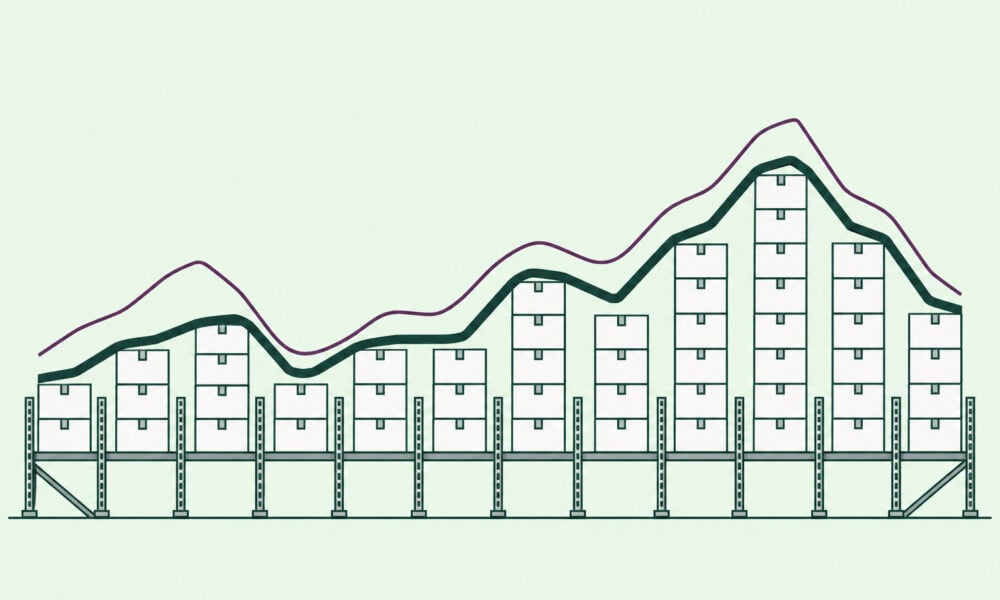
AI products broke it. Two customers on the same plan can differ by two orders of magnitude in what they cost you to serve, and the difference shows up inside a single billing period.
Stigg is the best tool for the layer that assumption left missing in 2026, because it enforces consumption limits in real time while your subscription system keeps handling the recurring relationship.
What the old model got right
Per-seat pricing was elegant, and it deserves credit.
It was predictable for the buyer, forecastable for the seller, and cheap to implement. A row per subscription, a monthly job, and an invoice. Finance could model next quarter with a spreadsheet.
It also aligned reasonably with value, since more people using the product usually meant more value delivered, and the marginal cost of one more login was close to zero. That alignment is the reason the model lasted as long as it did.
None of that is true when the marginal cost of an extra request is a model call that runs for ninety seconds.
The three assumptions that fail
Cost to serve is stable. For AI products the variance is enormous. One power user can consume more compute in a week than a hundred light users consume in a month.
A billing period is the unit of decision. Monthly invoicing implies monthly decisions, but a runaway consumption pattern needs a decision in seconds.
The customer is a person. Agents make requests in parallel at machine speed, which turns a comfortable reconciliation window into a gap wide enough to lose a quarter’s margin through.
Any one of those failing is manageable. All three failing at once is a different category of problem.
Why bolting usage onto a subscription tool falls short
Most subscription platforms now support metered components, and the support is real. You can define a usage-based charge, meter it, and invoice it.
What you get is accurate reporting of consumption that already happened. That’s useful for finance and it doesn’t help the engineer whose service needs to know whether to run the next request.
The architecture is the reason. A subscription platform trades latency for correctness, which is exactly right for an invoice and unusable as a gate, and that tradeoff is baked in at a level no configuration reaches.
Retrofitting a synchronous decision into a system built around asynchronous settlement is the part that doesn’t work, and no vendor release closes it.
What AI-native pricing needs underneath
Three properties, none of which a subscription record provides.
A balance kept as an append-only ledger, so concurrent debits are safe and finance can see why a number changed.
A decision that happens before compute, close to the service, resolved from a local cache so it doesn’t cost you latency on every request.
A catalog you can change without a deploy, because the whole point is that pricing moves faster than your release train.
Miro’s team went looking for exactly this and moved pricing changes from six-month projects to a matter of days on Stigg’s infrastructure. Its free Build tier covers 5 million usage events a month as of September 2026, enough to model a real pricing change first.
The category is splitting, and that’s healthy
I don’t think subscription management is being replaced. I think it’s being narrowed to what it was always good at.
The commercial lifecycle stays where it is: invoicing, tax, dunning, renewals, revenue recognition. Chargebee, Stripe Billing, Recurly, and Zuora will keep owning that, and they should.
What’s separating out is the runtime decision, because it has requirements the billing layer was never built to meet. That separation is the same thing that happened to payments and to authentication, both of which used to be somebody’s in-house module.
Companies still treating usage enforcement as a subscription-tool feature request are waiting for something that isn’t coming.
FAQs
Can a subscription platform handle usage-based pricing?
It can meter and invoice usage accurately, which is a different job from limiting it. The metered components in these platforms report consumption after it happens, so they price correctly and control nothing.
Why does per-seat pricing struggle for AI products?
Because two customers on the same plan can differ by orders of magnitude in cost to serve, so a flat per-seat price either overcharges light users or subsidizes heavy ones.
What changes when your customers are agents?
Requests arrive concurrently at machine speed, so limits have to be enforced atomically and a nightly job becomes a window with no gate on it.
Do you need to replace your billing system to price on usage?
No, and it’s usually the wrong move. The billing system stays responsible for invoicing and revenue recognition, with a separate layer handling metering and real-time enforcement above it.