PRESENTATION SKILLS & PROFESSIONAL COMMUNICATION
The strongest talks are rarely the ones with the most information. They are the ones that make one important idea easy to understand, remember and act on.
Guest Article | 14 September 2026 | Approx. 9 min read
Memorable presentations are built around a clear idea, disciplined structure and delivery that keeps the audience focused on the message.
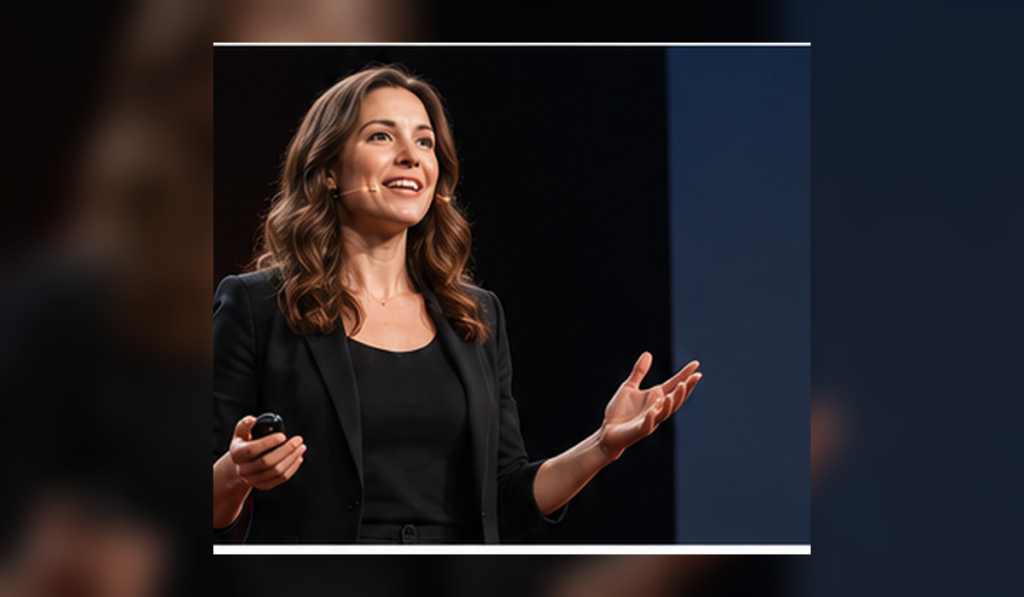
TED-style talks have influenced the way many professionals think about public speaking. Their appeal is not simply the stage design, the production quality or the fact that many talks are relatively short. What makes the best of them useful to business communicators is the discipline behind the message.
A strong talk usually gives the audience one clear idea to follow. It uses stories and evidence to develop that idea, removes material that does not serve it, and gives the speaker enough room to sound human rather than rushed. Those same principles can improve a client presentation, leadership briefing, sales pitch, conference session or internal meeting.
- Start With One Idea, Not an Entire Subject
One of the easiest ways to make a presentation forgettable is to treat a broad subject as if it were a message. “Leadership,” “digital transformation” or “quarterly results” may describe a topic, but they do not tell the audience what they should understand about it.
TED’s guidance for speakers places strong emphasis on structure, brevity and purpose. Its organizer guidance recommends focusing a talk on one major point and ensuring that each part supports the main idea. TED’s official speaker-preparation guidance also stresses that relevance to the audience matters as much as the idea itself.
That principle is highly transferable to business presentations. Before building slides, try completing this sentence: “When this presentation is over, I want the audience to understand that…” If the answer requires a paragraph, the idea is probably still too broad.
A narrow idea gives the rest of the presentation a filter. Useful examples stay. Interesting but unnecessary material goes. The result is not a simplistic talk; it is a focused one.
- Build a Throughline the Audience Can Follow
Memorable talks feel connected from beginning to end. The opening raises a question or establishes a problem, the middle develops the idea, and the conclusion resolves the journey. The audience should never have to wonder why a section is there.
For professionals, a throughline can be as simple as problem, insight and action. A presentation about declining customer retention, for example, might begin with what is changing, explain why the current approach no longer works, and finish with the decision required from leadership.
Transitions are especially important. Instead of moving from slide to slide with phrases such as “next” or “moving on,” explain the relationship between ideas. A transition such as “That tells us what is happening; the next question is why” keeps the audience inside the argument.
- Use Stories to Make Abstract Ideas Concrete
Stories work because they give information a setting, a sequence and a human consequence. In a corporate setting, that does not require a dramatic personal story. A customer example, a project that went wrong, a moment when a team changed direction or a short before-and-after comparison can all provide narrative structure.
The key is relevance. A story should clarify the central idea, not delay it. If the audience enjoys an anecdote but cannot explain what it had to do with the presentation, the story has become decoration.
A useful test is to ask whether the example changes how the audience understands the point that follows. If it does, keep it. If it merely adds color, consider cutting it.
- Make the Audience Work a Little
Good speakers do not carry the full cognitive load for the audience. They create moments where listeners predict, compare, decide or reflect. That involvement keeps attention active.
Questions are one of the simplest tools for doing this. Stanford Graduate School of Business communication lecturer Matt Abrahams has highlighted how questions can create intrigue and strengthen the connection between speaker and audience.
A business presenter can use that principle without turning a meeting into a workshop. Ask the audience to estimate a number before revealing it. Present two options and ask which one seems more plausible. Invite a quick show of hands. Pause after a difficult question before answering it yourself.
Even silent participation matters. When listeners are mentally answering, they are no longer merely watching.
- Treat Slides as Support, Not as a Script
Many professional presentations fail because the slide deck is asked to do too much. Dense slides try to function as speaker notes, handouts, data repositories and visual aids at the same time. The result is competition between the screen and the speaker.
The TED speaker guidance is deliberately restrained about slides: if they are used, they should be simple, visually clear and purposeful. That is a useful standard for almost any business presentation.
A slide should help the audience see what matters. One chart with the critical trend highlighted is more useful than six charts squeezed onto one page. One phrase that frames an idea is often more effective than a paragraph the audience must read while the presenter is talking.
If people can understand the entire presentation by reading the slides without the speaker, the deck may contain too much.
- Use Brevity as an Editing Tool
Time limits can improve a presentation because they force prioritization. The goal is not to imitate a specific talk length. It is to ask what would remain if the available time were cut by a third.
That exercise often reveals the real presentation. Repeated explanations disappear. Secondary examples go. Background information is reduced. The speaker is left with the strongest evidence and the clearest path to the conclusion.
Professionals can apply the same discipline before a meeting by creating a full version and then a shorter version. If the essential argument survives the shorter version, the structure is probably strong.
- Rehearse for Delivery, Not Memorization
A polished talk can look spontaneous while being extensively rehearsed. The purpose of practice is not to memorize every sentence. It is to become familiar enough with the structure that attention can shift from remembering words to communicating with people.
Rehearsal is particularly valuable for the opening, the major transitions and the closing. Those moments shape how confident and coherent the presentation feels.
Record a practice run and listen for pace. Important ideas often need more space than presenters give them. A short pause after a key point can help the audience process it, while constant speed makes every sentence sound equally important.
- Sound Like a Person, Not a Presentation
Professional does not have to mean impersonal. Speakers are usually more convincing when their language sounds like something they would naturally say rather than something written for a brochure.
Plain language, specific examples and natural phrasing make expertise easier to trust. Jargon may be necessary in specialist environments, but unnecessary jargon creates distance. The strongest presenters know the difference between demonstrating expertise and making the audience work to decode it.
Authenticity also means allowing appropriate personality into the presentation. A thoughtful observation, a genuine reaction or a moment of humor can make a speaker more memorable without weakening the seriousness of the message.
- Design the Ending Before You Design the Middle
Many presentations begin strongly and then simply stop. The final slide appears, the presenter says “that’s everything,” and the audience is left to decide what mattered.
A better ending returns to the central idea and makes the implication clear. What should the audience think differently? What should they decide? What should happen next?
If the presentation is intended to influence a decision, state the decision. If it is intended to teach, summarize the lesson. If it is intended to inspire action, make that action specific. A memorable ending gives the audience something to carry out of the room.
Applying TED-Style Discipline to Professional Presentations
The useful lesson from TED-style speaking is not that every professional should imitate a conference talk. A quarterly review should still be a quarterly review, and a technical briefing still needs enough detail to be useful. The lesson is that clarity is designed.
Strong presenters decide what matters most, organize everything around it, remove distractions, involve the audience and practice until the structure feels natural. Those are skills rather than personality traits.
Structured presentation skills training can help professionals develop those habits through practice and feedback, particularly when the goal is to communicate complex ideas with greater clarity and confidence.
The Main Lesson: Make the Idea Easy to Carry Forward
The best presentations do not leave audiences impressed by how much the speaker knows. They leave audiences able to explain the idea afterward.
That is the standard worth borrowing from memorable TED-style talks. Give the audience one strong idea, a clear path through it, enough evidence to believe it and enough humanity to care about it. Then remove anything that gets in the way.
When a presentation is built that way, the speaker does not need a famous stage to create impact. The message itself does the work.