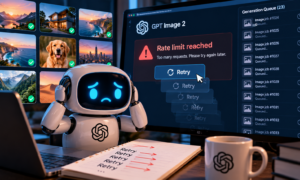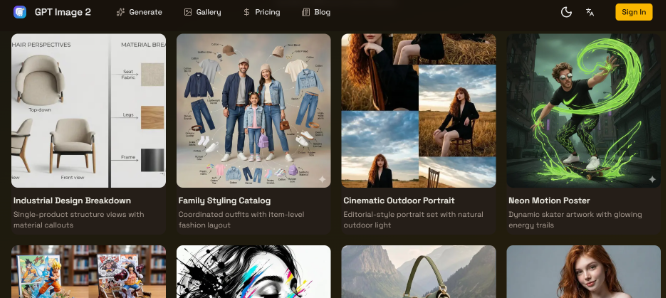
First, the uncomfortable truth GPT Image 2 is not an officially confirmed OpenAI product name in public documentation.
What people usually mean by this phrase online is one of three things:
- ChatGPT’s latest image generation capability
- Improvements over earlier models like DALL·E
- Or experimental/rumored naming used in blogs and SEO content
So instead of chasing a fake label, it’s more accurate to explain what’s actually happening under the hood.
1. What ChatGPT image generation really is
Modern ChatGPT image systems are built on advanced text-to-image models developed by OpenAI (historically DALL·E, and newer integrated models inside ChatGPT).
These systems allow you to:
- Describe an image in text
- Generate a visual output based on that description
- Sometimes edit or refine existing images (depending on the interface)
In simple terms:
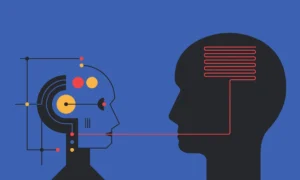
You write instructions → the model converts them into a visual representation.
No magic. Just probabilistic image generation guided by language understanding.
2. How image generation actually works
Despite marketing language online, the process is not “drawing like a human.”
Most modern AI image systems work like this:
Step 1: Text understanding
The model analyzes your prompt and extracts:
- Objects (what is in the image)
- Style (realistic, cartoon, UI design, etc.)
- Relationships (what is placed where)
- Constraints (colors, layout, composition)
This is where newer systems have improved: they better understand intent and structure, not just keywords.
Step 2: Latent image generation
Instead of drawing pixel-by-pixel like a traditional renderer, the model generates an image in a compressed mathematical space (latent space).
It:
- Starts from noise
- Gradually refines it
- Adjusts structure based on the prompt
This is called a diffusion-based process (or diffusion-like approach)
Step 3: Iterative refinement
The model repeatedly adjusts:
- shapes
- textures
- lighting
- composition consistency
Until it converges into a coherent image
3. Why modern models feel “smarter.”
Compared to older AI image tools, newer systems (like those integrated into ChatGPT) are better at:
✔ Prompt adherence
They follow complex instructions more accurately, especially in multi-object scenes.
✔ Composition structure
They handle layouts (UI designs, posters, diagrams) more reliably than older models.
✔ Style consistency
They maintain visual style across elements better than earlier-generation tools.
4. Text inside images (important improvement)
One real and noticeable improvement across newer image models is better text rendering.
Older models often produced:
- distorted letters
- unreadable words
- random symbols
Newer systems are better at:
- readable English text in images
- cleaner typography in posters/UI
- improved handling of structured layouts
However, this is still not perfect:
- long paragraphs in images often break
- Small text can still degrade
- Complex multilingual typography is inconsistent
So yes, improvement is real but not flawless.
5. Editing capabilities (where things get practical)
Modern ChatGPT image tools can also support editing workflows depending on the interface version:
Typical capabilities include:
- modifying parts of an image (inpainting)
- changing the style of an image
- adding/removing objects
- refining composition
But an important limitation:
These systems do NOT fully understand images as humans do. They approximate changes based on patterns, not true semantic understanding.
6. Resolution and “4K claims.”
A lot of online content claims “4K generation” or “ultra-HD native output.”
That is misleading.
What actually happens is:
- Models generate images at a base resolution
- Upscaling techniques may be applied afterward
- Perceived quality can reach “4K-like detail,” but it is not inherently true 4K rendering
So the correct statement is:
Output can be upscaled to high-resolution, but native generation is not equivalent to true 4K rendering in a traditional graphics sense
7. Strengths vs. Weaknesses
Strengths
- Strong text-to-image understanding
- Good at creative concepts and design drafts
- Useful for UI mockups and marketing visuals
- Improved consistency in structured scenes
Weaknesses
- Not reliable for exact factual diagrams
- Still struggles with precise fine text
- Can produce subtle structural errors
- Not suitable for high-precision technical illustration without correction
8. Real limitations people ignore
This is the part most hype articles avoid:
These models do not “understand reality.” They generate statistically likely visual patterns.
That means:
- They simulate design, not logic
- They imitate structure, not reasoning
- They approximate truth visually, not verify it
So even if outputs look impressive, they are still probabilistic guesses, not verified representations
Conclusion
The term “GPT Image 2” is mostly internet shorthand, not a clearly defined official product.
What actually exists is:
- continuous improvement in ChatGPT’s image generation systems
- better text understanding
- better composition control
- stronger integration with language models
But not a magical new “version” with the extreme claims often seen online