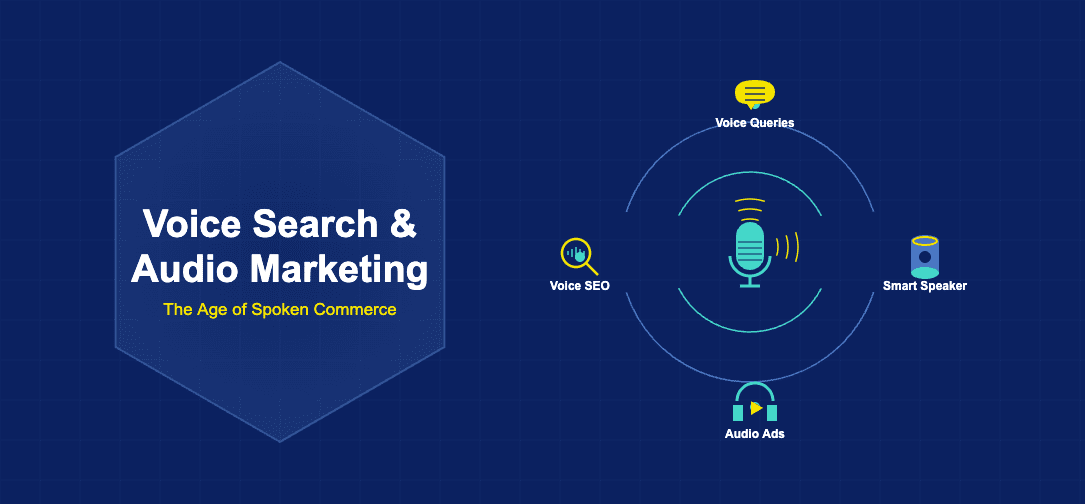
The voice search advertising market reached a forecast valuation of $19 billion in 2025, reflecting the rapid integration of voice interfaces into everyday consumer behaviour. Smart speakers, voice-enabled smartphones, and connected car systems have established spoken queries as a mainstream information discovery channel. For marketers, voice represents both an opportunity and a technical challenge: optimising for voice search requires fundamentally different approaches to content and SEO strategy, whilst audio advertising channels demand creative formats that work without visual elements. Understanding how voice and audio marketing technology works has become essential knowledge for organisations seeking to maintain visibility as consumer behaviour continues shifting toward voice-first interactions.
Understanding Voice Search and How It Differs from Text Search
Voice search queries differ fundamentally from their text counterparts in structure, length, and intent. Text searches tend to be concise keyword phrases: a user might type “best CRM software” into a search engine. The same person using voice search is more likely to ask a complete question: “What’s the best CRM software for a small business?” These conversational queries require content optimised for natural language rather than keyword density, fundamentally changing how organisations should approach search engine optimisation.
Question-based queries dominate voice search. Users ask who, what, where, when, why, and how questions, seeking specific answers rather than lists of results. Content that directly answers common questions in clear, concise language performs best in voice search environments. Featured snippets, the answer boxes that appear at the top of Google search results, are particularly valuable for voice optimisation: voice assistants frequently read featured snippet content as their spoken answer.
Optimising for Voice Search
Voice search optimisation requires a distinct technical and content strategy. Schema markup, structured data that helps search engines understand the content and context of web pages, plays an increasingly important role in voice search visibility. FAQ pages using appropriate question-and-answer structured data are particularly effective at capturing voice search queries. Local business schema helps organisations appear for location-based voice queries such as “coffee shops near me” or “pharmacies open now.”
Page speed is critically important for voice search performance. Voice assistants prioritise fast-loading pages, and mobile optimisation is essential given that significant proportions of voice searches occur on smartphones. Content written in conversational, accessible language performs better in voice contexts than technical jargon or complex sentence structures. Targeting long-tail conversational keywords that match natural speech patterns, rather than abbreviated text-search phrases, helps organisations capture voice query traffic effectively.
| Characteristic | Voice Search | Text Search |
|---|---|---|
| Query format | Full sentences and questions: “What is the best…” | Keywords: “best CRM software” |
| Average query length | 29 words on average | 2-3 words typically |
| Local intent | 22% are location-based queries | Approximately 46% have local intent |
| Results shown | Single spoken answer | Ten or more results per page |
| Content format ideal | Direct answers, FAQ format, featured snippets | Comprehensive content, keyword optimisation |
Smart Speaker Advertising and Voice Commerce
Amazon’s Alexa and Google Assistant have established smart speakers as mainstream consumer devices, creating new advertising and commerce opportunities. Amazon’s advertising ecosystem allows brands to promote products through voice shopping interactions, with sponsored product placements appearing when users ask Alexa to reorder items or search for products. Google’s voice advertising capabilities integrate with its broader display and search advertising ecosystem, enabling brands to appear in voice search results.
Voice commerce, where consumers complete purchases through voice interfaces, remains nascent but growing. Amazon has invested significantly in streamlining voice purchasing through Alexa, enabling quick reorders of previously purchased items through simple spoken commands. As voice interfaces improve and consumer trust in voice transactions grows, voice commerce represents a significant emerging channel requiring brands to optimise their product listings and purchasing flows for voice-first experiences.
Podcast Advertising Technology
Podcast advertising has emerged as one of the most effective audio marketing channels, combining intimate listener relationships with increasingly sophisticated targeting and measurement capabilities. The format’s engaged listener base and limited advertising density create environments where advertising messages receive genuine attention, with podcast advertising consistently demonstrating strong brand recall and purchase intent metrics compared to other digital formats.
Programmatic podcast advertising technology has transformed the medium from a manually negotiated channel into an automated, targetable one. Dynamic ad insertion technology allows advertisers to serve different ads to different listeners of the same episode, enabling audience targeting based on demographics, geography, listening behaviour, and third-party audience data. This targeting capability brings podcast advertising closer to digital display advertising’s precision whilst retaining the intimacy and engagement of the podcast format.
Programmatic Audio Advertising
Beyond podcasts, programmatic audio advertising encompasses streaming music services, digital radio, and audio content platforms. Platforms including Spotify, Pandora, and iHeartMedia have developed sophisticated programmatic advertising infrastructure that enables audience targeting, frequency management, and performance measurement across their audio inventory. Spotify’s advertising platform, in particular, offers detailed audience targeting using first-party data from its 500 million users, combined with contextual targeting based on playlist mood, activity context, and listening time.
| Channel | Audience Reach | Ad Format | Measurement Capability |
|---|---|---|---|
| Smart speaker | 35% of UK households have smart speakers | Flash briefings, sponsored skills, voice ads | Limited: engagement signals only |
| Podcast | 32% of UK adults listen monthly | Pre-roll, mid-roll, host-read, dynamic insertion | Moderate: downloads, surveys, attribution |
| Streaming music | Spotify: 500M+ users globally | Audio ads, video takeovers, sponsored sessions | Strong: first-party audience data, digital attribution |
| Digital radio | Broad: national and local reach | Standard audio spots, sponsorships | Traditional: impressions, reach, frequency |
Preparing Your Organisation for Audio-First Marketing
Succeeding in voice and audio marketing requires both technical and creative adaptation. From a technical standpoint, organisations should audit their existing content for voice search optimisation opportunities, implement structured data markup, and ensure their local business listings are complete and accurate. Developing FAQ content that directly addresses common customer questions in natural language creates content well-positioned for voice search visibility.
Creative adaptation requires developing audio-first content capabilities. Radio-style scriptwriting, voice acting, and audio production skills are increasingly valuable as audio advertising channels grow. Brands that establish distinctive sonic identities, consistent audio branding elements that appear across podcast sponsorships, streaming ads, and voice interface interactions, build audio brand recognition that complements visual brand identity. As voice interfaces become more prevalent, the organisations that have invested in understanding and optimising for spoken commerce will have a meaningful competitive advantage over those that have focused exclusively on visual digital channels.
Related reading: Audio Advertising Technology: Podcasts, Streaming and the AdTech Audio Stack
Data from Statista’s digital market outlook shows that global digital spending continues to grow at double-digit rates, with mobile channels accounting for an increasingly dominant share of total transactions.
PwC’s analysis of financial services trends through 2025 highlights the convergence of technology and media as a defining dynamic, with data-driven personalisation becoming the primary competitive differentiator.
For more coverage on related topics, explore our dedicated section on technology insights.