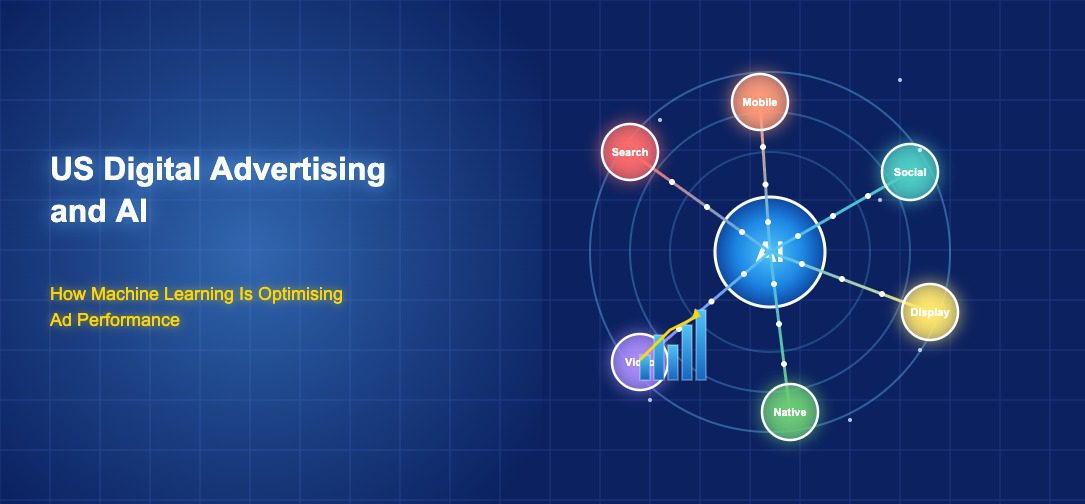
Artificial intelligence has become the primary engine of optimization across the 413 billion dollar US digital advertising market, with an estimated 87 percent of programmatic ad transactions now involving machine learning systems at some stage of the buying, targeting or creative process. The integration of AI into advertising operations has moved from experimental novelty to operational necessity, with platforms including Google, Meta and Amazon deploying neural networks that process billions of signals to deliver ads with precision that manual campaign management cannot match.
The financial impact of AI on advertising performance is measurable and significant. Advertisers using AI-powered campaign optimization tools report average improvements of 20 to 35 percent in return on ad spend compared to manually managed campaigns. Google’s Performance Max campaigns, which use AI to optimize across all Google advertising surfaces simultaneously, have been adopted by more than 80 percent of large advertisers on the platform since their launch. Meta’s Advantage Plus suite has shown similar adoption rates, with the company reporting that AI-optimized campaigns deliver 32 percent lower cost per acquisition on average.
The scale of AI deployment in advertising is difficult to overstate. Google’s advertising systems evaluate more than 100 trillion combinations of targeting, bidding and creative variables daily. Meta’s ad delivery system processes over 12 million ad auctions per second, with each auction informed by machine learning models that predict the likelihood of user engagement and conversion. These systems operate at a computational scale that exceeds most other commercial AI applications.
How AI is reshaping ad targeting and bidding
Machine learning has fundamentally changed how advertisers identify and reach their target audiences. Traditional audience targeting relied on explicit demographic and interest categories selected by human media planners. AI-powered targeting systems analyze patterns across billions of user interactions to identify audiences most likely to convert, often discovering effective audience segments that human planners would never have considered. Google’s broad match keyword targeting, powered by natural language understanding models, now matches search queries to advertiser keywords based on semantic meaning rather than exact word matching.
Automated bidding systems represent one of the most impactful applications of AI in advertising. Google’s Smart Bidding strategies use machine learning to set optimal bid amounts for each individual ad auction, considering hundreds of contextual signals including device type, location, time of day, browser, operating system and the user’s position in the purchasing journey. These systems adjust bids in real time at a speed and granularity that human bid managers cannot replicate, processing millions of bid decisions per minute across large advertiser accounts.
Predictive audience modeling has become a standard capability across major advertising platforms. These models analyze historical conversion data to identify patterns that predict which users are most likely to take desired actions, then automatically expand targeting to reach similar users who have not yet interacted with the advertiser. Meta’s Lookalike Audiences and Google’s Similar Audiences use these techniques to help advertisers scale their campaigns beyond their existing customer bases while maintaining performance efficiency.
Cross-channel optimization powered by AI enables advertisers to allocate budgets dynamically across multiple platforms and formats based on real-time performance data. Rather than setting fixed budget allocations across channels at the beginning of a campaign, AI systems can shift spending toward the platforms and formats that are delivering the strongest results at any given moment. This dynamic allocation capability is particularly valuable for advertisers with limited budgets who need to maximize the impact of every advertising dollar.
AI-powered creative optimization and generation
Creative optimization has emerged as one of the most rapidly advancing applications of AI in advertising. Dynamic creative optimization systems automatically test hundreds or thousands of creative variations to identify the combinations of images, headlines, copy and calls to action that generate the strongest performance for each audience segment. These systems can personalize ad creative based on user characteristics, contextual factors and predicted preferences, delivering more relevant advertising experiences at a scale that manual creative production cannot achieve.
Generative AI has begun to transform advertising creative production. Google’s automatically created assets feature uses large language models to generate ad headlines and descriptions based on landing page content and campaign objectives. Meta has introduced AI tools that generate background images and text variations for advertising creative. These capabilities reduce the time and cost of creative production while enabling advertisers to test more variations than would be economically feasible with traditional creative development processes.
Video advertising creative is increasingly influenced by AI, with tools that can generate video ads from static images, automatically edit long-form video into short-form advertising clips and personalize video elements based on viewer characteristics. Companies including Synthesia, HeyGen and Runway have developed AI video generation tools that are being adopted by advertisers for producing advertising content at scale. While fully AI-generated video advertising remains in its early stages, the technology is advancing rapidly and will likely become a standard component of advertising creative production.
AI-powered creative testing has accelerated the pace of creative iteration in advertising. Where traditional A/B testing might evaluate two or three creative variations over several weeks, AI testing systems can simultaneously evaluate dozens of variations and identify winning creative elements within hours. This rapid testing capability enables advertisers to continuously improve creative performance throughout campaign flights rather than making creative decisions based on limited pre-campaign testing.
Measurement and attribution powered by machine learning
AI has become essential for advertising measurement and attribution as traditional tracking methods face increasing limitations from privacy regulations and technical changes. Machine learning models can estimate conversion contributions from individual advertising touchpoints even when direct tracking is unavailable, using statistical patterns identified in aggregate data to fill gaps left by cookie deprecation and app tracking restrictions.
Media mix modeling has been revitalized by machine learning techniques that enable faster model training, more granular analysis and near-real-time optimization recommendations. Traditional media mix models required months of data collection and weeks of analysis to produce actionable insights. Modern AI-powered models can incorporate daily data feeds, test incremental budget scenarios and provide optimization recommendations within days rather than months. Companies including Google, Meta and independent vendors have developed open-source and proprietary media mix modeling tools that make these capabilities accessible to advertisers of all sizes.
Incrementality measurement, which estimates the causal impact of advertising by comparing outcomes between exposed and control groups, has been enhanced by machine learning techniques that improve experimental design, reduce required sample sizes and increase the statistical precision of results. These improvements make incrementality testing practical for a wider range of advertisers and campaigns, providing more reliable evidence of advertising effectiveness than observational attribution methods.
Fraud detection in advertising relies heavily on machine learning systems that identify suspicious patterns in impression, click and conversion data. These systems analyze hundreds of behavioral signals to distinguish between genuine human engagement and fraudulent bot activity, protecting advertiser budgets from waste. The ongoing arms race between fraud perpetrators and detection systems ensures that AI will remain central to maintaining the integrity of digital advertising transactions.
The competitive implications of AI in advertising
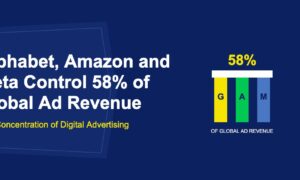
The deepening integration of AI into advertising operations is creating competitive advantages for platforms and advertisers that invest most heavily in machine learning capabilities. Google, Meta and Amazon benefit from massive datasets that improve the accuracy of their AI models, creating a data advantage that smaller competitors struggle to match. The more advertisers use these platforms, the more data they generate, which improves AI model performance, which attracts more advertisers. This data flywheel effect concentrates advertising spending among platforms with the most sophisticated AI capabilities.
For advertisers, AI is simultaneously democratizing and concentrating competitive advantage. Self-service AI tools from major platforms give small advertisers access to optimization capabilities that were previously available only to large brands with dedicated data science teams. However, large advertisers who invest in proprietary AI tools, first-party data infrastructure and specialized machine learning talent can develop capabilities that exceed what platform-provided tools offer, creating a new form of competitive advantage based on AI sophistication.
The advertising agency industry is being reshaped by AI as automated systems take over tasks that previously required human specialists. Media buying, audience targeting, bid management and basic creative production are increasingly handled by AI systems, shifting the value of human expertise toward strategic planning, creative direction and the interpretation of AI-generated insights. Agencies that successfully integrate AI into their operations can serve more clients with fewer staff, while those that resist automation risk becoming uncompetitive.
The trajectory of AI in advertising points toward increasingly autonomous campaign management, where AI systems handle the majority of operational decisions while human oversight focuses on strategic direction and brand governance. This evolution will continue to improve advertising efficiency and effectiveness while raising important questions about transparency, accountability and the role of human judgment in commercial communication that reaches billions of consumers daily.