User-generated-content ads, the creator-style clips where someone talks to camera about a product, have become the default creative on TikTok, Reels and Shorts. They outperform polished brand videos for a simple reason: they look like the rest of the feed.
The problem for small brands is volume. Paid social rewards testing: different hooks, different openings, different benefits up front. A single filmed UGC shoot gives you one or two angles. Testing eight means eight shoots, or a creator retainer most small businesses cannot justify.
AI video has changed that math. Here is how small teams are using it to test ad angles, and where the limits are.
The testing problem in numbers you already know
Every performance marketer knows the pattern: most ad variations underperform, and a small number carry the account. You cannot predict which in advance. The only way to find a winner is to run enough variations that one emerges.
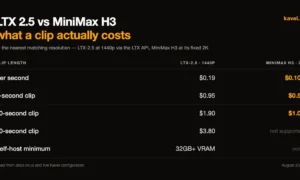
With filmed content, the cost per variation is high, so teams test too few. With AI-generated content, the cost per variation drops to a few credits and a few minutes, which makes it realistic to test hooks the way you test headlines.
What an AI UGC workflow looks like
- Start from the product. Write a short brief: what the product is, who buys it, the one problem it solves.
- Write several hooks. “I stopped buying X after I found this.” “Three things nobody tells you about Y.” “POV: you finally fixed Z.” Each hook becomes its own ad.
- Generate the clips. An AI video generator for shorts can turn each brief into a vertical, creator-style ad with a spoken hook, voiceover and burned-in captions, composed for 9:16 rather than cropped from landscape.
- Add an explainer cut. Some products need explaining rather than showing. A short animated version works well here: toonbee ai turns a script into a narrated cartoon clip with the same character in every scene, which suits a five-second product explainer on a landing page or a longer how-it-works ad. Photoreal product B-roll (pouring, steaming, unboxing) makes a good cutaway between the hook and the call to action.
- Run small, cut fast. Launch the variations with a modest budget each, kill the bottom half after a few days, and put the budget behind what works.
Where AI video works best for ads
- Hook testing. The first two seconds decide whether anyone watches. AI makes it cheap to test many openings on the same body.
- Product B-roll. Food, drinks, cosmetics and gadgets with strong visual moments (pouring, steaming, unboxing) generate well.
- Explainers. A five-second motion clip or a short narrated explainer for a landing page.
- Localization. The same ad with narration in another language, without reshooting.
Where it still falls short
- Real testimonials. An AI-generated “customer” is not a customer. Presenting synthetic people as real buyers is misleading, and platforms and regulators increasingly treat it that way. Use AI for demonstrations and narration, not fake reviews.
- Hands-on product proof. If the selling point is how something feels, fits or performs, real footage still wins.
- Brand-sensitive categories. Health, finance and anything with compliance requirements needs human review of every claim the narration makes.
Building a simple testing system
Generating more ads only helps if you can tell which ones work. A lightweight system is enough for most small teams:
- Name every variation consistently. Product, hook number, format and date in the file name and the ad name (for example, serum_hook03_ugc_0918). It sounds tedious, but it is the only way to read results a month later.
- Change one thing at a time. Keep the body and call to action the same while you test hooks; once a hook wins, test the offer or the call to action behind it.
- Give each variation a fair budget. A variation that gets fifty impressions has not been tested. Set a minimum spend before judging.
- Keep a winners file. Write down the hooks, angles and formats that worked and why you think they did. Over time this becomes the brief for every new round of creative.
- Refresh before fatigue. Even winning ads wear out. When frequency climbs and click-through drops, bring in new variations of the winning angle rather than starting from scratch.
The combination of cheap production and disciplined testing is where AI video pays off. Teams that only use it to make more content, without measuring, usually end up with more content and the same results.
Practical rules for small teams
Keep the price visible before you render. Use tools that show the credit cost before generating and refund failed renders automatically; it keeps testing budgets predictable.
Check commercial rights. Ads are commercial use. Make sure the plan you are on includes it, and that output carries no watermark.
Label honestly. Follow platform rules on AI-generated content. Disclosure rarely hurts performance, and getting an account restricted hurts a lot.
Measure on outcomes, not views. A hook that earns cheap views but no clicks is not a winner. Judge variations on click-through and cost per purchase.
The takeaway
AI video does not replace good creative strategy, but it removes the main reason small brands under-test: the cost of making each variation. When a new ad angle costs minutes instead of a shoot, the winning ad is more likely to be found, and that is where the return actually comes from.