Water has always been a source of inspiration, relaxation, and aesthetic appeal. Incorporating a water feature into a home, garden, or commercial space can completely transform the environment, creating a sense of serenity, luxury, and natural beauty. From gently flowing fountains to elaborate waterfalls, water features combine visual elegance with the soothing sound of moving water, enhancing both interior and exterior spaces. Understanding the types of water features, their benefits, installation considerations, and maintenance requirements is essential to creating a feature that is both beautiful and functional.
The Appeal of Water Features
Water has an inherent ability to attract attention and evoke a calming effect. Whether it is the gentle trickle of a small fountain or the dramatic cascade of a waterfall, moving water engages multiple senses. Visually, water reflects light, adds movement, and complements landscaping or architectural design. Audibly, the sound of flowing water masks unwanted noise, providing a natural, relaxing soundtrack that enhances comfort and reduces stress. Psychologically, studies have shown that water can help lower heart rates, promote mindfulness, and create a peaceful ambiance. These qualities make water features an ideal addition to residential gardens, patios, courtyards, office spaces, and public areas.
Types of Water Features
Water features come in a wide range of designs and styles to suit different spaces, tastes, and budgets. Choosing the right type requires understanding the aesthetic and functional goals of the space.
1. Fountains
Fountains are among the most popular water features and come in diverse designs, from classic tiered structures to contemporary minimalist styles. They can be freestanding, wall-mounted, or incorporated into a landscape, providing a focal point that draws the eye. Fountains are ideal for smaller spaces and are often used to enhance entryways, patios, or indoor settings.
2. Waterfalls
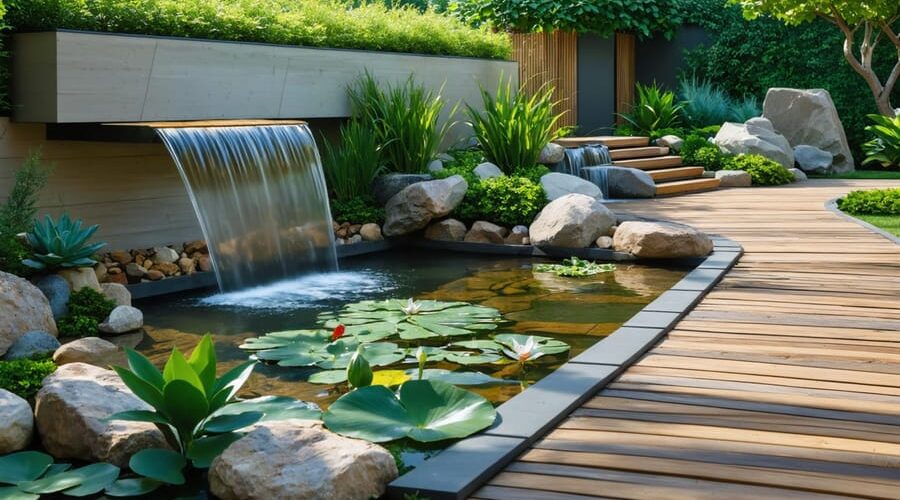
Waterfalls add a dynamic, dramatic element to a landscape. They can be naturalistic, mimicking rock formations, or modern, incorporating sleek lines and materials like glass or stainless steel. Waterfalls can be integrated into ponds, streams, or standalone structures, creating a bold centerpiece that enhances visual interest while generating soothing soundscapes.
3. Ponds and Streams
Ponds and streams offer a naturalistic approach, blending water with plants, rocks, and aquatic life. Koi ponds, for example, add color and movement, while small streams can guide water through a garden, enhancing landscape design and creating a harmonious flow. These features often require more space and careful planning but provide a tranquil, immersive environment.
4. Wall and Indoor Water Features
Wall-mounted or indoor water features are perfect for apartments, offices, and smaller outdoor areas. These designs often incorporate minimalist materials and LED lighting to create a modern, elegant ambiance. Indoor water walls can improve air humidity and provide a calming backdrop for meditation areas, lounges, or reception spaces.
5. Custom Designs
Custom water features allow for complete personalization. Designers can create features that complement the architectural style of a property, incorporate sculptures or decorative elements, and tailor water flow and sound levels to the client’s preference. Custom designs often combine fountains, ponds, waterfalls, and lighting to create a cohesive, unique experience.
Benefits of Installing a Water Feature
Water features provide aesthetic, environmental, and psychological benefits that enhance any space.
Aesthetic Enhancement
A well-designed water feature serves as a focal point, elevating the visual appeal of a garden, patio, or indoor space. It can complement landscaping, furniture, and architectural elements, adding elegance, sophistication, or a naturalistic charm depending on the design.
Stress Reduction and Relaxation
The sound of flowing water promotes relaxation and reduces stress. Studies suggest that water can have a calming effect on the nervous system, improving mental clarity and reducing tension. A water feature creates a peaceful retreat where people can unwind, meditate, or enjoy quiet moments.
Masking Unwanted Noise
Water features can help mask unwanted environmental noise, such as traffic, machinery, or neighborhood activity. The consistent sound of flowing water provides a natural white noise that enhances privacy and improves the overall ambiance of outdoor or indoor spaces.
Environmental Benefits
Water features support local ecosystems by attracting birds, butterflies, and other wildlife. Ponds and streams can also support aquatic plants, contributing to biodiversity and providing a balanced, healthy environment. Indoor water features can increase humidity, improving air quality and comfort levels in dry indoor environments.
Property Value
A thoughtfully designed water feature can increase property value by adding a luxurious and unique element to the landscape. Potential buyers often view water features as premium enhancements that improve the attractiveness and desirability of a property.
Planning and Installation Considerations
Proper planning and installation are crucial to ensure that a water feature functions efficiently, remains safe, and complements its surroundings.
Location and Space
Consider the available space, sunlight exposure, and proximity to electrical sources. The location should allow for visibility while providing accessibility for maintenance. Larger features like ponds or waterfalls require careful site preparation, including leveling and drainage.
Materials and Design
Materials such as stone, concrete, metal, glass, and wood can significantly affect the appearance and longevity of a water feature. Design choices should align with the overall landscape or interior décor. For example, natural stone creates a rustic, organic look, while stainless steel or glass conveys modern elegance.
Water Flow and Pump Systems
Selecting the right pump system is essential to achieve the desired water flow and sound effect. Flow rate, head height, and energy efficiency are key considerations. Pumps should be sized appropriately to prevent overworking the system, ensuring durability and reducing energy consumption.
Lighting
Lighting enhances the visual appeal of water features, particularly at night. LED lights, spotlights, or fiber optic systems can highlight water movement, textures, and surrounding landscaping, creating a dramatic or serene effect depending on the design intent.
Safety and Maintenance
Water features require ongoing maintenance to prevent algae buildup, keep pumps functioning properly, and ensure water quality. Safety measures, especially for features with deep water, include fencing or barriers to prevent accidents and protecting electrical components from moisture exposure. Regular cleaning, water treatment, and seasonal adjustments help maintain appearance and performance over time.
Maintenance Tips
Routine maintenance is essential to preserve both the functionality and aesthetics of a water feature. Regular cleaning of pumps, filters, and surfaces prevents debris buildup and extends equipment lifespan. Treating water with safe chemicals or natural treatments controls algae and bacterial growth. Inspecting plumbing, liners, and electrical components ensures the system operates efficiently. Seasonal adjustments, such as winterizing outdoor features, prevent damage from freezing temperatures. Proper maintenance ensures that the water feature remains a consistent source of beauty and tranquility for years to come.
Conclusion
Water features are more than decorative elements; they are transformative additions that enhance the sensory experience of a space. By combining visual beauty, soothing sounds, environmental benefits, and increased property value, water features create spaces that are both functional and inspiring. Whether it is a small indoor fountain, a cascading waterfall, or a landscaped pond, careful planning, professional installation, and diligent maintenance ensure that the feature remains an enduring centerpiece. Investing in a water feature is not merely a design choice but a long-term commitment to creating an environment that promotes relaxation, well-being, and aesthetic harmony.