Travel and hospitality software development companies are reshaping how hotels operate in a digital-first world. From booking automation to guest experience personalization, modern hospitality now depends on intelligent software ecosystems rather than manual processes.
What used to be a heavily operational, people-driven industry is now increasingly powered by data, automation, and connected digital platforms. Every interaction, no matter how small, is now influenced by technology decisions made behind the scenes.
Hotels are no longer just physical spaces for accommodation. They are becoming fully digital service environments where every interaction—from booking to check-out—can be optimized, tracked, and improved through technology. And here’s the key shift: software is no longer a support function in hospitality. It is the core infrastructure that determines how efficiently and competitively a hotel can operate.
In many cases, the quality of software directly defines the quality of guest experience. A slow booking engine, outdated interface, or fragmented PMS system can immediately lead to lost revenue, abandoned reservations, and frustrated customers. On the other hand, a well-designed, integrated ecosystem can significantly increase occupancy rates, improve staff efficiency, and unlock new revenue streams through personalization and upselling.
This is why investment in digital infrastructure has become a strategic priority for hospitality businesses of all sizes—from boutique hotels to global chains.
Why Hotel Software Matters In Modern Hospitality
The hotel industry has gone through a massive transformation in the last decade. Manual reservations, spreadsheets, phone-based bookings, and disconnected operational tools are no longer sufficient in a market that demands speed, accuracy, and personalization at scale.
What makes this shift even more important is the behavior of modern travelers. Guests no longer compare hotels only by price, location, or star rating. Instead, they evaluate the entire digital experience—from the first search query to post-stay communication and loyalty engagement. The booking journey itself has become part of the product.
Today’s travelers expect instant confirmation, frictionless booking flows, mobile-first access, and highly personalized service that adapts to their preferences in real time. Even small delays, inconsistent pricing, or unclear availability can lead to abandoned bookings or negative reviews that directly affect brand reputation and long-term revenue performance.
Behind the scenes, hotel operations are becoming significantly more complex than they appear from the outside. A single reservation can trigger multiple interconnected systems at once: reservation management platforms, payment gateways, housekeeping schedules, CRM updates, inventory tracking, and revenue management tools.
Without proper integration, these systems quickly become fragmented. This fragmentation leads to operational errors, double bookings, communication delays between departments, inconsistent guest data, and inefficient allocation of staff and resources. Over time, these issues compound and directly impact profitability and service quality.
This is where modern software becomes essential. It connects all operational layers into one unified ecosystem, ensuring smooth communication between departments and enabling real-time decision-making based on accurate, centralized data. Instead of reacting to problems after they occur, hotels can proactively optimize operations as they happen.
But here’s the reality. Not all vendors deliver the same level of transformation. Some focus on isolated functionality—solving one specific problem at a time. Others design scalable, interconnected ecosystems that fundamentally redefine how entire hospitality businesses operate, grow, and compete in a digital-first environment.
What Makes The Top Hotel Software Development Companies Stand Out
Before exploring the top 15 hotel software development companies, it is important to understand what defines strong players in this industry.
A reliable technology partner does more than build software. It helps hotels rethink operational models, improve efficiency, and create better guest journeys through digital transformation.
In most successful cases, software becomes a strategic asset rather than just an operational tool.
Key Qualities for Assessing Hotel Software Providers:
- Deep understanding of hospitality workflows and guest behavior
- Ability to design scalable cloud-based systems
- Strong UX focus for both staff and guests
- Seamless integration with third-party platforms and APIs
- Real-time data processing and automation capabilities
- Experience with multi-property and global hotel operations
And here’s something often underestimated. The best providers don’t just respond to current problems. They anticipate future needs. They build systems that evolve alongside business growth, seasonal demand, and changing traveler expectations. This long-term mindset is what separates average vendors from true industry leaders.
Top 15 Hotel Software Development Companies
Below is a curated list of the top 15 hotel software development companies transforming modern hospitality through technology, innovation, and digital ecosystems.
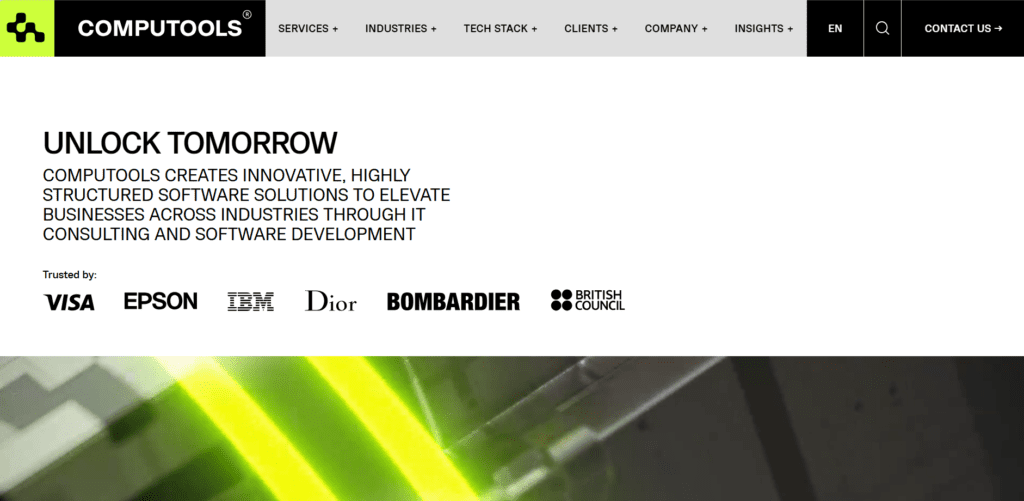
1) Computools – A Leader in Custom Hotel Software Development
Key Features
- 12+ years of expertise in travel and hospitality
- 250+ vetted software engineers
- 400+ software projects delivered worldwide
- 40+ custom-built projects for travel and hospitality
- ISO 9001 & ISO 27001 certified security practices
- Trusted by global brands including Visa, Epson, Dior, British Council, and IBM.
Computools stands out among the top hotel software development companies thanks to its ecosystem-first approach. Instead of building isolated tools, it creates interconnected platforms that unify hotel operations, guest experience, and business intelligence.
The company focuses on solving real operational inefficiencies that hotels face daily, especially in multi-system environments where data fragmentation is a major issue.
Core Focus
Computools delivers tailored software solutions for hotels, resorts, casinos, travel agencies, and hospitality startups. The company provides full-cycle travel and hospitality software development services, covering every stage from IT consulting to deployment and continuous support.
Its custom-built solutions include booking engines, payment and billing software, PMS and RMS platforms, guest mobile applications, loyalty software, CRM systems, and custom automation tools for housekeeping, reservations, and front desk operations.
The primary goal is to eliminate operational friction and create seamless digital guest journeys from booking to check-out.
Business Impact
- Faster booking and check-in processes
- Reduced operational costs through automation
- Improved guest satisfaction through personalization
- Higher efficiency across departments
- Better coordination between hotel systems
Computools also addresses critical hospitality challenges such as fragmented booking systems, OTA dependence, lack of real-time visibility, and inconsistent service delivery across multiple locations. By unifying operations into one ecosystem, hotels gain better control, scalability, and operational transparency.
2. Oracle Hospitality – Enterprise Hotel Infrastructure
Oracle Hospitality provides enterprise-grade cloud solutions designed for large hotel chains and global hospitality brands.
Its platforms centralize operations across multiple properties, allowing hotel groups to manage reservations, guest services, and financial operations from a single system.
This level of centralization becomes especially important for international hotel chains that operate across different markets, currencies, and regulatory environments.
Key Features
- Cloud-based PMS systems
- Multi-property management
- Enterprise security and compliance
- Integrated guest services
- Advanced reporting and analytics
3. Sabre Hospitality Solutions – Data-Driven Operations
Sabre focuses on improving hotel performance through data intelligence and automation.
Its systems help hotels optimize pricing, manage distribution channels, and improve occupancy rates using real-time analytics.
Key Features
- Central reservation systems
- Revenue optimization tools
- Analytics dashboards
- Channel management
- Dynamic pricing capabilities
4. Cloudbeds – Unified Hospitality Platform
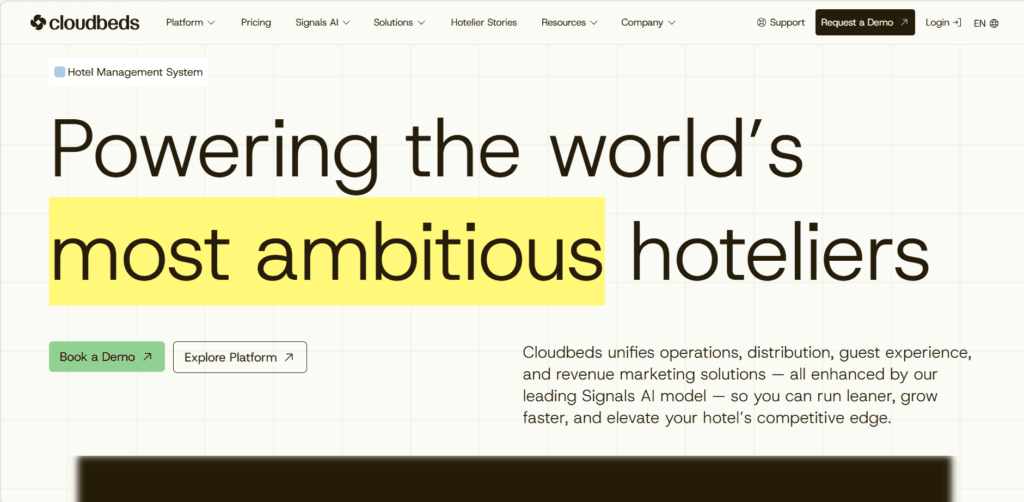
Cloudbeds offers an all-in-one system that connects booking, distribution, and operations into a single platform.
It is widely used by independent hotels and boutique properties looking for simplicity without sacrificing functionality.
Key Features
- Unified hotel management system
- Booking engine integration
- Channel manager
- Revenue optimization tools
- Automation of daily operations
5. Hotelogix – Simplified Cloud PMS
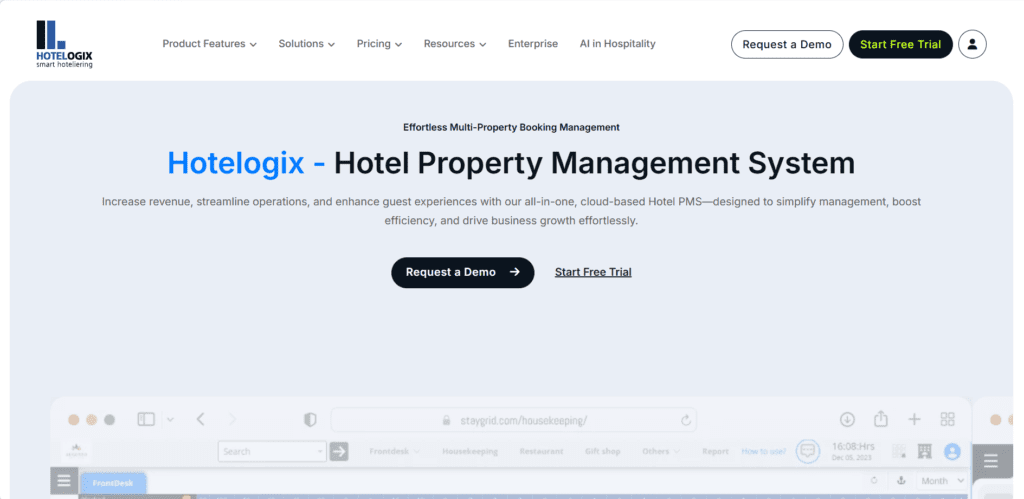
Hotelogix provides cloud-based property management systems designed for small and mid-sized hotels.
It focuses on ease of use and quick implementation, making it accessible for businesses without large IT teams.
Key Features
- Front desk automation
- Cloud PMS system
- Multi-property support
- Real-time reporting
- Inventory management
6. StayNTouch – Mobile-First Hotel Management
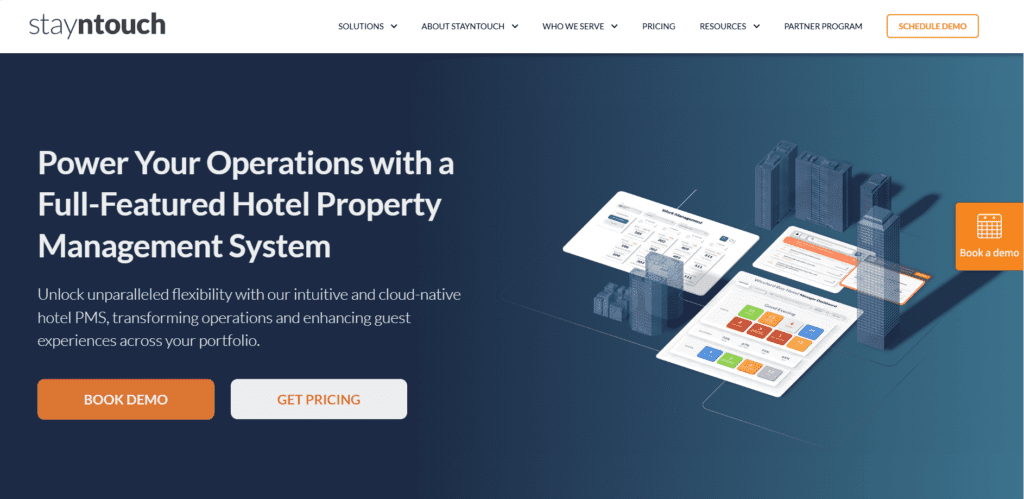
StayNTouch focuses on transforming traditional hotel operations into fully mobile-driven experiences. Its platform is designed around the idea that hotel staff and guests should be able to manage key interactions directly from mobile devices without delays or unnecessary steps.
The company is particularly strong in enabling contactless hospitality, which has become a major expectation in modern travel. From digital check-in to mobile room management, StayNTouch reduces the need for physical interaction while improving operational speed.
Another important aspect is flexibility. The system adapts well to both independent hotels and larger chains that want to modernize guest experience without rebuilding their entire infrastructure.
Key Features
- Mobile PMS solutions
- Contactless check-in and check-out
- Guest engagement tools
- Cloud-based infrastructure
- Real-time operational updates
7. SiteMinder – Distribution And Revenue Connectivity
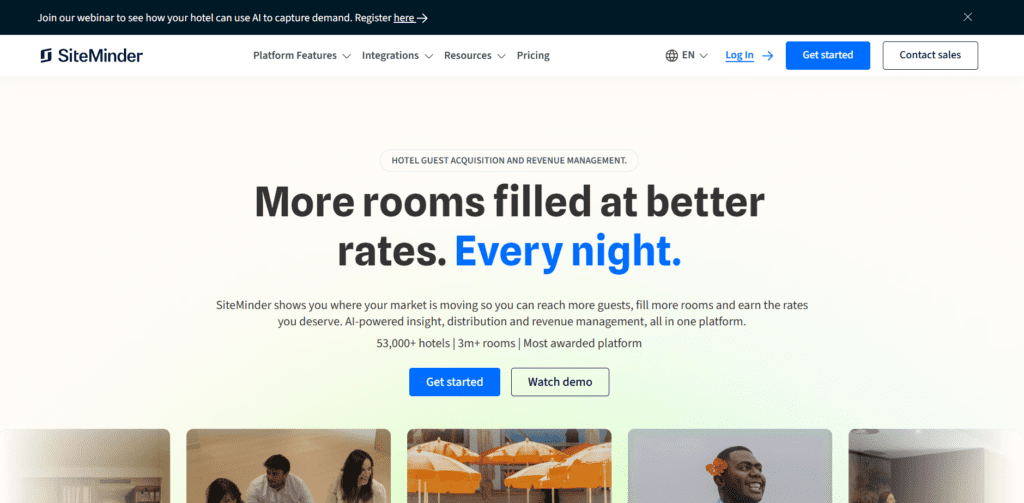
SiteMinder plays a critical role in hotel distribution by connecting properties with multiple online booking channels. It ensures that hotel availability, pricing, and inventory stay synchronized across all platforms in real time.
This is especially important in a fragmented digital ecosystem where hotels often rely on dozens of OTAs and booking platforms. Without centralized control, overbooking and pricing inconsistencies become common problems.
SiteMinder solves this by acting as a central hub that simplifies distribution and improves revenue visibility across channels.
Key Features
- Channel management system
- OTA integration
- Booking engine solutions
- Revenue optimization tools
- Real-time inventory synchronization
8. Mews – Cloud-Native Hospitality Platform
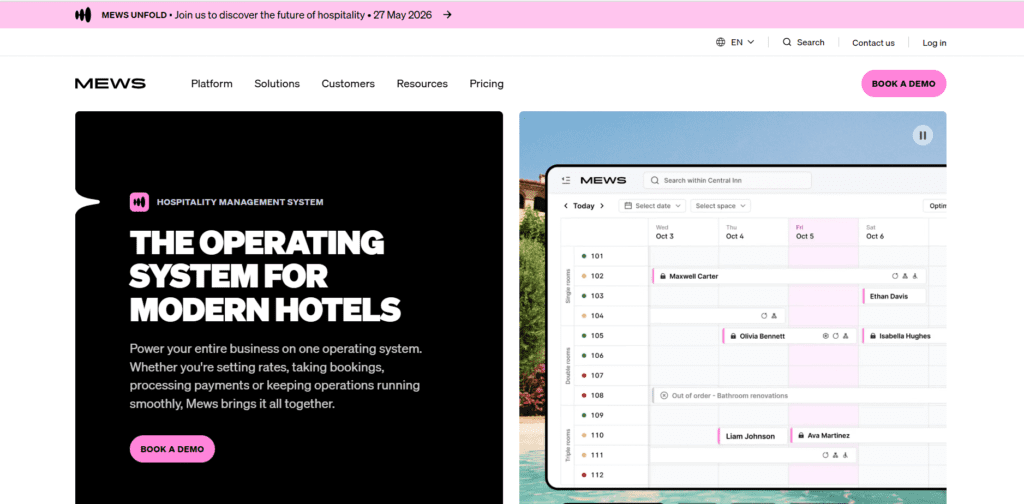
Mews offers a fully cloud-native hotel management system designed for automation and scalability. It removes the complexity of traditional PMS solutions and replaces them with a more flexible, API-driven ecosystem.
The platform is built with modern hospitality operations in mind, where speed, integration, and automation are essential. Hotels using Mews can automate repetitive tasks and focus more on guest experience rather than manual processes.
Its architecture also makes it suitable for growing hotel groups that need scalable infrastructure without performance limitations.
Key Features
- Cloud-based PMS
- Automated hotel workflows
- Payment processing integration
- Guest experience management tools
- API-first architecture
9. Agilysys – End-To-End Hospitality Ecosystem
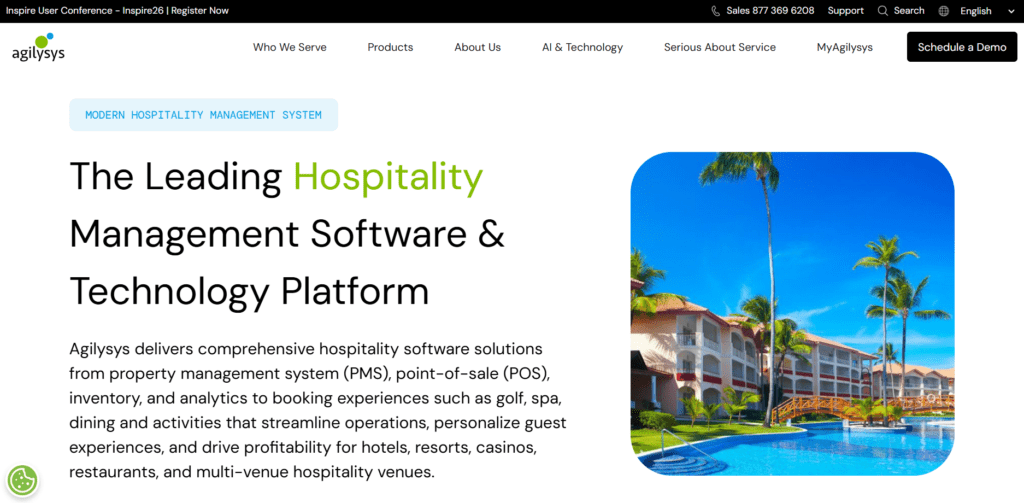
Agilysys provides a complete suite of hospitality software solutions designed for hotels, resorts, and casinos. Its strength lies in delivering end-to-end operational control across multiple service areas.
The platform integrates property management, guest engagement, and point-of-sale systems into one ecosystem. This helps businesses maintain consistency across all guest touchpoints.
Agilysys is especially valuable for large hospitality organizations that require unified systems across multiple service lines.
Key Features
- Property management systems
- Point-of-sale integration
- Guest engagement platforms
- Inventory and procurement tools
- Centralized operational control
10. eZee Absolute – Affordable Cloud Hospitality Platform
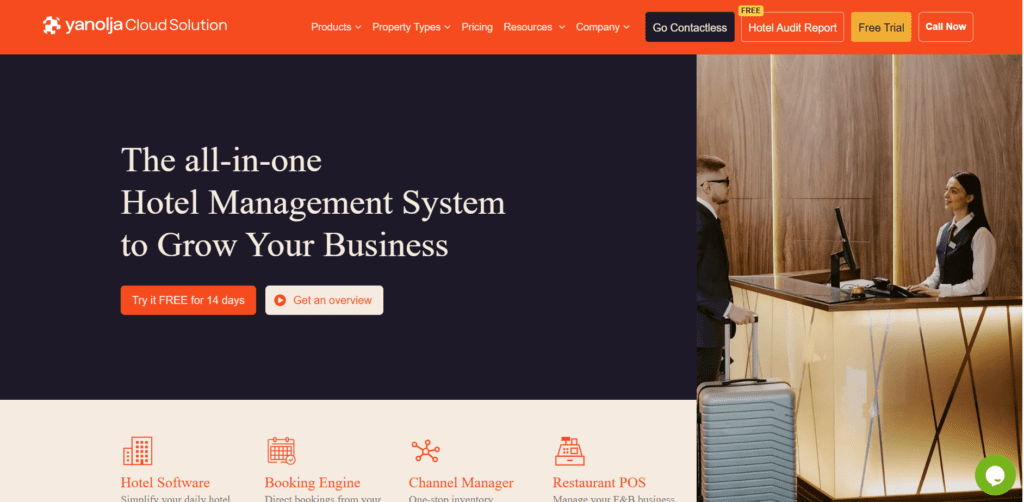
eZee Absolute focuses on providing accessible cloud-based hotel management software for small and mid-sized properties. Its goal is to simplify operations without requiring complex infrastructure or high investment costs.
The platform is widely used by independent hotels that need reliable tools for managing reservations, check-ins, and distribution channels without technical complexity.
Its simplicity is its main advantage, allowing hotel teams to adopt it quickly and start improving operations almost immediately.
Key Features
- Cloud-based PMS
- Online booking engine
- Channel manager
- Front desk operations system
- Reporting and analytics
11. Guesty – Short-Term Rental Management Platform
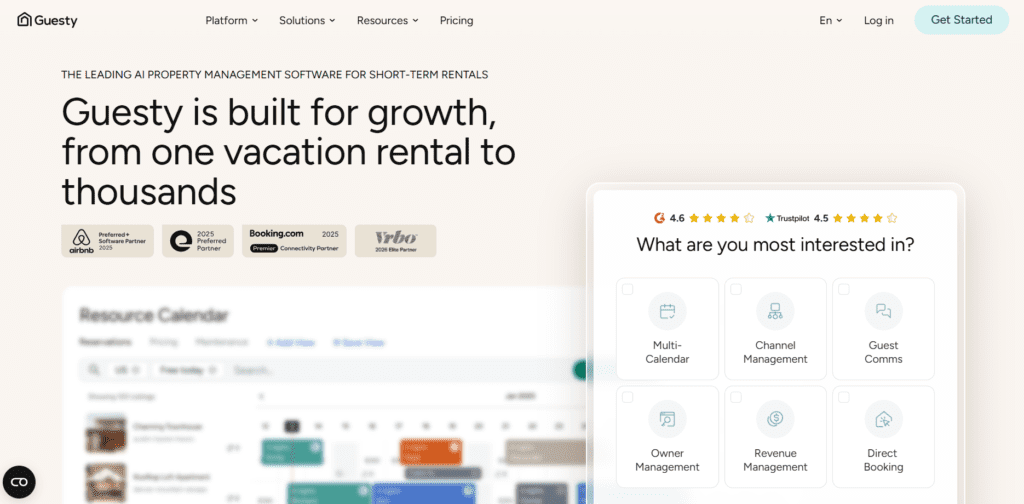
Guesty specializes in vacation rental and short-term property management. It is designed for hosts and property managers who operate across multiple booking platforms simultaneously.
The system automates communication, booking synchronization, and payment processing, reducing manual workload significantly.
Guesty is especially valuable in the fast-growing short-term rental market, where speed and automation are critical for competitiveness.
Key Features
- Multi-platform property management
- Automated guest communication
- Booking synchronization
- Payment processing tools
- Operational automation
12. RMS Cloud – Flexible Hospitality Management
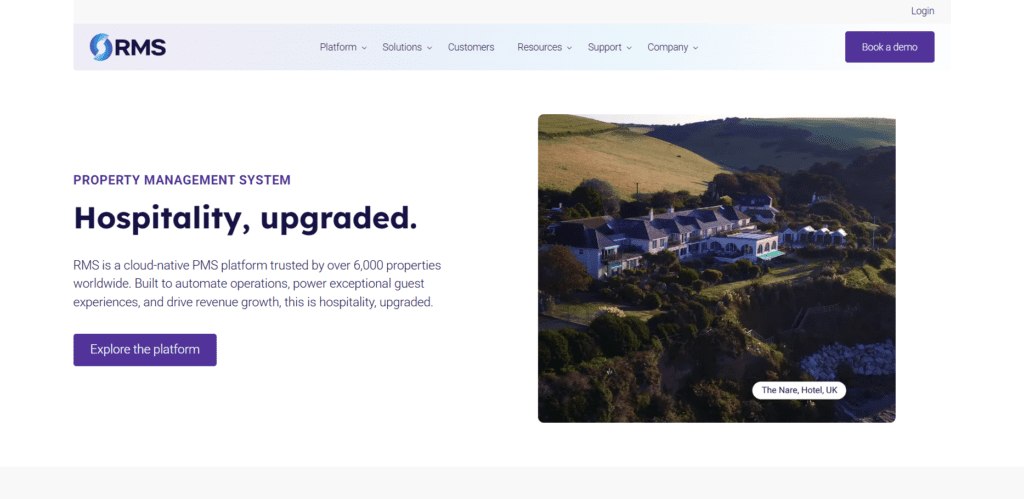
RMS Cloud delivers a scalable hospitality management system designed for hotels of different sizes. It focuses on flexibility, allowing businesses to adapt the platform to their operational needs.
The system supports core hotel functions such as reservations, guest management, and revenue tracking, while also providing tools for long-term business optimization.
Its adaptability makes it suitable for both single properties and large hospitality groups.
Key Features
- Cloud-based PMS
- Reservation management
- Revenue optimization tools
- Guest engagement features
- Multi-property scalability
13. ResNexus – Reservation-Centric Hospitality System
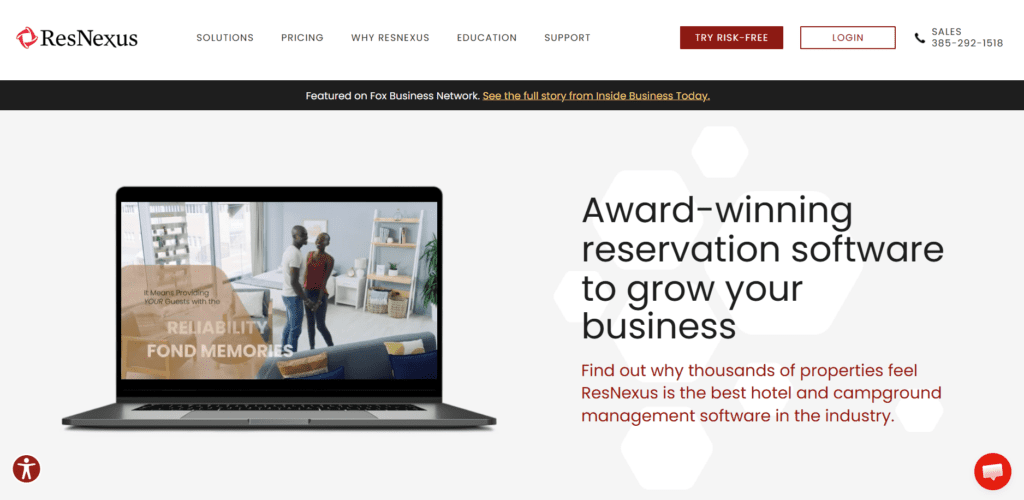
ResNexus focuses primarily on reservation management for hotels, lodges, and outdoor accommodation providers. It is especially popular in niche hospitality segments such as campgrounds and boutique stays.
The platform simplifies booking workflows and improves communication between guests and property managers. It also provides reporting tools that help businesses understand occupancy trends.
Key Features
- Reservation management system
- Booking engine integration
- Guest communication tools
- Reporting and analytics
- Property management features
14. Protel – Enterprise Hotel Technology Platform
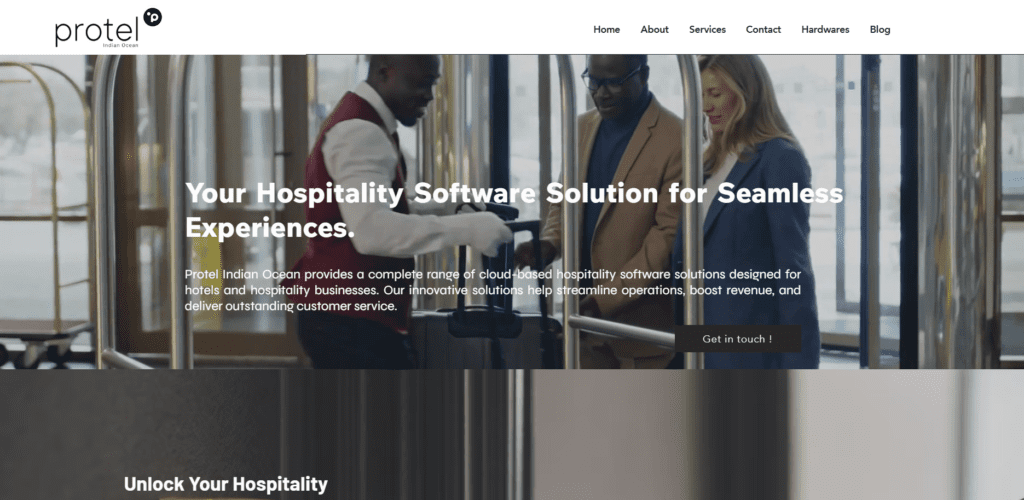
Protel delivers enterprise-level hotel management systems designed for scalability and integration. It is widely used by hotel groups that operate multiple properties across different regions.
The platform focuses on centralizing operations while maintaining flexibility for local property management teams. This balance is critical for global hospitality brands.
Protel also supports integration with third-party systems, allowing hotels to build more customized ecosystems.
Key Features
- Cloud PMS solutions
- Multi-property management
- Integration capabilities
- Guest management tools
- Scalable architecture
15. Clock PMS+ – Unified Hotel Operations System
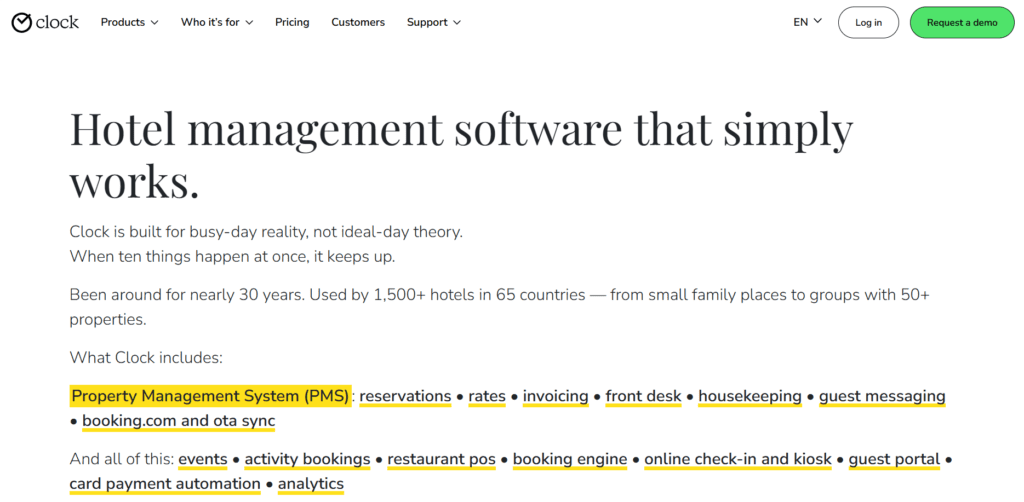
Clock PMS+ offers a modern, all-in-one hotel management platform that focuses on automation and guest communication. It is designed to reduce manual workload while improving service quality.
The system combines booking, operations, and guest messaging into a single interface. This helps hotels streamline workflows and improve internal coordination.
Its automation capabilities make it particularly effective for hotels aiming to scale without increasing operational complexity.
Key Features
- Cloud-based PMS
- Automated workflows
- Booking engine
- Guest messaging system
- Operational dashboard
Conclusion: The Future Of Hotel Software
The top 15 hotel software development companies are not just technology providers. They are long-term transformation partners shaping the future of hospitality in a world where digital experience defines competitiveness as much as service quality itself.
Their role goes far beyond building booking systems or property management tools. They help hotels fundamentally rethink how operations are structured, how teams collaborate, and how guests experience every stage of their journey.
In practice, this means moving from fragmented, disconnected systems to fully integrated digital ecosystems where every process—from booking and payment to guest communication and post-stay engagement—works in real time, without friction or data loss. It also means shifting from reactive management to proactive, data-driven decision-making.
This transformation is not theoretical. It leads to measurable and consistent outcomes: higher operational efficiency, reduced manual workload, improved guest satisfaction, and stronger revenue performance across seasons. Hotels gain not only better tools, but also better visibility into their entire business performance.
In the end, success in hospitality will depend less on physical location, traditional branding, or even property size—and more on how effectively technology is embedded into every operational layer. The ability to connect systems, automate workflows, and personalize guest experiences at scale is quickly becoming the real competitive advantage.
So the real question is no longer whether to invest in technology, but how fast and how strategically it should be done.
Which of these companies aligns best with your hotel strategy—and how quickly is your business ready to evolve in a fully digital hospitality landscape?