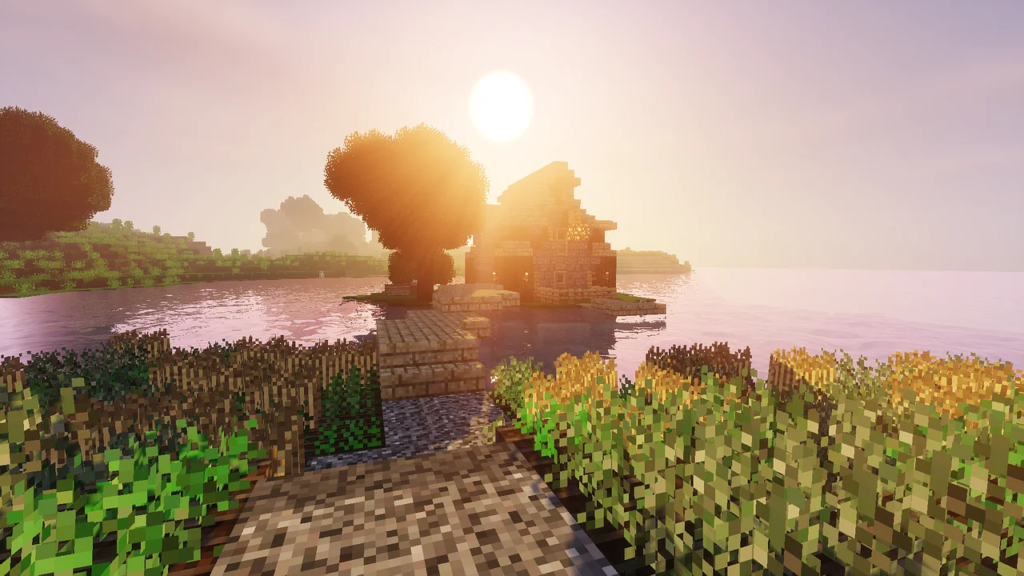
Running your own Minecraft world sounds intimidating — but it really isn’t. It doesn’t matter if you want an invite-only chill zone for your inner circle or a bustling public server for the masses — honestly, going from zero to “online” takes way less time and effort than you probably think. No tech degree required.
Choosing where to host: local vs. cloud
The first real decision is where the server actually runs. Two main options: on a personal computer at home, or on a remote hosting service.
Hosting it locally is free and dead simple to get going. Boot up Minecraft, press “Open to LAN,” and that’s it — friends on your network are in instantly. But the second your computer shuts down? Poof — everyone’s kicked out. For anything more reliable than a casual Friday session, that’s a problem. Liquid Web says that more than 30% of people choose to self-host at home.
Remote hosting solves this. Your server’s always on, your friends can join from literally anywhere, and you get to actually turn off your computer at night like a normal person.
When shopping around, look into the best free Minecraft server hosting options. Some of them might not be perfect — expect some startup delay when no one’s connected — but for small groups, they’re completely solid.
Getting the server running: step-by-step
So you’ve settled on a host — good. From there, it’s the same dance no matter who you go with. Here’s the usual flow:
- Sign up for an account with whichever host you’ve gone with.
- Pick your server type — vanilla Minecraft, Forge, Paper, or Spigot.
- Pick the same version everyone else has installed on their end.
- Tweak the basics — server name, max players, and whether you’re building in survival or creative mode.
- Whitelist friends for a private hangout, or keep it open for a public crowd.
- Share the server address — usually something like play.yourservername.aternos.me.
That’s the skeleton. And if you get stuck somewhere? Don’t overthink it — just ask around. Bill Nye once dropped this gem: “Everyone you will ever meet knows something you don’t.” In Minecraft communities, that’s basically doctrine — someone in every Discord always knows the fix.
Adding mods without breaking everything
Mods are where Minecraft goes from a sandbox to something truly unlimited. A free mod for Minecraft can add dinosaurs, tech systems, magic spells, or entirely new dimensions. The modding community is enormous — CurseForge alone hosts over 100,000 Minecraft mod games for free download.
To run mods on a server, the host needs to support a mod loader. Forge is the most established. Fabric is faster and lighter. The critical rule: every player must have the exact same mods installed locally as the server is running. Even one version mismatch will block someone from joining.
A few practical tips for keeping mods stable:
- Start with one or two mods before adding a dozen. It’s much easier to spot what broke something.
- Always check mod compatibility before installing. Most mod pages list which versions they support.
- Keep backups. A free mod for Minecraft is great until it corrupts the world file on day one.
There’s a free Minecraft mod for almost every concept imaginable — from simple quality-of-life tweaks to total game overhauls.
Now go build something
You don’t need to be Elon Musk to figure this out. Seriously, the only things you need? Patience, a willingness to copy-paste error messages into Google, and at least some idea of what you’re trying to create. Start small: free host, vanilla, a few friends. Build from there. And once you’ve got the basics down? That’s when the real fun starts — toss in a free Minecraft mod or two, browse some Minecraft mod games for free, and watch your server take on a life of its own. The community’s got your back, the tools are right there for the taking, and the world is yours to shape however you see fit.