The Routing Layer Decides Whether the GPUs Deliver: Inside Selvamani Ramasamy’s Work on the Networks Powering American AI

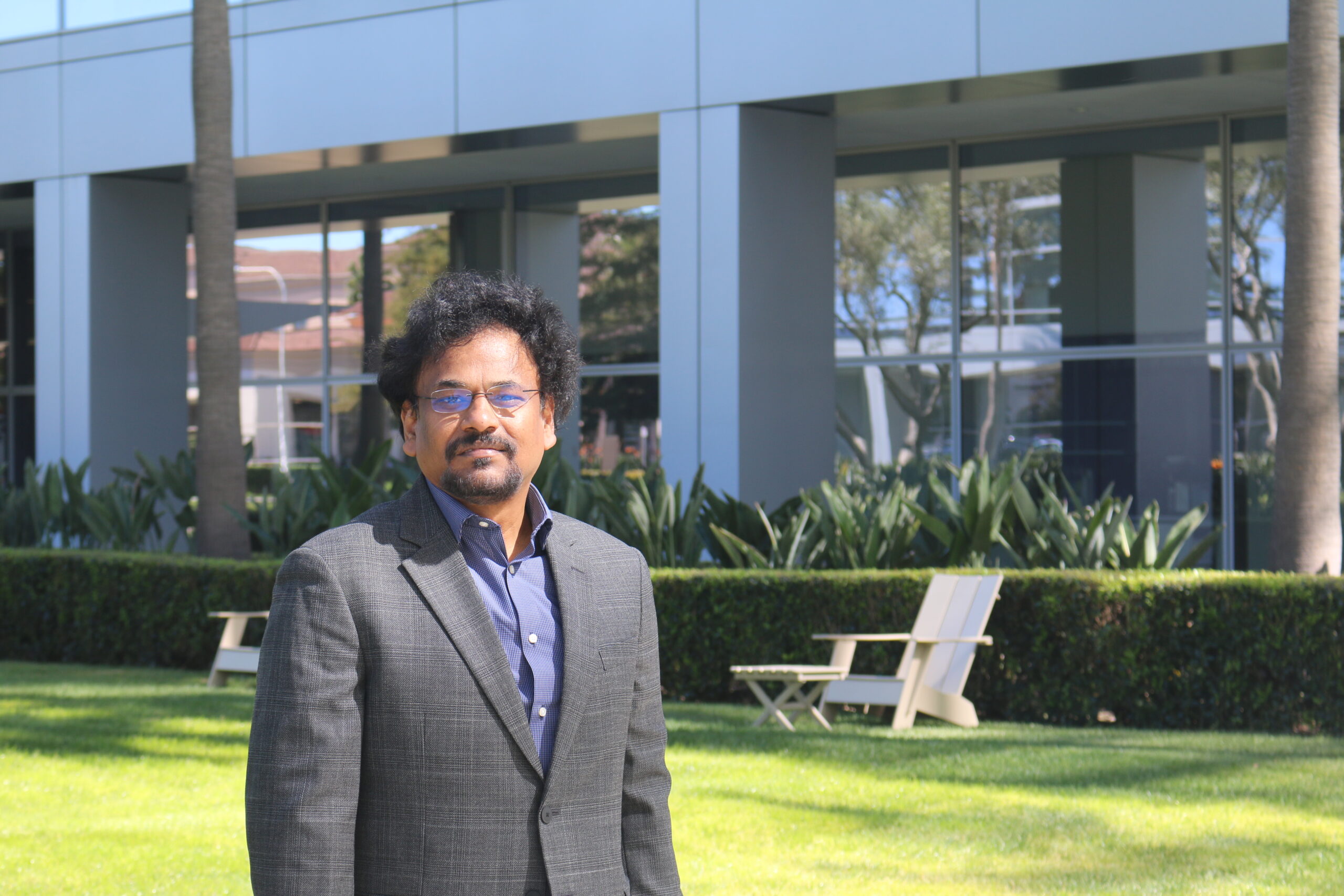
A senior principal engineer whose patented SRv6 and EVPN mechanisms moved from Tier-1 carrier networks into the AI data center is now one of a small number of engineers gating what enters the open-source routing stack the industry is standardizing on.
The capital pouring into American artificial intelligence infrastructure is measured in the hundreds of billions of dollars, and almost all of the public attention lands on one component: the GPU. Far less attention goes to the layer that determines whether those GPUs ever reach full utilization – the routing control plane that moves traffic between them.
That gap is where Selvamani Ramasamy has built a career. Now Senior Principal Engineer for routing and AI data center networking at Nexthop AI, Ramasamy designs the BGP, EVPN and Segment Routing over IPv6 (SRv6) control planes that run on SONiC-based white-box switches inside large GPU clusters. Before that, he spent more than a decade at Ciena as the principal architect for EVPN and SRv6 in the company’s NG-SAOS routing platforms — systems that today carry production traffic for Tier-1 service providers across North America, Europe and Asia.
“AI infrastructure is only as reliable as the network underneath it,” Ramasamy said. “If the routing control plane can’t converge fast enough or can’t be trusted across vendors, the GPUs on top of it don’t matter. That’s the layer I work on.”
Three Inventions That Started as Production Failures
Ramasamy is a named co-inventor on three patent filings originating from his work at Ciena, and each traces back to a problem that surfaced in a live carrier network rather than in a laboratory.
The first, covering SRv6 service SID transposition capability, replaced manual, device-by-device configuration of SRv6 service identifiers with BGP-based signaling in which each router advertises how it handles those identifiers. Routers discover one another’s capabilities and transpose automatically. For operators running equipment from multiple vendors and multiple hardware generations — which is to say, nearly all of them – it removed an entire category of misconfiguration and made large-scale SRv6 service rollouts practical.
The second addresses SRv6 services carried across different SID types. Existing BGP models forced operators to duplicate routes for every SID format in the network, inflating routing tables and complicating policy. Ramasamy’s framework allows a single BGP route to carry services across multiple SRv6 SID types, letting networks evolve their hardware and vendor mix without a proportional increase in operational complexity.
The third is an EVPN fast-failover and multi-homing enhancement, and it is the one Ramasamy identifies as his most consequential. Standard EVPN multi-homing behavior can produce transient traffic black-holes when failure and configuration events overlap — brief windows in which traffic is silently discarded. Tier-1 operators consider that unacceptable. Ramasamy redesigned the EVPN state machine and the ordering of protocol updates to guarantee sub-second convergence through those overlapping failure sequences, eliminating the black-holing condition without destabilizing deployments already in the field.
“I’ve always been drawn to the parts of networking where theory meets the real world – where a protocol design decision either holds up under actual failure conditions in a carrier network, or it doesn’t,” he said. “That’s where I try to spend my time.”
From Implementer to Standards Author
Engineers who implement protocols are numerous. Engineers who define them are not.
Ramasamy co-authors an active Internet-Draft in the Internet Engineering Task Force’s Inter-Domain Routing (IDR) working group specifying BGP extensions for SR Policy composite candidate paths. The Segment Routing Policy architecture introduced composite paths as a concept, but BGP had no standardized method of distributing composite path information to controllers and headend routers, which left the construct largely theoretical in production networks. The extensions Ramasamy co-authored give controllers a way to program composite multi-policy behavior at scale across vendors.
The work began as his own independent submission before merging with an overlapping effort into the current joint draft – a sequence that, within IETF norms, indicates the working group judged his approach substantive enough to consolidate around. The document is publicly tracked in the IETF Datatracker and cited in ongoing IDR working group discussion, making it an independently verifiable artifact of his standing rather than a self-reported credential.
Gatekeeper for an Open-Source Stack the Industry Runs On
SONiC – Software for Open Networking in the Cloud – has become the network operating system of record for a significant share of hyperscale and AI infrastructure, adopted by cloud providers seeking an alternative to closed, single-vendor routing stacks. Its Routing Working Group draws more than 300 members and includes engineers from Microsoft, Alibaba, Cisco, Broadcom and Nvidia.
For the SONiC 202505 release, that community selected Ramasamy as a co-maintainer for routing. The role is a gating function: he reviews and approves which BGP, EVPN and SRv6 contributions meet the technical bar to enter the release. Contributors from competing companies revise their submissions in response to his review before their work is accepted. Very few engineers anywhere hold that authority over the routing subsystem of a production network operating system used at this scale.
“Open-source routing platforms like SONiC are changing who gets to build core network infrastructure – it’s no longer limited to a handful of vendors,” Ramasamy said. “Being part of that shift, both as a contributor and a reviewer, has been one of the most rewarding parts of my career.”
He has separately completed ACM Certified Reviewer training, extending the same evaluative role into peer review for academic networking venues.
Peer Assessment From Competing Companies
The clearest measure of standing in a specialized engineering field is what senior technical leaders at rival firms say about a person’s work. In Ramasamy’s case the assessments converge from Cisco, Ciena and Alibaba independently.
Siva Sivabalan and Patrice Brissette, both Distinguished Engineers at Cisco – Brissette also a co-chair of the SONiC Routing Working Group – along with Eddie Ruan, Senior Staff Engineer at Alibaba and Chair of that working group and Vice Chair of the SONiC Technical Steering Committee, and senior Ciena leadership including Dalen Bosteder and Eli Eisenpress, describe Ramasamy as belonging to a very limited group of engineers operating with his depth across routing, EVPN and SRv6 in genuine production environments. Their common observation is not that he knows the specifications, but that he knows where the specifications break under load – and that his review comments are routinely adopted before other engineers’ work is accepted.
That combination is scarce by structure, not by accident. Carrier protocol design and AI fabric deployment have historically been separate career tracks. Engineers with genuine depth in both are, by every account within the community, a very small population.
Global Deployment, American Advantage
The EVPN and SRv6 services Ramasamy architected at Ciena were validated in multi-vendor interoperability testing – including EANTC evaluations and demonstrations at Mobile World Congress – before entering live Tier-1 networks supporting mobile backhaul, business VPN and cloud connectivity across three continents. His SONiC contributions reach global cloud regions and are documented in SONiC Foundation and SONiC China Forum materials. He collaborates through the IETF’s IDR, BESS and SPRING working groups with carriers, equipment vendors and cloud providers on multiple continents.
The strategic consequence for the United States is specific. Open, vendor-neutral routing software is the principal alternative to proprietary network operating systems, several of which originate outside the United States. American leadership in projects like SONiC and in the IETF standards that define their behavior determines whether the country’s AI infrastructure is built on a stack it helps govern. Ramasamy’s patents, standards authorship and maintainer role all sit on that side of the ledger.
The economics are equally direct. A GPU cluster idled by a routing convergence failure burns capital at the same rate whether or not it is computing. Sub-second convergence, elimination of transient black-holing, and automated SRv6 capability discovery translate into utilization, avoided outages and reduced operational cost across AI infrastructure investments that now rank among the largest in U.S. technology history. Ramasamy also mentors engineers at Ciena, at Nexthop AI and across the SONiC community, expanding a domestic talent pool in a specialty with an acknowledged shortage.
What Comes Next
Ramasamy’s current focus is extending open-source SONiC routing to match the traffic patterns of AI training and inference: faster BGP convergence at GPU-cluster scale, SRv6-based multi-tenant segmentation for shared infrastructure, and production adoption of composite SR policies.
“The next big test for networking isn’t just carrier services anymore – it’s AI fabrics running at a scale and speed we haven’t fully designed for yet,” he said. “I want to keep building the routing foundations that make that possible.”
Asked what he tells engineers entering the field, his answer reflects the same standard he applies as a reviewer. “Depth matters more than breadth in this field. Understanding a protocol well enough to know exactly where it breaks in production is what actually earns trust from the community – not just implementing to the spec.”