By Dmitri Leonov
AI is already changing the way we write email. The next shift will be even more seismic: deciding which emails deserve our attention in the first place.
Generative AI can meaningfully reduce the time we spend on email by helping us draft replies faster. But if the volume of messages continues to grow, we risk optimizing ourselves for a never-ending email treadmill.
If we want to free up more time, the bigger opportunity is to use AI to reduce the number of emails, decisions, and interruptions that demand our attention every day.
Email was never designed for this much information
Email’s original promise was wonderfully simple: a digital way to send messages from one person to another. It wasn’t designed to become the operating system of modern work, where the same inbox might contain a client request, a calendar notification, a marketing newsletter, an automated receipt, an internal update, a sales pitch and an invitation to a webinar you have no intention of attending.
The problem isn’t just that we’re getting more email. We’re receiving a much broader range of information through the same channel, and almost every message carries the implicit question: “Do I need to do something with this?”
That makes email a triage problem. We have to determine what is important, what can wait, what needs a response, what should be delegated, and what can safely be ignored.
As email volume rises, so does the amount of cognitive work involved in making those judgments. A 2024 study in Frontiers in Psychology found that high email load can make it more difficult to complete primary work tasks, with unpredictable incoming messages interrupting workflow and creating uncertainty about how messages relate to the work already underway.
For years, we’ve largely dealt with this by asking humans to become better at triage. AI gives us another option.
The first wave of AI email was about writing
The most obvious application of generative AI in email has been writing. Give an AI tool a few points and it can turn them into a polished response; ask it to make the message warmer, shorter, or more professional, and it will instantly oblige.
There is now evidence that it saves meaningful amounts of time. A 2025 randomized field experiment across 66 companies found that employees given access to generative AI spent about two fewer hours per week on email.
But there is an important distinction between making email faster and making email smaller.
If AI helps you answer 50 emails instead of 30, you’ve become more efficient at processing email, but you haven’t necessarily created more time for the work that matters. In fact, if AI makes it cheaper for everyone to send messages, the volume of communication can continue to rise while we become increasingly efficient at dealing with it.
That is why the next stage of AI email is moving upstream, from generating responses to deciding what deserves a response at all.
The real value of AI: Protecting your attention
Attention is a finite cognitive resource. Your brain has to select relevant information from a much larger stream of things it could potentially process, while working memory holds the information needed to pursue whatever goal you are currently working on.
Neuroscience research continues to show just how important that filtering process is. A 2024 study in Nature Human Behaviour found neural evidence that salient distractors can rapidly capture attention and interfere with the processing of goal-relevant information.
That matters for email because every new message creates an opportunity for attention to be captured, even when the message is irrelevant. The problem isn’t simply the time required to read an email, it’s the attention involved in noticing it, evaluating it, and deciding what to do with it.
Good AI triage can therefore have a different cognitive benefit from an AI writing assistant. Rather than helping you respond to an interruption more efficiently, it can help prevent lower-value information from competing for your attention in the first place.
That is a more fundamental form of productivity. The objective isn’t to help your brain process more information; it is to help your brain spend more of its limited attention on information that actually matters.
The email treadmill keeps speeding up
For years, we’ve responded to rising email volumes by optimizing the mechanics of email. We created folders, filters and labels. We learned keyboard shortcuts. We started batching our inboxes. Now AI can draft our replies, summarize long threads and extract action items.
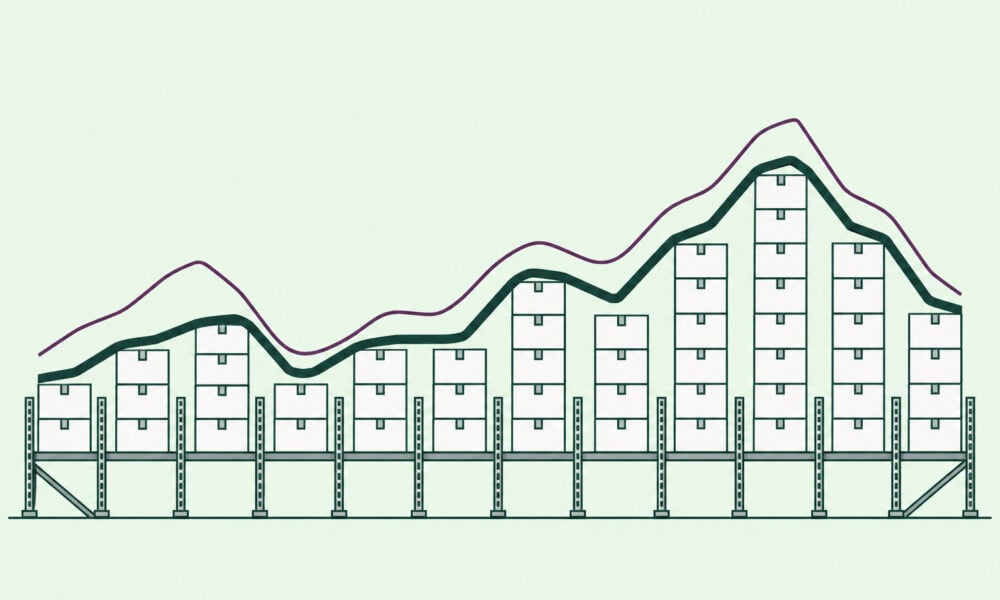
Every improvement makes us better at handling the next wave of messages. But the underlying problem remains: more communication produces more things to process, so we keep getting better at processing an ever-growing workload.
The promise of AI is supposed to be different. People aren’t interested in spending their newfound productivity gains simply doing more administrative work. They want time back.
And there is evidence that this isn’t happening automatically. BCG’s 2026 global AI at Work survey found that 41% of regular AI users reported increased cognitive load, while nearly half said they now spend more time managing and directing AI rather than doing the work itself. The same research found that 42% of regular AI users among frontline employees reported saving at least a full workday a week through AI, but organizations often haven’t figured out how to convert that saved time into value.
The lesson isn’t that AI doesn’t save time — it clearly can. The lesson is that saving time on individual tasks isn’t enough if the saved time immediately gets filled with more tasks.
For email, that makes the distinction particularly important. We don’t necessarily need an AI that helps us answer every message more quickly. We need one that can make a good first judgment about which messages actually deserve our attention.
Traditional inbox organization puts the triage burden back on you
Email providers have been helping with this problem for years. Gmail automatically sorts messages into categories such as Primary, Social, Promotions and Updates, while Gmail and Outlook both give users rules, filters, folders, labels and other ways to create their own systems.
Those tools are useful, but they are essentially building blocks. Gmail’s preset categories may not reflect your priorities. A newsletter could be essential to one person and completely irrelevant to another; a promotional email from a particular company might actually be important business communication. The categories are necessarily broad because they have to work for millions of different users.
AI-powered triage can take a different approach by learning from how you actually use email.
SaneBox, for example, takes the first pass for you, automatically moving lower-priority messages out of the main inbox while keeping messages it considers important in view. Crucially, it is also trainable: when your priorities change, you can teach it by moving messages between folders, helping it learn what matters to you.
That personalization is becoming increasingly important as people’s expectations of AI change. We’re no longer impressed simply because software can automate a task. We expect it to understand our preferences and adapt to the way we work.
The best AI email assistant might be the one you barely notice
A lot of AI products are competing on how much they can do: summarize the thread, draft the response, suggest the next action, generate the meeting notes, label the conversation and remind you about the follow-up.
There is obvious value in some of these features. But they can also create a strange form of AI overload, where the technology intended to save time gives you more outputs to review, more suggestions to evaluate, and more features to manage. That is particularly unnecessary when the underlying email doesn’t deserve your attention in the first place.
If an AI system can recognize that a newsletter is unlikely to matter to you today, there may be little value in producing a beautifully summarized version of it. If it knows that a message from a particular sender is usually low priority, the most useful thing it can do may simply be to move that message somewhere you can review later.
This is where invisible automation becomes powerful. The best AI doesn’t always give you more information. Sometimes it quietly removes information from your immediate field of view.
SaneBox is built around that principle. Its AI takes the first pass at sorting incoming messages according to your individual patterns and preferences, rather than asking you to manually construct a system for every category of email.
The result isn’t another AI interface demanding your attention. It’s a calmer inbox.
AI email triage isn’t about ignoring email
Good triage isn’t the same as deletion, and it isn’t about blindly trusting an algorithm to decide what you will never see. The point is to create a hierarchy of attention.
Messages that are important now should be easy to see. Messages that matter but don’t require immediate attention should remain accessible without competing with urgent work. And messages that you need at a particular point in the future should be brought back when they’re relevant.
That distinction matters because email is a record as well as a communication channel. The goal is not to lose information. It is to stop treating every piece of information as though it deserves your attention at the same moment it arrives.
AI to reduce work, rather than accelerate it
AI email tools should remove entire tasks from our plate, rather than enabling us to do more things faster. That means prioritizing incoming messages, identifying conversations that need follow-up, and surfacing an email at the moment it becomes relevant. Routine, low-priority communication should move out of your way automatically.
Drafting is a good example. There are certainly emails where an AI-generated first draft can save time. But it’s worth asking whether you genuinely need an AI-generated draft for every routine email. If you still have to read the draft, edit it, check its tone and decide whether it says what you actually mean, you’ve reduced the writing burden…but without eliminating the decision-making burden.
The more powerful question is therefore not “How can AI help me handle this email faster?” but “How can AI make this email require less work from me?” That is the promise of AI email triage.
The next email revolution is about attention
AI has already made email faster to write, summarize and respond to. The next opportunity is to make the inbox itself more selective.
That matters because the scarce resource in modern work isn’t simply time. It is the ability to direct attention toward the things that deserve it while everything else is competing to interrupt you.
The most useful AI email system may therefore not be the one that helps you process 200 messages before lunch. It may be the one that recognizes that only 20 of those messages really need you, and gets the other 180 out of the way.
Dmitri Leonov is a serial entrepreneur focused on revolutionizing wellness and human potential. Dmitri is the co-founder and CEO of SaneBox.