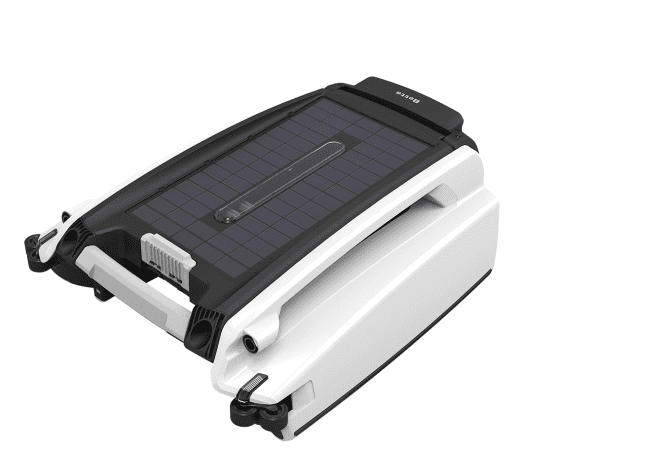
For the 10.4 million American households with swimming pools, maintenance represents a hidden ongoing cost that many homeowners underestimate when installing their dream backyard oasis. Between professional pool service fees, equipment costs, and time investments, the annual expense of pool maintenance can approach or exceed the cost of the pool equipment itself.
The True Cost of Traditional Pool Maintenance
Pool ownership costs extend far beyond the initial installation. For homeowners who hire professional pool services, monthly fees typically range from $150 to $300, translating to $1,800 to $3,600 annually. Even DIY-inclined homeowners face significant time commitments.
According to pool industry surveys, manual pool maintenance requires:
- 2-3 hours per week for surface skimming and debris removal
- 1-2 hours per week for chemical testing and balancing
- Additional time for filter cleaning, brushing, and seasonal maintenance
For a homeowner valuing their time at even $25/hour, the annual labor cost of DIY pool maintenance exceeds $3,500 in time value.
The Automation Solution
Enter robotic pool cleaners, which have evolved from luxury items to practical investments that deliver measurable ROI for pool owners. Unlike their predecessors requiring cords and frequent battery charging, modern solar-powered models offer true “set and forget” operation.
Companies like Betta have pioneered solar-powered pool skimmers that operate continuously without external power or intervention. The value proposition becomes clear when examining the total cost of ownership.
ROI Analysis: Professional Service vs. Robotic Cleaner
Let’s examine a typical scenario:
Professional Pool Service (Annual Cost):
- Monthly service fee: $200 × 12 months = $2,400
- Surface debris still requires homeowner attention between visits
- Long-term contract commitment
Solar Robotic Cleaner (One-Time Investment):
- Upfront investment for device (one-time)
- Operating cost: $0 (solar-powered)
- Maintenance: Minimal (rinse basket 2x/week, 5 minutes)
Break-even timeline: Typically within the first pool season
Even conservative estimates show that robotic cleaners achieve full ROI within the first pool season, then continue delivering value year after year.
Beyond Direct Cost Savings
The financial benefits extend beyond avoided service fees:
- Chemical Cost Reduction
Surface debris that sinks and decomposes contributes to water contamination, requiring additional chemicals to maintain proper balance. Autonomous surface cleaning prevents this organic material from degrading water quality.
Pool chemistry experts note that consistent debris removal can reduce monthly chemical costs by 15-25%, saving $10-30 monthly or $120-$360 annually.
- Equipment Longevity
Pool filters work harder when managing decomposing organic matter. By preventing surface debris from entering the filtration system, robotic skimmers reduce wear on pumps and filters, extending equipment life by 1-2 years on average.
Filter replacement costs ($300-$800) and pump replacement costs ($400-$1,200) represent significant avoided expenses over the pool’s lifetime.
- Time Reclaimed
Perhaps the most valuable benefit is time reclamation. Pool owners report spending 100+ hours annually on manual skimming alone. A robotic cleaner handles this task autonomously, returning weekends and evenings to family enjoyment rather than maintenance chores.
Real-World User Experiences
Pool owners who’ve adopted robotic cleaning technology report consistent benefits:
“I bought this skeptically but it’s been amazing,” notes one verified purchaser. “I used to skim the pool every morning and evening. Now the robot does it 24/7 and I just empty the basket twice a week. Best purchase I’ve made for the pool.”
Another user highlights the convenience factor: “We travel frequently and were paying neighbors to skim our pool. The solar robot keeps working whether we’re home or away, and we come back to a clean pool every time.”
Market Segmentation: Finding the Right Solution
The robotic pool cleaner market has developed clear segments addressing different needs and budgets:
| Segment | Best For |
| Surface Skimmers | Leaf/debris removal, solar operation, continuous autonomous use |
| Cordless Vacuums | Bottom cleaning, portability, periodic deep cleaning |
| Premium Robots | Full-pool cleaning, app control, comprehensive automation |
For most residential pools, surface skimmers deliver the highest ROI since surface debris represents 70-80% of total pool contamination.
Environmental Benefits Add Value
Beyond financial returns, solar-powered cleaners appeal to environmentally conscious consumers. Zero grid power consumption and elimination of chemical-laden debris decomposition align with sustainability goals while delivering practical benefits.
California pool owners particularly value solar operation, as the state’s energy costs and environmental regulations make renewable-powered equipment increasingly attractive.
Conclusion: Investment vs. Expense
The question for pool owners isn’t whether robotic cleaners work—the technology has proven itself effective across millions of installations worldwide. The question is whether the rapid ROI and ongoing benefits justify the modest initial investment.
For most pool owners, the math is straightforward: A modest one-time investment that eliminates thousands in annual service fees or reclaims 100+ hours of personal time delivers value that extends far beyond simple automation. It transforms pool maintenance from a recurring expense into a solved problem.
As robotic cleaning technology continues improving while prices trend downward, the value proposition becomes increasingly compelling. Today’s pool owners aren’t just buying a gadget—they’re making an investment that pays dividends every time they don’t need to skim their pool manually.