For years, SaaS companies have focused heavily on office workers.
Businesses now have countless tools for project management, sales, accounting, communication, and productivity. Yet many companies that operate outside the office still depend on spreadsheets, phone calls, text messages, paper forms, and disconnected apps.
That is beginning to change.
Field service businesses are becoming one of the most promising areas for vertical SaaS growth. These companies manage technicians, crews, vehicles, equipment, customer properties, routes, contracts, invoices, and service records—often in real time.
The opportunity is not simply to digitize paperwork. It is to create an operating system for field work.
Field Service Is More Complex Than It Looks
A service call may appear simple from the customer’s perspective. A technician arrives, completes the work, and sends an invoice.
Behind that visit is a chain of decisions.
The company must assign the right worker, confirm availability, provide property information, plan the route, track progress, document the work, update the customer, and process payment.
When these tasks are handled through separate systems, mistakes become common.
Dispatchers may not know where crews are. Technicians may receive incomplete instructions. Photos may remain on personal phones. Office staff may have to reconstruct job details before preparing an invoice.
Each small inefficiency reduces profit.
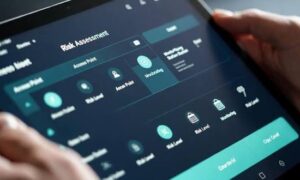
Field service software connects these steps so information can move from the customer request to scheduling, dispatch, job completion, billing, and follow-up without repeated manual entry.
Snow Removal Is the Ultimate Stress Test
Snow removal shows why connected field technology matters.
A major storm can create hundreds of urgent jobs at the same time. Crews must service commercial properties, parking lots, sidewalks, loading areas, and residential communities within tight timelines.
Conditions may change throughout the day. A property may require plowing, salting, sidewalk clearing, repeat visits, or additional service based on accumulation.
Dispatchers need to know which locations have been completed, which crews are delayed, where equipment is operating, and whether another visit is required.
Spreadsheets and basic calendars are not designed for this level of activity.
Purpose-built snow removal software can centralize routing, scheduling, crew dispatch, job tracking, service records, customer updates, photos, and invoicing.
The value becomes especially clear during severe weather, when delays and missing information can create customer complaints, billing disputes, and operational risk.
Snow removal is an extreme example, but the same problem exists across HVAC, plumbing, electrical, landscaping, cleaning, property maintenance, and other service industries.
Vertical SaaS Is Moving Closer to the Work
Traditional software products usually solve broad business problems.
Vertical SaaS goes deeper.
Instead of offering a generic calendar, it can understand recurring service schedules, technician skills, customer assets, property instructions, service territories, equipment requirements, and contract terms.
That industry knowledge makes the software more useful.
An HVAC company needs more than a customer database. It may need equipment histories, maintenance plans, emergency dispatch, technician certifications, and replacement estimates.
A landscaping business may need recurring routes, crew scheduling, seasonal work, property notes, and material tracking.
A snow contractor may need storm-based dispatch, priority properties, service verification, salting records, and repeat-visit tracking.
The closer software gets to the actual workflow, the harder it becomes to replace.
One Platform Can Replace Operational Fragmentation
Many service companies use one tool for customer information, another for scheduling, another for accounting, and several informal channels for communication.
The problem is not always the quality of each tool. It is the lack of connection between them.
A customer approves an estimate, but the job must be entered manually into the calendar. A technician completes the work, but the office cannot see the notes. The customer calls because no update was sent. The invoice is delayed because service details are missing.
An integrated field service software platform can connect customer management, estimates, scheduling, dispatch, mobile workflows, documentation, invoicing, and payments.
This creates one operational record instead of several disconnected versions of the same job.
The office can see what is happening in the field. Crews can access instructions without repeatedly calling dispatch. Customers can receive automatic updates. Completed jobs can move directly into billing.
Service Data Is Becoming More Valuable
Field service software also creates structured data.
Every completed job can include timestamps, GPS records, photos, technician notes, materials used, customer signatures, and payment details.
That information helps companies answer important questions.
Which routes are most efficient? Which jobs regularly take longer than expected? Which properties require repeated service? Which technicians complete the most work? Which invoices are delayed?
Service records can also help resolve disputes and support commercial contracts.
Proof of service is no longer just paperwork. It is operational intelligence.
AI Will Make Field Operations More Predictive
Artificial intelligence will expand the value of these platforms.
AI may help recommend technician assignments, predict job duration, identify scheduling conflicts, optimize routes, draft customer updates, flag missing documents, and detect completed work that has not been invoiced.
The goal is not necessarily to replace dispatchers or technicians.
It is to help them make faster decisions.
A dispatcher should not have to manually review every route, delay, and service deadline. A smart platform can highlight where attention is needed and recommend the next action.
The Next Major SaaS Market Is in the Field
Field service businesses support essential parts of the economy, yet many still operate with outdated systems.
That creates a large opening for technology companies.
The strongest platforms will not simply add more features. They will understand how field work moves from the first customer request to the final payment.
The next SaaS gold rush may not be found in another office productivity app.
It may be found in the software coordinating crews, vehicles, equipment, and customer properties during the moments when reliable execution matters most.