Most companies like to talk about innovation in very visible ways. They talk about AI adoption, automation, cloud migration, digital transformation and data-led decision making. Those things matter, of course, but they only tell part of the story.
The real test of a business is not whether it has bought the newest software or added “AI-powered” to a pitch deck. It is whether the company has built systems that can cope with pressure, scale sensibly and keep working when conditions are less than ideal.
That is where hidden infrastructure comes in.
Every business has a layer of operations that customers rarely see and executives do not always discuss in public. It might be the way facilities are managed, how waste is processed, how teams are supported physically, or how internal systems talk to each other. These are not always glamorous investments, but they can have a direct impact on productivity, risk, resilience and cost.
In other words, the smartest businesses are not only investing in what looks impressive. They are investing in what stops things falling apart.
Operational Tech Is Becoming a Boardroom Issue
For years, operational infrastructure was often treated as a facilities problem. If the lights worked, the building opened and the equipment ran, it was easy for senior teams to leave it in the background.
However, that is changing.
Rising energy costs, tighter environmental expectations, cyber risk, hybrid working and supply chain pressure have all made operations much more strategic. A weak system is no longer just an inconvenience. It can become a cost centre, a compliance issue, a reputational problem or a barrier to growth.
This is especially obvious in companies with physical assets. Manufacturers, logistics firms, food producers, healthcare providers and industrial businesses cannot rely on digital tools alone. Their performance depends on the connection between software, equipment, premises, people and process.
A dashboard can show a problem, but it cannot compensate for poor physical infrastructure. Data can support better decisions, but only if the underlying systems are reliable enough to produce useful information in the first place.
That is why good businesses are starting to treat operational technology with the same seriousness as finance, marketing and sales. The companies that understand their infrastructure properly are often the ones that can control costs better and respond faster when something changes.
The Real Value of Connected Systems
The phrase “smart business” is often used to describe companies that automate admin or use digital tools to improve customer experience. But a truly smart business connects more than just office software.
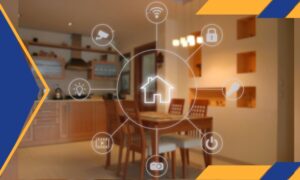
It links energy monitoring with usage patterns. It connects stock data with procurement. It uses sensors to identify equipment issues before they become failures. It brings facilities, finance and operations into the same conversation instead of treating them as separate worlds.
This matters because most expensive problems do not appear from nowhere. They usually leave clues first. A machine becomes less efficient. A workspace becomes harder to use. A process starts taking longer. A building system begins consuming more energy than expected. A compliance task becomes harder to document.
Businesses that collect and act on this kind of information early can make better decisions. They can repair before replacing, redesign before relocating, and adjust before costs spiral.
That is the point of modern infrastructure. It should not just sit in the background. It should generate insight.
Sustainability Needs Engineering
Sustainability has become a business priority, but it is still too often discussed in vague language. Companies talk about becoming greener, reducing impact or working towards net zero, but the practical work behind those goals is usually much more technical.
Real sustainability is not built through slogans. It is built through engineering, measurement and operational control.
For some businesses, that means improving energy efficiency across buildings. For others, it means cutting material waste, reducing water use, rethinking logistics or investing in better treatment systems. In industrial and semi-industrial settings, infrastructure such as sewage treatment plants can play an important role in managing wastewater safely and responsibly, particularly where sites are not connected to mains drainage or need greater control over discharge.
This is where sustainability becomes less about brand image and more about business intelligence. The companies that understand their resource flows properly are better placed to reduce waste, manage risk and avoid being caught out by rising costs or regulatory pressure.
The future of business sustainability will not be won by the companies with the nicest environmental statements. It will be won by the companies that know exactly where energy, water, materials and money are being wasted, and have the systems in place to do something about it.
The Workplace Is Part of the Technology Stack
When businesses talk about productivity, they often focus on software. They invest in project management platforms, AI tools, CRMs and communication systems, then wonder why teams still feel slow, distracted or worn down.
The missing piece is that productivity is not purely digital. It is physical too.
A poorly designed workplace creates friction. Bad acoustics make concentration harder. Weak lighting drains energy. Awkward meeting spaces make collaboration clumsy. Uncomfortable seating creates fatigue that no productivity app can solve.
This is why the workplace should be seen as part of the company’s technology stack. Not technology in the narrow sense of screens and software, but technology in the older, more useful sense: tools that help people perform work better.
For teams spending long days at desks, practical decisions such as investing in heavy duty office chairs are not just a facilities purchase. They are part of creating a workplace that supports people properly, reduces discomfort and makes the office feel fit for purpose.
Hybrid working has made this even more important. If employees are being asked to come into the office, the space has to justify the commute. It has to offer something better than a laptop at a kitchen table.
Resilience Is Built Before the Crisis
A business usually discovers the quality of its infrastructure when something goes wrong. A system fails, demand spikes, a key supplier slips, costs rise or compliance requirements change. At that point, the difference between a resilient business and a fragile one becomes obvious very quickly.
Resilient companies are not lucky. They have usually made better decisions earlier.
They have mapped critical systems. They know where the weak points are. They understand which assets need monitoring, which processes need backup and which parts of the business are too dependent on one person, one supplier or one outdated tool.
This is not about overcomplicating the business. It is about removing avoidable fragility.
The clever companies are the ones that look at infrastructure before it becomes urgent. They ask whether the workplace still supports the team, whether operational systems can handle growth, whether waste and energy are being managed intelligently, and whether the business has enough visibility over the things that cost money in the background.
The Next Competitive Advantage Will Be Less Obvious
The next wave of business advantage may not come from the loudest technology or the most dramatic transformation project. It may come from companies that are better at connecting the unglamorous parts of the business.
The firms that understand their buildings, equipment, data, waste, people and processes as one connected system will have an edge. They will be able to spot inefficiencies earlier, spend more carefully and make decisions based on how the business actually works, not how it appears on a strategy slide.
That is the real value of hidden infrastructure. It does not exist to impress people. It exists to make the business stronger.
And in a market where costs are high, expectations are rising and disruption is never far away, that may be one of the smartest investments a company can make.