Most beauty founders spend weeks choosing between a frosted bottle and a clear one, comparing per-unit prices from three different suppliers, and negotiating a few cents off the quote. Then they receive their first big shipment and realise the unit cost they budgeted was only one part of the real number.
Packaging is one of the largest controllable costs in any beauty product. Industry data shows that first-time founders regularly underestimate their cost of goods by 30 to 50 percent, not because they are careless, but because packaging cost is spread across four separate layers and most suppliers only quote one of them.
This piece walks through each layer, explains how to sequence your spending, and shows why sustainability and sourcing decisions that feel optional today will become unavoidable cost pressures tomorrow.
The Four Cost Layers Nobody Itemizes
When a supplier sends you a quote, you are looking at one number: the per-unit material cost. The other three layers are rarely in that document.
Layer 1: Tooling. If you want packaging with a custom shape, your supplier needs to cut a mold for it. That mold costs anywhere from $5,000 to $30,000 or more depending on its complexity. It is a one-time, upfront cost that has nothing to do with how many units you order. Many founders discover this cost for the first time after they have already committed to a design.
Layer 2: Per-unit material cost. This is the number in the quote. It covers the resin, the molding cycle, and basic assembly. It is the most visible cost and, on its own, the most misleading.
Layer 3: Decoration. Every finish you add to a package costs extra per unit. A one or two-color silk screen print adds roughly $0.45 to $0.60 per unit at a 1,000-unit run. A hot stamp logo runs $0.50 to $0.70. A four-color silk screen can reach $1.00 per unit or more. Electroplating and custom spray coatings add further on top. Decoration is often 25 to 40 percent of the total packaging cost on smaller orders, and most founders budget nothing for it separately.
Layer 4: Logistics. Freight, import duties, and third-party logistics handling are real costs that compound quickly. Air freight alone can add $0.50 to $2.00 per unit on a small order. Miss a sea freight window and you pay air freight. Miss a production deadline and you pay air freight. The logistics layer is where budgets that looked correct on paper fall apart.
The honest cost of a cosmetic package is the sum of all four layers, divided by the number of units. The quote in your inbox is one layer only.
Why Tooling Is the Real Lever, and How to Sequence It
Custom tooling is the cost that can derail a launch before it starts. A mold for a unique airless bottle shape costs $15,000 to $30,000 upfront. That cost has to be recovered across every unit you ever sell. If your first run is 1,000 units and the mold cost $15,000, you have added $15 per unit to your packaging cost before the resin is even purchased.
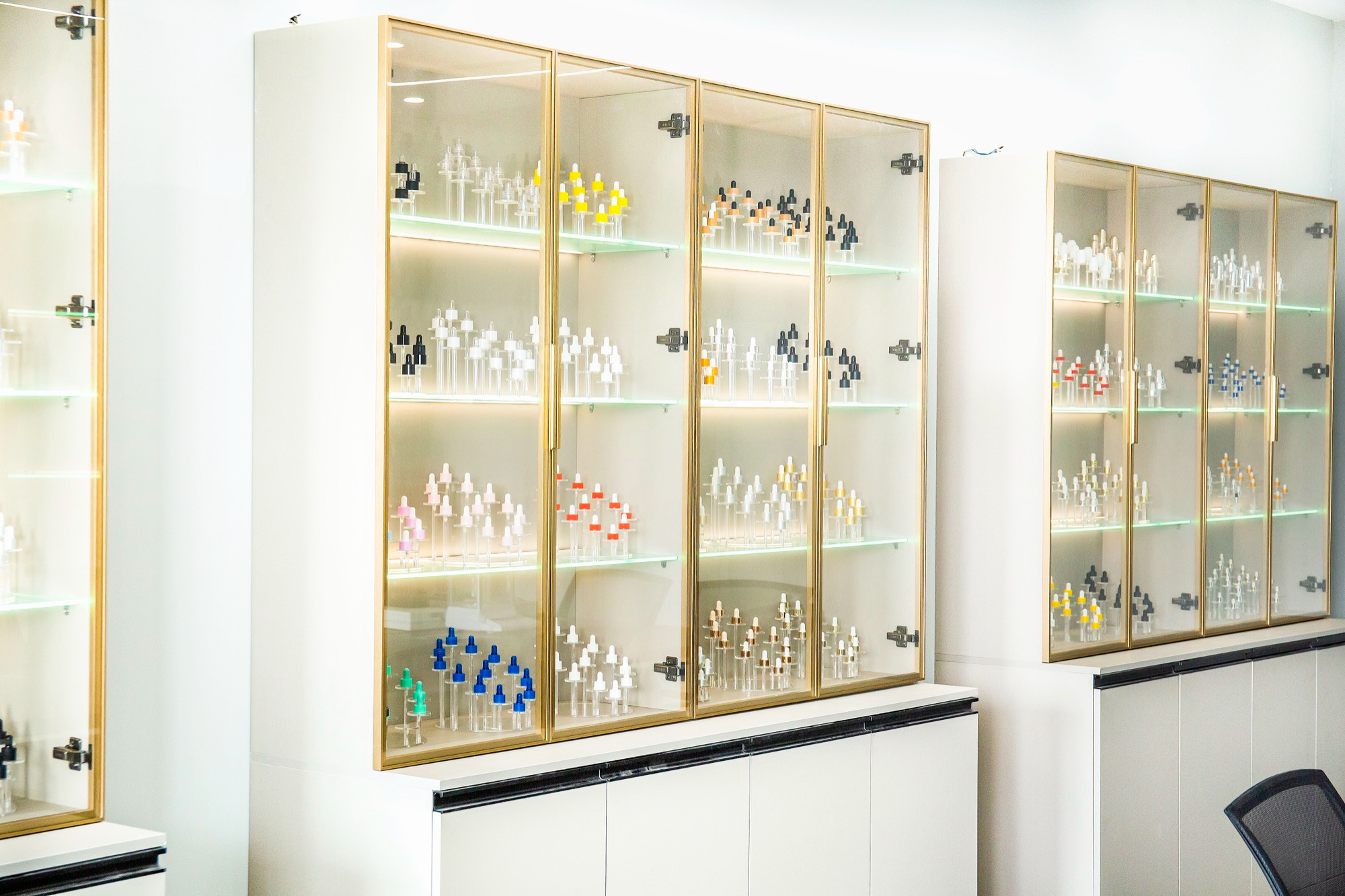
The smarter path is to launch on existing stock molds. Factories that manufacture at scale maintain extensive mold libraries covering different volumes, neck finishes, and pump mechanisms. Ordering from an existing mold requires no tooling investment, allows minimum orders from around 1,000 units, and delivers in a fraction of the time of a custom build. You get a real product in market, real sales data, and a real demand signal.
Once you have proven that a SKU sells, the economics of custom tooling change completely. You now have the volume forecast to amortize the mold cost meaningfully. A $15,000 mold across 30,000 units over two years adds $0.50 per unit to your cost. That is manageable. Across 3,000 units on an uncertain first launch, it adds $5.00 per unit. That is not.
The principle is simple: validate first, invest in tooling second. Factories with deep existing mold ranges make this sequence easy to execute without sacrificing quality or brand appearance at launch.
Sustainability Is Now a Cost and Compliance Decision, Not a Marketing Line
Post-consumer recycled plastic, known as PCR, costs 15 to 30 percent more per unit than virgin resin. That premium exists because cosmetics-grade recycled resin is scarce and expensive to process to the quality standards cosmetic packaging requires. This will not change quickly. Industry analysis projects the global recycled plastics market growing at a compound rate of over 10 percent annually through 2033, and demand from beauty brands is a major driver of that growth, according to Grand View Research.
At the same time, regulators are not waiting. The EU’s Packaging and Packaging Waste Regulation reached full application in August 2026, mandating minimum recycled content across packaging sold in EU markets. Brands that cannot document PCR compliance face exclusion from retail programs that their competitors are already building toward. Beyond EU borders, major retailers including Sephora and Boots have introduced sustainability criteria for the brands they carry.
The practical implication for founders is this: sustainability is no longer a price-add you choose for marketing reasons. It is a supply-chain position you need to take now. Cosmetics-grade PCR supply is already constrained relative to projected 2030 demand. Brands that secure supply relationships with manufacturers who compound PCR resin in-house will have cost stability. Brands that treat it as optional will face both price spikes and compliance deadlines at the same time.
Working with manufacturers who handle recycled resin processing in-house, rather than sourcing it on the open spot market, is one of the most practical ways to manage this risk.
Factory vs. Trader: How to Tell, and Why In-House Decoration Controls Both Cost and Quality
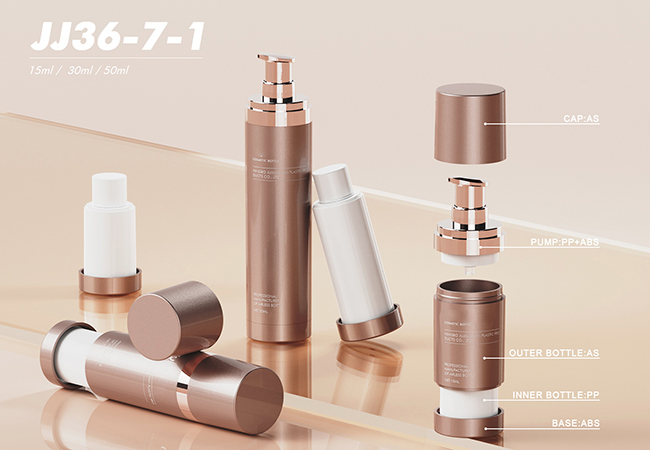
Industry sourcing data consistently estimates that between 30 and 50 percent of suppliers presenting themselves as manufacturers on major platforms are actually trading companies. A trading company does not own a production line. It buys from factories and resells to you, embedding a markup of 5 to 25 percent that does not appear anywhere on the invoice. More importantly, a trading company has no floor to fix a defect on. When something goes wrong, you are in the middle of a blame conversation between two parties you cannot audit.
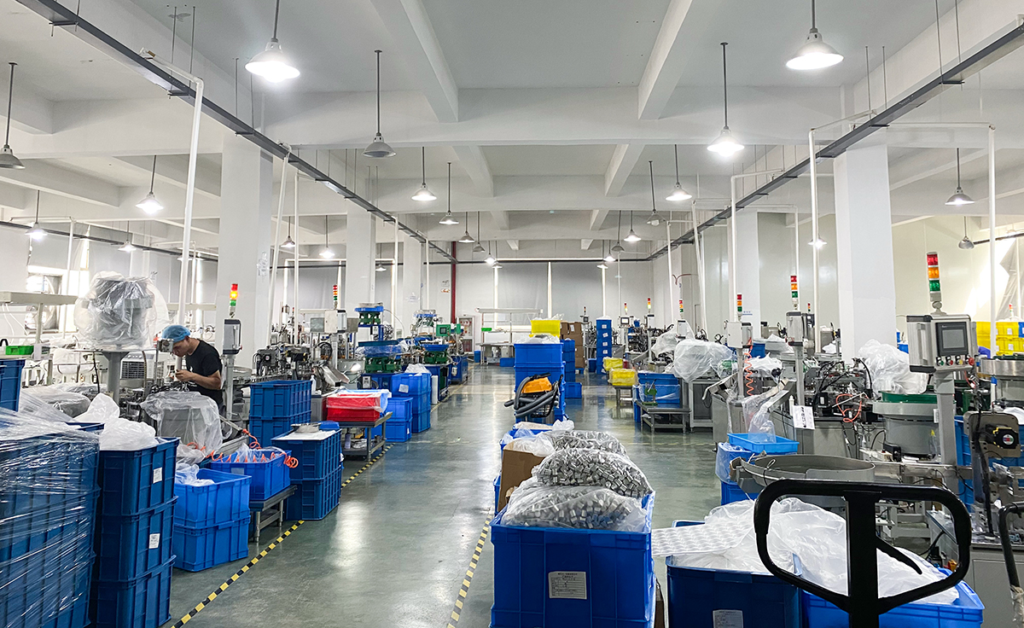
Identifying a real factory is straightforward if you know what to check. Ask for the ISO 9001 certificate and verify that the entity name on the certificate matches exactly the company you are buying from. Ask for a live video call from the production floor, not a pre-recorded factory tour. Ask whether decoration is done in-house or sent to a subcontractor.
That last question matters more than most founders realise. When injection molding and decoration, which includes silk-screen printing, hot stamping, electroplating, and spraying, all happen inside one facility, quality control is tighter, lead times are shorter, and defect responsibility is clear. The factory that made the bottle is the same factory that applied the logo. There is no gap between production and decoration where problems hide.
For brands working through all four cost layers, the cleanest approach is to source directly from a cosmetic packaging manufacturer that runs its own injection molding and decoration under one roof, rather than a trading company that subcontracts both. Oulete, for example, operates 20 injection-molding machines with capacity for over 20 million sets per year, and handles silk-screen, hot stamping, electroplating, and spraying in-house at its Shaoxing facility. The company states it holds ISO 9001, CE, SGS, and GMP certifications. For brands exploring a fully tailored approach, reviewing custom cosmetic packaging options from a factory with that kind of depth makes more sense than going through a middleman.
When decoration is subcontracted, every finish decision becomes a coordination problem. When it is in-house, it is a production variable the factory controls directly.
A Practical Sourcing Checklist Before Your First Order
Before wiring a deposit, work through these six checkpoints. Each one addresses a specific failure mode that costs founders money.
- MOQ on existing molds: Ask the factory what its minimum order is on its current stock mold range. If the answer is above 5,000 for a standard airless bottle or pump, ask why. A real factory with a broad mold library can generally run 1,000 units.
- Physical pre-production sample: Request a sample made from the actual mold and materials that will run your order, not a competitor sample or a pulled shelf piece. The sample is your quality reference. If the factory hesitates to provide one, that is the answer.
- Certification verification: Ask for the ISO 9001 or GMP certificate PDF and check that the legal entity name on the certificate matches the company you are buying from. A trading company sometimes borrows a partner factory’s certificate.
- Decoration chain: Confirm whether silk-screen, hot stamping, or coating is done in-house or sent to a subcontractor. Ask who is responsible for defects in the finished decoration. Get the answer in writing.
- PCR content documentation: If the supplier claims recycled content, ask for per-batch documentation showing the recycled percentage, not a one-page sustainability brochure that covers the whole product range.
- Live factory video call: A legitimate factory will connect you to its production floor on a video call. A trading company with no floor to show will send a stock video or deflect the request.
The Metric That Actually Matters
The per-unit price your supplier quotes is not your packaging cost. It is the starting point for a calculation that includes tooling amortization, decoration, logistics, and the hidden cost premium of working through a trader who does not own a production line.
The honest metric is the total landed cost of packaging as a share of the product value the customer actually receives, across the full life of the SKU. Getting there requires a cost model that spans all four layers, a sourcing strategy that sequences tooling investment against real demand, a sustainability position taken early enough to matter, and a supplier you can actually verify.
Founders who build that picture before their first production run tend to make better decisions at every step after it.