Artificial intelligence has transformed how digital content is created. What once required expensive production teams, professional editing software, and weeks of post-production can now be achieved with a well-crafted prompt and a capable AI model. As video generation continues to evolve, a new skill has quietly become one of the most valuable in modern content creation: prompt engineering.
Whether you’re a filmmaker, marketer, entrepreneur, educator, or social media creator, your results increasingly depend on the quality of the instructions you provide to AI. Learning how to create awesome AI video prompts is no longer a niche ability—it’s becoming a competitive advantage.
The New Language of AI Video Creation
Modern video generation models have reached an impressive level of realism. Platforms such as Seedance, Veo, Kling, Runway, Luma, PixVerse, and Hailuo can generate cinematic scenes from simple text instructions.
However, there is a significant difference between writing:
“A cat walking in a park.”
and
“A cinematic tracking shot follows an orange tabby cat carrying a smiling toddler along a sunlit park pathway during golden hour. Soft natural lighting, shallow depth of field, realistic motion, subtle lens flare, highly detailed foliage, premium cinematic color grading.”
The second prompt provides context, composition, lighting, motion, mood, and visual style—all factors that dramatically improve the final output.
The quality of AI-generated video is often limited less by the model itself and more by the prompt supplied to it.
Why Generic Prompts Produce Generic Results
Most creators still rely on short, vague descriptions.
This creates several problems:
- Inconsistent camera movement
- Weak scene composition
- Poor lighting descriptions
- Characters changing appearance between scenes
- Unrealistic motion
- Generic-looking videos
Professional creators instead structure prompts around individual cinematic elements such as:
- Subject
- Character appearance
- Environment
- Camera movement
- Shot type
- Lens
- Lighting
- Mood
- Motion
- Composition
- Color palette
- Scene transitions
These elements provide AI with enough context to generate more consistent and visually compelling videos.
Every Video Model Speaks a Slightly Different Language
One challenge many creators discover is that not every AI model interprets prompts the same way.
A prompt optimized for one platform may underperform on another.
For example:
- Seedance performs well with structured cinematic descriptions.
- Veo often produces stronger results from natural-language storytelling.
- Runway benefits from production-oriented camera instructions.
- Kling places greater emphasis on motion consistency.
- PixVerse responds well to energetic, visually descriptive prompts.
This means creators increasingly need prompts tailored for the specific model they’re using rather than relying on a universal prompt.
The Rise of Video to Prompt Technology
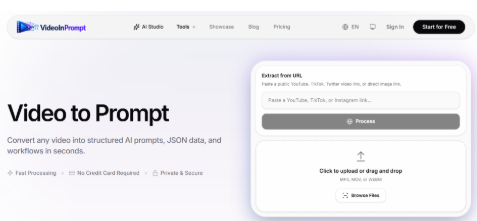
One of the most exciting developments in this space is video to prompt technology.
Instead of manually analyzing every shot, AI can now examine an existing video and automatically extract:
- Scene descriptions
- Camera movements
- Shot types
- Character actions
- Lighting
- Composition
- Storyboards
- Cinematic structure
The extracted information can then be transformed into prompts that are ready for today’s leading AI video generators.
Rather than starting with a blank page, creators begin with a professionally structured foundation that can be refined and optimized.
This dramatically reduces production time while helping maintain visual consistency across projects.
Building Awesome AI Video Prompts
The best prompts usually answer six essential questions:
Who is in the scene?
Describe the primary subject with enough detail to maintain consistency.
What is happening?
Focus on the action rather than simply describing the object.
Where does it happen?
Environment influences mood, lighting, and realism.
How should the camera behave?
Camera movement often has more impact than people realize.
Examples include:
- Tracking shot
- Dolly shot
- Locked tripod
- Crane movement
- Orbit camera
- Handheld documentary style
What lighting creates the desired atmosphere?
Lighting communicates emotion before the audience even notices it.
Natural daylight, golden hour, moody interiors, neon city lights, volumetric lighting, and soft studio illumination all produce very different visual results.
What cinematic style should the AI follow?
Consistency improves when prompts include visual direction such as:
- Photorealistic
- Cinematic realism
- Documentary
- Luxury commercial
- High-end product advertisement
- Film-quality color grading
AI Is Becoming a Creative Partner
The future of video creation is unlikely to replace creativity—it will amplify it.
Creators will spend less time describing every technical detail manually and more time refining ideas, storytelling, pacing, and artistic direction.
AI handles the repetitive work while humans focus on imagination.
As generation models continue improving, understanding how to create structured prompts—and how to extract them from existing videos—will become an essential workflow for content teams, agencies, and independent creators alike.
Those who master prompt engineering today will likely have a significant advantage as AI-generated media becomes increasingly mainstream.
The next generation of creative tools won’t simply generate videos—they’ll understand cinematic language, adapt prompts for different AI models, and help creators produce professional-quality content faster than ever before.