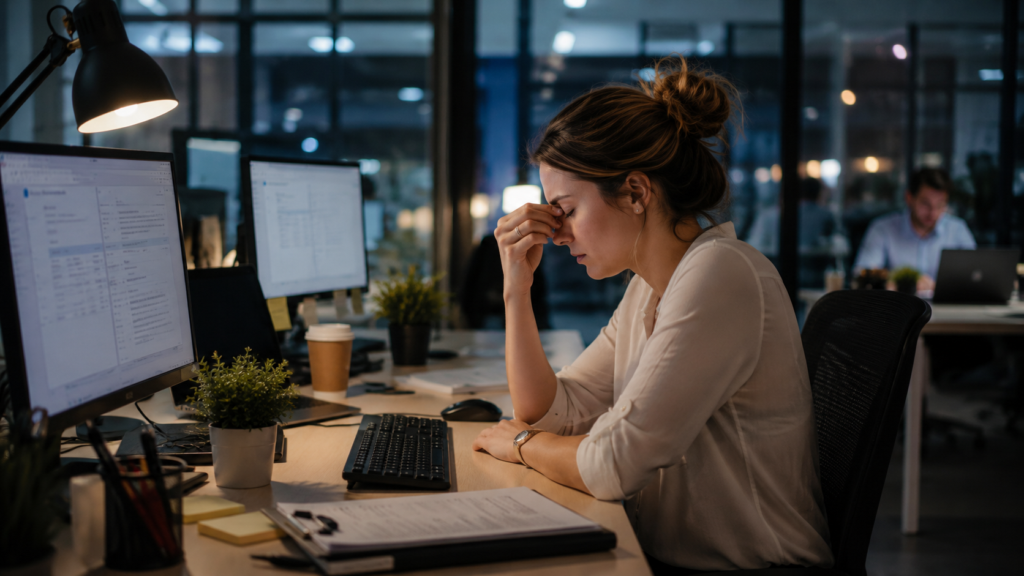
Modern workplaces are more connected than ever before. Emails arrive around the clock, meetings happen on video calls, and most tasks rely heavily on laptops, tablets, or smartphones. While technology has improved productivity in countless ways, it has also introduced a growing issue that many professionals underestimate: screen fatigue.
For millions of workers, spending eight or more hours a day staring at screens has become completely normal. Yet this constant exposure can have serious consequences for eye health, concentration, sleep quality, and overall well-being. The hidden cost of screen fatigue is often ignored until symptoms become difficult to manage.
What is Screen Fatigue?
Screen fatigue, sometimes referred to as digital eye strain, develops when the eyes are overworked for extended periods. Unlike reading printed material, digital screens force the eyes to constantly adjust to brightness, contrast, glare, and flickering light.
Many employees experience symptoms without realizing that screens are the root cause. Common signs include:
- Dry or irritated eyes
- Blurred vision
- Frequent headaches
- Eye twitching
- Difficulty focusing
- Neck and shoulder tension
- Increased sensitivity to light
In modern offices, remote work environments, and hybrid setups, these symptoms are becoming increasingly common. Workers often move from one screen to another throughout the day without allowing their eyes adequate time to recover.
The Long-Term Impact on Eye Health
Occasional eye strain may seem harmless, but repeated exposure over time can contribute to more serious issues. Prolonged screen use can worsen dry eye syndrome and may accelerate vision problems in people already prone to them.
Blue light exposure from screens has also become a major concern. While research is ongoing, experts agree that excessive blue light can interfere with sleep patterns and contribute to eye discomfort. Poor sleep then creates a cycle of fatigue that affects work performance and mental clarity.
Another overlooked issue is reduced blinking. People naturally blink less when using screens, which causes tears to evaporate more quickly. This leaves the eyes dry and irritated for long periods during the workday.
Although screens may not directly “damage” eyesight permanently in every case, chronic digital strain can significantly reduce comfort and quality of life. For many professionals, unmanaged screen fatigue eventually impacts productivity, mood, and even confidence.
Why Women Often Experience Greater Eye Strain
Women can be particularly vulnerable to screen-related discomfort for several reasons. Hormonal changes may contribute to dry eyes, especially during pregnancy or menopause. In addition, many women juggle professional responsibilities alongside family and household tasks, increasing total screen exposure each day.
Fashion and functionality are also important considerations. Many women want eyewear that supports eye health while still matching their personal style. This has increased demand for modern reading glasses that combine comfort, protection, and appearance.
Simple Ways to Reduce Screen Fatigue
The good news is that small changes can make a noticeable difference. Protecting your eyes does not require completely avoiding screens. Instead, it involves creating healthier digital habits.
- Follow the 20-20-20 Rule
One of the easiest techniques is the 20-20-20 rule. Every 20 minutes, look at something 20 feet away for at least 20 seconds. This gives the eye muscles an opportunity to relax and reset.
- Reading Glasses Can Make a Big Difference
One of the most effective solutions for reducing screen fatigue is wearing properly designed reading glasses. Many professionals struggle with eye strain without realizing that magnification or blue light filtering could dramatically improve comfort.
Stylish and supportive options, such as reading glasses for women at Just Glasses, can help reduce the strain on the eyes during long working hours. Choosing the right pair may improve focus, reduce headaches, and create a more comfortable working experience overall. Modern reading glasses are no longer purely functional. Many designs now combine eye support with fashionable frames that suit both office and casual environments.
- Adjust Your Workspace
Lighting plays a major role in eye comfort. Position screens to reduce glare from windows or overhead lights. Increasing text size and lowering screen brightness can also help minimize strain. Maintaining good posture is equally important. Screens should sit at eye level to prevent neck and shoulder tension that often accompanies digital fatigue.
- Use Artificial Tears if Needed
For people suffering from dryness, lubricating eye drops may help restore moisture and improve comfort throughout the day. Staying hydrated can also support better eye health.
- Limit Screen Time Outside Work
After spending an entire day in front of a computer, many people continue using phones or watching television late into the evening. Reducing recreational screen use, especially before bed, can help the eyes recover and improve sleep quality.
As workplaces continue to rely on technology, screen fatigue is unlikely to disappear anytime soon. However, awareness is growing around the importance of protecting eye health in professional settings. Yes, the modern workplace depends on screens, but healthy vision should not be sacrificed in the process.