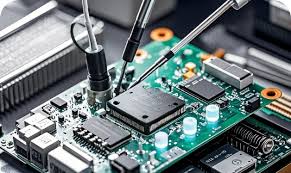
The global electronics industry is entering a new era defined by rapid innovation, shorter product cycles, increasing device complexity, and higher expectations for reliability and supply-chain resilience. As OEMs push the boundaries of performance—whether in automotive systems, industrial automation, IoT devices, medical electronics, aerospace, or consumer technology—the demands placed on PCB manufacturing become more intense and more specialized.
To meet these evolving requirements, the turnkey PCB manufacturing model has become the preferred strategy for engineering teams worldwide. A fully integrated workflow—spanning fabrication, component sourcing, assembly, and testing—enables faster iteration, greater reliability, and reduced supply-chain risk.
As a leader in turnkey pcba assembly FastTurn PCB has developed deep insight into how the industry is evolving and what the future holds.
This article explores the key trends shaping the future of turnkey PCB manufacturing and how FastTurn PCB is preparing to support the next generation of hardware innovation.
- Increasingly Complex PCB Designs Will Require Advanced Manufacturing Capabilities
Devices continue to shrink in size yet grow in functional density. This trend is driving demand for:
- HDI (High-Density Interconnect)
- Multi-layer PCBs (up to 20–40 layers)
- Microvia-in-pad and stacked microvias
- Embedded components
- Hybrid materials for high-frequency designs
- Precise impedance control
As processors, RF modules, memory, sensors, and power components become more tightly integrated, manufacturing complexity will increase exponentially.
FastTurn PCB is already investing in:
- Higher-precision laser drilling
- Advanced lamination systems
- High-speed signal integrity management
- Material innovation for RF and high-speed boards
- Zero-warping lamination control
These capabilities ensure that OEMs can develop next-generation products without being constrained by manufacturing limitations.
- AI-Driven Automation Will Transform the Turnkey Process
Artificial intelligence and machine learning are beginning to reshape PCB manufacturing across:
DFM Automation
AI can evaluate PCB layout files and automatically detect manufacturing and assembly risks.
Automated Optical Inspection (AOI) Intelligence
AI-driven AOI systems learn defect patterns and improve detection accuracy over time
Predictive Supply-Chain Management
- Machine learning analyzes:
- Lead time fluctuations
- Shortage trends
- Pricing shifts
- Global logistics risks
FastTurn PCB is actively integrating AI-driven analysis tools to optimize:
- Component sourcing
- Production scheduling
- Quality inspection
- Predictive defect detection
This will make turnkey workflows faster, more reliable, and more resilient.
- Supply-Chain Resilience Will Be a Core Competitive Advantage
Recent global events have exposed vulnerabilities in international supply chains. In the future, OEMs will select partners based on their ability to:
- Maintain multi-region sourcing networks
- Predict shortages before they occur
- Implement substitution strategies quickly
- Ensure full traceability and compliance
FastTurn PCB is expanding its global sourcing network and implementing real-time availability systems to ensure continuity even during market disruptions.
Turnkey models that offer strong sourcing integration—such as supply-chain optimized turnkey PCBA manufacturing will become industry standard.
- Higher Regulatory and Quality Standards Will Drive Process Innovation
Industries such as medical electronics, automotive, aerospace, and energy systems are adopting stricter regulations:
- IPC Class 3 and Class 3A requirements
- Automotive AEC-Q100/200 reliability expectations
- Medical device compliance (ISO 13485)
- EV battery safety standards
- Data traceability compliance
FastTurn PCB is strengthening its QC ecosystem to align with these evolving standards through:
- Advanced reliability testing
- Automated documentation systems
- Environmental stress and thermal aging validation
- Enhanced traceability frameworks
The future turnkey PCB manufacturer must not simply build boards—it must build trust.
- Sustainability and Eco-Friendly Manufacturing Will Be Mandatory
Environmental pressure is increasing across all electronics sectors. OEMs will require partners who adopt:
- Halogen-free materials
- RoHS/REACH-compliant production
- Energy-efficient manufacturing equipment
- Waste-minimization and recycling systems
- Reduced carbon output in logistics
FastTurn PCB is implementing sustainable production practices to help customers meet global environmental requirements.
- Faster Iteration Cycles Will Demand Agile Turnkey Manufacturing
Hardware teams are moving toward “software-like speed” with:
- Weekly prototype iterations
- Rapid DVT/EVT testing cycles
- Small-batch production for pilot deployments
- Continuous design refinements
Turnkey manufacturing will evolve to support:
- Ultra-fast 48-hour assembly windows
- Real-time ECO implementation
- Digital tracking across the entire lifecycle
- Automated quoting and instant BOM validation
FastTurn PCB is developing these capabilities so engineering teams can iterate at unprecedented speed.
- The Future Belongs to Full Digitalization of the Manufacturing Workflow
The next phase of innovation will involve:
- Digital twin models for PCB assemblies
- Factory-wide data integration
- Cloud-based traceability systems
- Remote quality dashboards
- Real-time production analytics
FastTurn PCB is integrating digital manufacturing tools to build a transparent, data-rich ecosystem for customers.
This will enable OEMs to monitor the entire production lifecycle—from fabrication to assembly to final testing—through a unified digital interface.
- FastTurn PCB’s Vision for the Future of Turnkey Manufacturing
As turnkey PCB manufacturing evolves, FastTurn PCB is committed to:
Engineering-Driven Excellence
Leading with DFM/DFA/DFT intelligence and deep engineering collaboration.
Automation & Smart Manufacturing
Building a smarter, AI-enhanced, and data-driven production environment.
Supply-Chain Intelligence
Ensuring predictable, fast, and risk-mitigated sourcing for all customers.
Continuous Quality Innovation
Adapting to rising industry standards and regulatory frameworks.
Global Expansion
Supporting OEMs with faster delivery cycles and more regional manufacturing options.
Customer-Centric Turnkey Models
Providing flexibility, transparency, and reliability at every stage of the hardware lifecycle.
For OEMs preparing for the future, FastTurn PCB is not just a supplier—it is a long-term strategic manufacturing partner.
Conclusion
The future of turnkey PCB manufacturing will be defined by automation, supply-chain resilience, tighter industry standards, and increasingly complex electronic architectures. OEMs need manufacturing partners who can evolve with these challenges, offering precision engineering, scalable workflows, and complete visibility into every step of production.
is building this future today—investing in advanced equipment, digitalized production, AI-driven tools, global sourcing networks, and next-generation engineering support.
As the electronics industry continues to accelerate, FastTurn PCB stands ready to help teams innovate faster, build more reliably, and scale with confidence.