Every business owner who has ever walked past the fire extinguisher mounted near the exit has had the same thought, or something close to it: that’s handled. It’s there. It looks fine. We’re covered.
That assumption is doing a lot of work. And in most commercial settings, it’s wrong.
Not because the extinguisher isn’t there. It is. Not because nobody ever thought about it. Someone did, at some point, presumably when it was installed. The problem is what happens between that moment and the next time someone actually needs to use it — which, if you’re lucky, is never. But if you’re not, is exactly the wrong time to find out the unit on the wall isn’t ready.
What Annual Inspection Actually Means
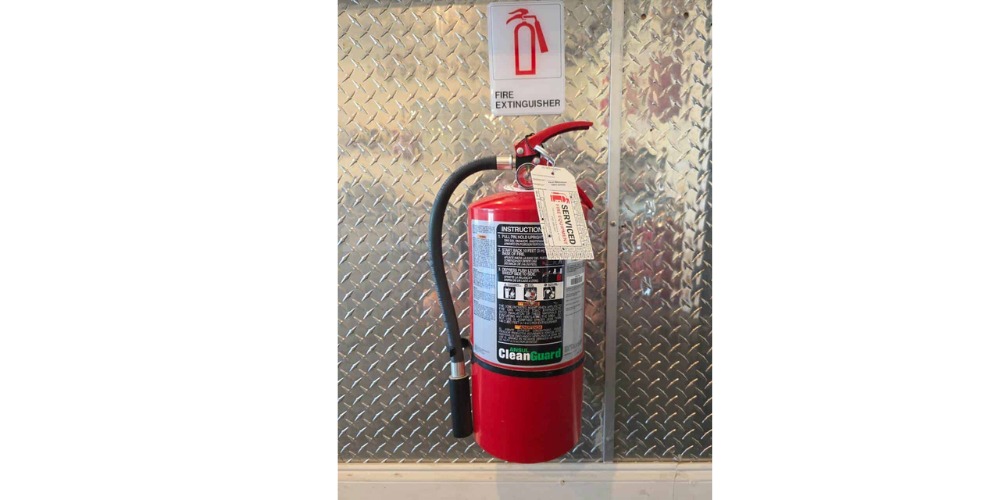
NFPA 10 — the national standard governing portable fire extinguisher maintenance — requires annual professional inspection of every fire extinguisher in a commercial occupancy. Not a visual check by an employee. Not a glance at the gauge during a walkthrough. A documented inspection by a licensed technician who checks pressure, agent condition, tamper seal integrity, hose and valve condition, and physical state of the cylinder — and who signs a tag proving they did it.
That tag is the compliance record. It’s what a fire marshal examines during an inspection. It’s what an insurance adjuster looks for after a fire incident. It’s what an OSHA compliance officer checks during a workplace safety audit. A missing tag, an expired tag, or a tag from an unlicensed technician are all citable violations. None of them are expensive to fix before an inspection. All of them are expensive to explain after one.
The tag also matters because the pressure gauge — the thing most people rely on as their proxy for “this extinguisher is fine” — tells you almost nothing useful. It measures whether internal pressure is within the operable range. It does not measure agent condition. It does not reveal hose deterioration, valve corrosion, or seal failure. An extinguisher can read green on the gauge and fail to discharge properly. This is a documented failure mode on units that haven’t been professionally serviced. The annual inspection exists precisely because gauge reading is not a substitute for it.
The Partially Discharged Unit Nobody Recharged
One of the most common fire equipment failures in commercial settings doesn’t happen because of neglect. It happens because of a reasonable-sounding decision that turns out to be wrong.
A small fire occurs. An employee uses an extinguisher to suppress it. The fire is out. The gauge still reads in the green range. The extinguisher goes back on the wall.
That unit is now compromised. The agent level is reduced. It will not perform to its rated capacity the next time it’s needed. The gauge reads green because pressure hasn’t dropped below the minimum threshold — not because the unit is fully charged. Those are different things, and the difference matters when someone is standing in front of a fire with seconds to act.
NFPA 10 is unambiguous: any extinguisher that has been discharged, even partially, must be recharged by a licensed technician before returning to service. A professional recharge costs a fraction of a replacement unit. There is no practical justification for putting a compromised extinguisher back on the wall.
The Testing Requirement That Accumulates in the Background
Beyond annual inspections, NFPA 10 requires periodic hydrostatic testing of fire extinguisher cylinders — a pressure test that verifies structural integrity in ways that visual inspection cannot. Standard ABC dry chemical extinguishers require this test every 12 years. CO₂ extinguishers require it every 5 years. The interval runs from the manufacture date on the cylinder, not the purchase date.
This is the requirement most businesses don’t know exists. A facility that has had the same extinguishers in place for ten years without tracking manufacture dates may have cylinders approaching or past their hydrostatic testing interval while carrying current annual inspection tags. The two requirements are independent. A current annual tag does not mean a cylinder is current on hydrostatic testing.
A fire marshal who pulls manufacture dates will find overdue cylinders regardless of what the annual tags say. For businesses with multiple units across a facility, this is a compliance gap that compounds quietly until someone checks.
The Case for Getting Ahead of It
Fire equipment compliance is not a significant operating expense for most businesses. Annual inspections run a few dollars per unit. Recharges are inexpensive. Hydrostatic testing when intervals come due is a routine cost. None of it approaches the cost of a fire marshal citation, a failed inspection that delays a certificate of occupancy, or a coverage dispute with an insurance carrier following a fire incident.
The businesses that handle this well aren’t doing anything complicated. They have current inspection tags on every unit. They recharge any extinguisher that gets used. They track manufacture dates and know when hydrostatic testing is due. They work with a licensed fire equipment service provider who manages the compliance calendar so they don’t have to.
That’s the whole picture. It’s not a large lift. It just requires treating the extinguisher on the wall as a maintained piece of safety equipment rather than a permanent fixture that takes care of itself.
Licensed walk-in fire extinguisher service is available in Clearwater with same-day turnaround, no appointment required, and no service call fee. Most services are completed while you wait.