
The Evolution of Mobile Retail: Why Custom Airstream Trailers are the Ultimate Brand Activation

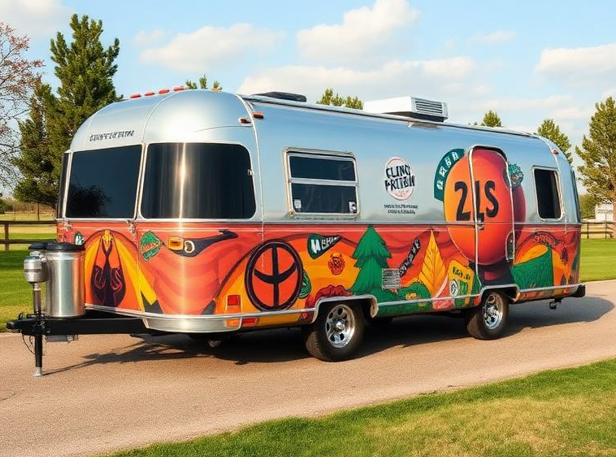
Mobile retail used to mean a table and a tent. A brand would show up, hand out product, and hope the setting did enough work to make the interaction memorable. That model has largely run its course, not because sampling stopped working, but because consumers now expect something closer to a real retail experience, even in a temporary one. Custom Airstream trailers are the clearest sign of that shift, because they’re the rare mobile format that can actually deliver a walk-in space instead of a curbside handoff.
What Changes When Consumers Can Step Inside
Most branded vehicles keep the consumer on the outside looking in, engaging through a window or across a counter. An airstream pop-up flips that arrangement. Once someone steps through the door, the interaction stretches from a few seconds to several minutes, and the brand gets to control far more of the experience: what’s on the shelves, what’s playing, how the space smells, what a person’s hand touches first. That’s a fundamentally different opportunity than sampling on a sidewalk, and it’s why retail-minded brands keep gravitating toward the format for launches that need more than a quick impression. A consumer who has physically stepped into a space behaves differently than one who has simply taken a sample and kept walking. They slow down, they look around, and they give a brand permission to hold their attention for longer than any curbside interaction could reasonably ask for.
The Interior Is the Pitch
A custom Airstream trailer succeeds or fails on its interior buildout, not its exterior wrap. Shelving, lighting, signage, and product staging all have to be designed with the same discipline a permanent retail space would demand, scaled down to fit roughly 200 square feet. Brands that treat the interior as an afterthought end up with a cramped, forgettable room. Brands that invest in the buildout end up with something that photographs like a boutique and functions like one too, which is exactly the association a launch campaign wants to create.
Capacity Is the Constraint Nobody Plans For
The tradeoff of interior access is throughput. A trailer that comfortably holds six to eight guests at a time can become a bottleneck fast if a line forms outside and nobody has planned for it. The best-run Airstream activations build a holding pattern into the experience itself, sampling or content outside while people wait, so the line becomes part of the show rather than a source of friction. Agencies that skip this step end up with frustrated guests and a queue that undercuts the premium feeling the interior was designed to create.
Compliance Isn’t Optional Once People Are Inside
Interior consumer access raises the stakes on things brand teams rarely think about until they’re already a problem: occupancy limits, accessibility, fire code, and structural certification for the buildout itself. A vendor cutting corners on any of this isn’t just risking a fine, they’re risking the safety of the people the campaign is trying to win over. Partners with real experience in this format treat these requirements as baseline, not as a checklist to revisit if a local inspector asks, and they build documentation into the planning process early enough that a permit delay never becomes a launch-day emergency.
The Format Rewards Brands Willing to Commit to It
A custom Airstream trailer costs more to build and more to staff than a standard branded truck, and it only pays off when a brand treats the interior as seriously as a flagship store would. Done well, it gives a launch campaign something almost no other mobile format can: a few unhurried minutes where a consumer experiences the brand the way it was actually meant to be experienced, not the compressed version everything else in mobile marketing has to settle for.





Comment