
The Evolution of Games Environments: How Advanced Physics and Layered Clothing Transformed Virtual Spaces


The landscape of virtual spaces has shifted dramatically over the last decade, turning what used to be digital playgrounds of rigid, unyielding bricks into highly responsive, living ecosystems. Not so long ago, jumping into a multiplayer game meant accepting a specific set of visual rules, where environments were mostly static backdrops and character outfits were flat textures painted directly onto a blocky frame. You could run, you could jump, and you could perhaps interact with a few pre-programmed buttons, but the world itself felt detached from your actions. Today, the boundary between indie sandbox platforms and high-end blockbuster titles has blurred completely, driven by massive architectural overhauls in physics engines and rendering capabilities. Players no longer just visit a virtual space; they inhabit it, feeling the physical weight of the environment through sophisticated mechanical feedback and hyper-detailed visual systems that react to every movement.
This transformation is particularly evident when looking at how modern engine architecture handles the complex interplay between light, matter, and movement. By moving away from basic geometric constraints, modern platforms allow creators to build worlds where assets possess genuine physical properties, dramatically shifting user expectations across the globe. Players now anticipate the same level of environmental fidelity from a user-generated platform that they would from a premium console release. When every blade of grass sways dynamically and clothing moves naturally against a character’s body, the digital illusion becomes incredibly powerful, rewriting the rules of online immersion entirely.
The Physics Revolution and Real-Time Interaction
The true turning point for modern virtual environments lies in how physics data is processed and shared across networks. In the early days of online gaming, calculating how an object fell or how a character collapsed required massive computational power, meaning most of these actions were calculated locally on a single machine or severely simplified to prevent server crashes. Recent engine upgrades have completely solved this bottleneck through advanced ragdoll physics replication, a system that ensures every single player in a server sees the exact same physical collapse, tumble, or impact simultaneously. When a character trips over an obstacle or gets knocked back by an explosion, the resulting movement is no longer a rigid, pre-recorded animation loop. Instead, the engine calculates the skeletal weight and joint constraints in real time, broadcasting those precise movements to everyone in the match without a hint of lag.
This level of real-time synchronisation changes the mechanical feel of virtual spaces, turning static arenas into unpredictable fields of play. Massive global platforms like Roblox have embraced these changes to empower their community, allowing developers to create highly intricate, physically reactive worlds directly within their ecosystem. Within these upgraded frameworks, creators can now build chaotic obstacle courses, realistic sports simulators, and complex survival games where the environment itself behaves like a living, breathing participant. A falling log will bounce off a cliff edge exactly as you expect, and a collapsing bridge will scatter debris that players must actively dodge.
This fluid predictability has also breathed new life into custom single-player scripts and cooperative experiences, inspiring developers to push boundaries. Because the Roblox platform handles network traffic so smoothly now, players diving into massive community hits can experiment with custom gameplay tweaks like never before. For instance, players looking to alter the rules of engagement in popular survival games often utilise the 99 Nights in The Forest mod menu v4.1 to smoothly adjust environmental variables and experiment with physics settings, showing just how much users love to tweak these highly responsive worlds. When the underlying engine is this robust, it invites endless experimentation, allowing the community to interact with digital spaces in ways that feel completely organic and endlessly surprising.
Layered Clothing and the Death of the Static Avatar
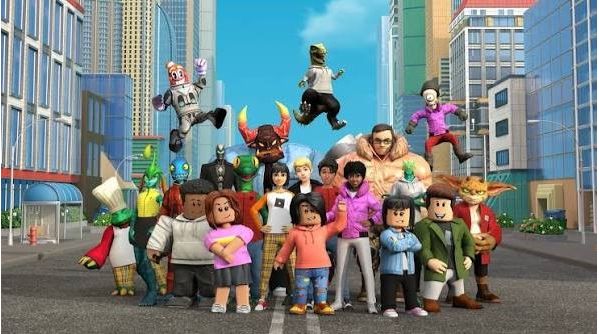
Parallel to the environmental revolution is the massive leap forward in character customisation, specifically through the introduction of layered clothing systems. For the longest time, changing your outfit in a sandbox game meant changing the skin texture of your 3D model, resulting in flat jackets, painted-on ties, and trousers that looked like they were part of the character’s skin. Layered clothing changes everything by treating garments as independent 3D assets that drape, stretch, and wrap naturally over any avatar shape imaginable. Whether your character is a slender futuristic robot, a towering fantasy knight, or a classic blocky figure, the clothing automatically deforms to fit the underlying structure perfectly.
This technological leap relies on complex cage-mesh deformation, where the digital fabric recognises the outer boundaries of the character model and rests upon it just like real cloth. When your avatar sprints, the hem of a trench coat flutters in the wind, and when you crouch, the fabric wrinkles realistically around the knees. This creates a profound sense of tactile immersion because the avatar now interacts directly with the physical laws of the world. You can layer a denim jacket over a hooded sweatshirt, throw a backpack over the top, and watch as each item respects the boundaries of the layer beneath it, completely eliminating the annoying visual clipping that used to ruin the immersion of virtual fashion.
Emissive Masking and Visual Sophistication
While physics and clothing handle how a world moves, modern rendering pipelines dictate how a world feels to the eye. One of the most significant upgrades in this department is the implementation of emissive material masking, a technique that allows specific parts of a 3D model to glow with internal light while others remain completely dark. In older game engines, making an object glow meant illuminating the entire asset or using basic textures that lacked any real depth. With advanced masking, developers can paint intricate neon circuitry onto a cyberpunk jacket, create glowing magical runes on an ancient stone wall, or build futuristic helmets with pulsing visors.
This visual tool does more than just look pretty; it directly affects how players perceive digital space and atmosphere. Because these emissive materials hook into the wider dynamic lighting system of the engine, the light pouring out of a neon sign or a glowing avatar accessory actually casts real reflections onto the surrounding walls, puddles, and nearby players. Walking down a dark, rainy alleyway in a virtual city becomes a cinematic experience when the crimson glow of a storefront sign bounces realistically off your wet jacket. By giving creators precise control over which pixels emit light and how intense that light is, virtual worlds can easily replicate the moody, atmospheric aesthetic of high-end AAA sci-fi and fantasy titles.
Bridging the Gap to AAA Gaming Spaces

All of these individual engine upgrades converge to do something truly remarkable, which is to bridge the historical gap between casual sandbox platforms and premium gaming experiences. The classic, hyper-simplified aesthetic that defined early user-generated content is rapidly evolving into a stylistic choice rather than a technical limitation. Today, you can enter a community-created virtual space and find yourself standing in a photorealistic dense forest where sunlight filters through the canopy via volumetric god rays, fog settles realistically in the valleys, and every single prop responds to physical touch.
This technical maturity has completely shifted what players expect when they log into an online world. The modern gaming community is no longer satisfied with simple rooms and rigid geometry; they want spaces that tell a story through their visual design and mechanical depth. Developers are responding by creating massive, sprawling cities, intricate dungeon crawlers, and highly detailed social lounges that rival the visual fidelity of major studio releases. By putting professional-grade rendering, physics replication, and fabric simulation tools into the hands of independent creators, the line between amateur development and professional production has permanently dissolved, paving the way for a brand-new era of collaborative digital architecture.







Comment