
THE EVOLUTION OF EROSION TECHNOLOGY ACROSS NEW ZEALAND

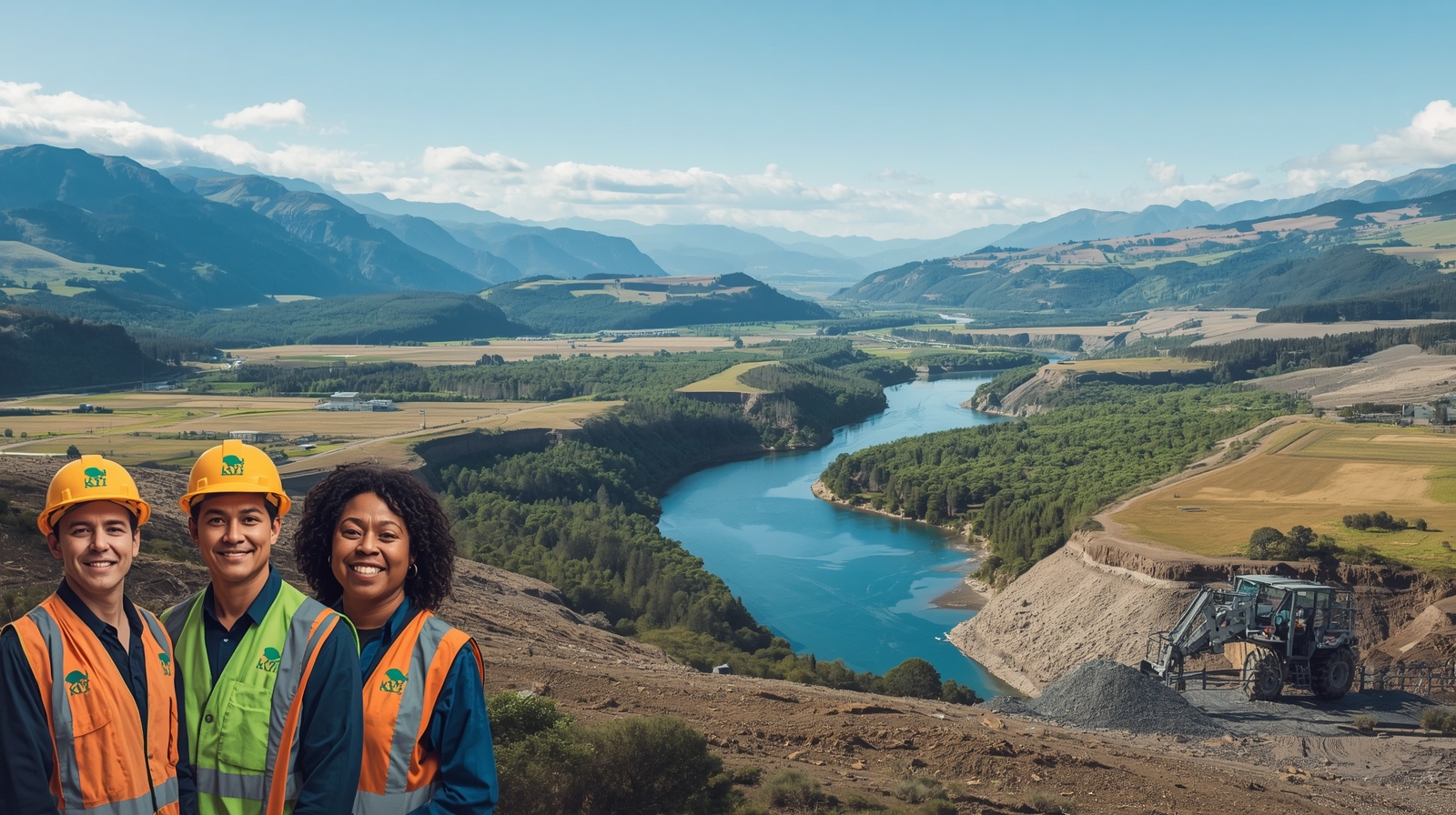
Erosion control has emerged as an essential aspect of infrastructural development throughout New Zealand. The country’s coastline and river networks place unrelenting pressure on major infrastructure, including:
- Ports
- Transport corridors
- Marine assets
These environments are not stable. They change with the conditions, like:
- Tides
- Storms
- Movement of sediments
This poses structural integrity risks. Especially in the long term.
Engineers now incorporate erosion control at the early design stage. The idea is to preserve the performance over decades.
Massive infrastructure is driving innovation
Major developments are shaping how erosion is managed. The Lyttelton port wharf extension in New Zealand is one example. Its long-term expansion requires precise planning.
Such large projects involve high-energy marine conditions. Therefore, there is constant stress due to:
- Wave activity
- Tidal forces
- Seabed movement
In such circumstances, traditional methods are not adequate. The engineers need to come up with systems that are capable of accommodating both short-term forces and long-term change. This has triggered the introduction of more developed erosion control measures in similar projects.
Adopting modern erosion systems
Traditional erosion systems aimed at resisting the forces of water. However, contemporary strategies are designed to control and disperse energy. This change is evident in the erosion technology that is now available across New Zealand.
It is now possible to have flexible systems that respond to the ground conditions. For example:
- Engineered containment units
- Geotextile-based solutions
They are faster to install, and the sites do not need much preparation. They also perform well under variable loads and on irregular terrain.
This enhances reliability and efficiency. It minimizes the structural failure from scour. It also reduces the maintenance needs in the long run.
With the growth in magnitude of infrastructure projects, these benefits are more significant.
Increasing use in marine environments
Contemporary infrastructure demands solutions capable of supporting both temporary and permanent requirements. Quick installation is also important during construction.
Contemporary erosion control techniques are being applied in an extremely diverse array of settings. Engineers focus on understanding the uses and applications of each system before selecting a method. This makes sure that the solution fits the unique circumstances of the site.
In coastal areas, erosion control protects reclaimed land and wharf structures. In the river systems, it stabilizes the banks and prevents exposure of the foundation.
Such systems are also utilized on:
- Bridge piers
- Culverts
- Transport embankments.
Systems that support natural sediment accumulation can enhance stability in the long term. Long-term durability guarantees further protection even after the completion of the project.
Integration with long-term infrastructure planning
Lastly, erosion control has since become a part of broader infrastructure strategy. Engineers consider:
- Future growth
- Environmental impact
- Operational needs
This is particularly significant in projects designed to add capacity, like port expansions.
Monitoring and data analysis also play a larger role. It is now possible to project erosion trends. This makes it possible to take action early. It also:
- Minimizes downtime
- Safeguards investments
- Enables adherence to environmental policies
Summing up
Erosion risks can be addressed effectively by incorporating modern systems into design and planning. This ensures infrastructure can meet future demands.







Comment